Ethical Movement: The History and Philosophy of Ethical Culture
The Ethical movement, also known as Ethical Culture or Ethical Humanism, is a philosophical and educational movement dedicated to the idea that living by a code of ethics is the primary requirement for a meaningful life. Established in 1877, the movement posits that morality is independent of theology and that the pursuit of a better world for all people is a duty that transcends religious dogma.
Key Facts
- Founder: Felix Adler (1851–1933).
- Established: 1877 in New York City.
- Core Philosophy: "Deed not creed"—emphasizing action over belief.
- Global Reach: Historically active in the United States, Great Britain, and Germany.
- Modern Status: Integrated into the broader modern Humanist movement.
- Membership: Fewer than 10,000 official members as of 2014.
Foundations and Early History
The Ethical movement emerged from the secularism of Victorian intellectuals. In Britain, a precursor was the South Place Ethical Society (founded in 1793 as South Place Chapel). Originally a Unitarian chapel, it became a hub for radical thought and feminism, hosting activists like Anna Wheeler, who campaigned for women's rights in 1829. Over time, the chapel transitioned from Unitarianism to a religious society, and eventually to the South Place Ethical Society, now known as the Conway Hall Ethical Society.
The movement's formalization began with Felix Adler. After studying in Germany and witnessing the exploitation of labor and women, Adler sought to create a moral framework independent of religion. After a poorly received sermon as a rabbi-in-training, Adler pivoted to academia at Cornell University. In 1877, he founded the New York Society for Ethical Culture, the first organization of its kind.
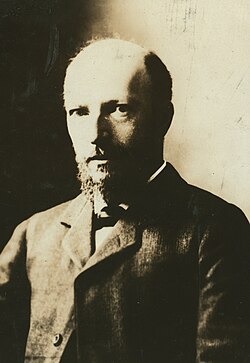
The American Expansion
By 1886, Ethical societies had spread to Chicago, Philadelphia, and St. Louis. These groups operated under four central principles:
- Morality is independent of theology.
- Philanthropy is a duty to advance morality.
- Self-reform must occur alongside social reform.
- Societies should be governed by republican rather than monarchical structures.
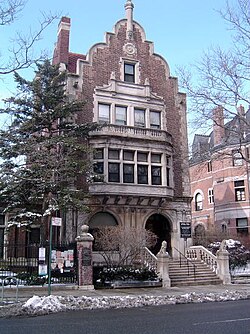
Adler's focus on "deed not creed" led to tangible social services. The New York Society established a kindergarten, a district nursing service, and a tenement-house building company. They also founded the Ethical Culture School (originally the "Workingman's School"). Unlike religious charities of the era, these societies did not proselytize or attempt to convert those they helped.

In 1893, these societies unified as the American Ethical Union (AEU). While the movement stagnated for a time, it saw a post-WWII revival in 1946, expanding into Washington D.C. and New Jersey. By 1968, membership reached over 5,500, though newer groups often focused more on alternative Sunday schools for children than on adult activism.
The Movement in Great Britain and Germany
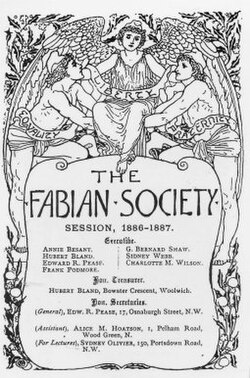
The movement reached Britain in 1885 through the distribution of pamphlets and the efforts of Stanton Coit. By 1910, over fifty societies existed in Great Britain. Coit attempted to blend ethical culture with the trappings of religious practice, creating the "Ethical Church" to appeal to cultural Christians. He hoped to reform the Anglican Church by replacing supernatural beliefs with science and ethics, though this effort ultimately failed.
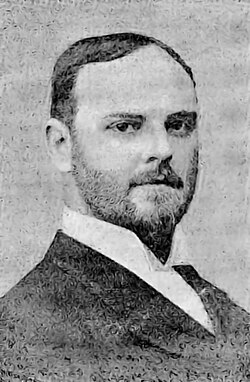
Over time, the British movement evolved. The Union of Ethical Societies eventually became the British Humanist Association in 1967 (now Humanists UK). This transition marked the shift from "Ethical Culture" to a broader humanist framework. The South Place Ethical Society continues today as Conway Hall.
In Germany, the movement was led by figures such as Wilhelm Foerster and Georg von Gizycki in Berlin. It peaked around 1895 before declining as momentum shifted toward the German Freethinkers League. The movement was effectively dismantled by the Nazi regime and did not reform until after German reunification, leading to the 1993 founding of the Humanistischer Verband Deutschlands.
Organizational Model and Legal Status
The Ethical movement views itself as a way of life rather than a set of dogmas. Since 1950, it has been closely aligned with modern Humanism. In 1952, the AEU helped found the International Humanist and Ethical Union.
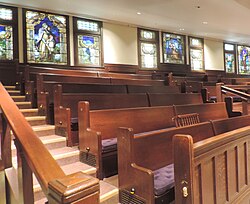
The movement has also faced legal scrutiny regarding its tax status. Courts in Washington, D.C. (1957) and Austin, Texas (2003) upheld the status of Ethical Societies as religious organizations. The Texas State Appeals Court noted that the First Amendment protects a diverse range of belief systems, including those that do not adhere to traditional theology.
Notable Support
Albert Einstein was a prominent supporter of Ethical Culture. In 1951, he stated that the movement embodied his personal conception of the most valuable aspects of religious idealism, asserting that "without 'ethical culture' there is no salvation for humanity."
| Region | Key Figure | Primary Outcome/Successor | Core Focus |
|---|---|---|---|
| United States | Felix Adler | American Ethical Union (AEU) | Social reform and public service |
| Great Britain | Stanton Coit | Humanists UK / Conway Hall | Secularist advocacy and humanism |
| Germany | Wilhelm Foerster | Humanistischer Verband Deutschlands | Freethought and ethical journals |
Frequently Asked Questions
What is the main difference between Ethical Culture and traditional religion?
The primary difference is that Ethical Culture asserts that morality is independent of theology. It focuses on "deed not creed," meaning it prioritizes ethical action and social reform over the adherence to supernatural beliefs or religious dogmas.
Who was Felix Adler?
Felix Adler was an academic and the founder of the Ethical movement. After rejecting a career as a rabbi, he established the New York Society for Ethical Culture in 1877 to promote a secular, ethical way of living.
How did the movement influence the modern Humanist movement?
The Ethical movement served as a bridge to modern Humanism. In Britain, the Union of Ethical Societies evolved into the British Humanist Association. Globally, the American Ethical Union was a founding member of the International Humanist and Ethical Union in 1952.
Did the Ethical movement engage in social work?
Yes, extensively. The movement established kindergartens, nursing services, and schools for the working class. These projects were designed to improve society without the goal of proselytizing or converting the recipients of the aid.
Is the Ethical movement still active today?
Yes, although it is smaller than in its peak years. As of 2014, it had fewer than 10,000 official members, and many of its goals are now carried forward by broader Humanist organizations.