Estancias: The History and Evolution of Latin American Rural Estates
An estancia (or estância) is a large, private plot of land dedicated to farming or the raising of livestock, specifically cattle and sheep. While the term is most commonly associated with the vast grasslands of Chilean and Argentine Patagonia, its meaning and application have varied significantly across different regions and historical eras of the Americas.
In the context of South America, estancias are large rural complexes. They are functionally similar to what is known as a ranch in the United States or a station in Australia. In the pampas—the fertile lowlands of Argentina and Uruguay—these estates have historically served as the backbone of the livestock industry.
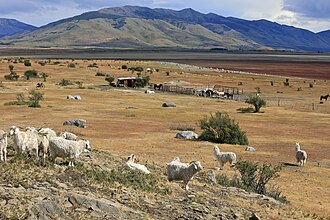
Key Facts
- Definition: A large private estate used for livestock or farming, primarily in South America.
- Regional Equivalents: Similar to a US ranch or an Australian station.
- Cultural Icon: The gaucho, a skilled horseman, is the traditional ranch worker of the Argentine estancia.
- Evolution: Many historic estancias have been converted into paradores (guest ranches).
- Puerto Rican Context: Historically referred to small farms growing frutos menores for local consumption.
The Evolution of the Estancia
Colonial Origins and the Encomienda
The roots of the estancia lie in the early Spanish colonial period. In Mexico and the Caribbean, holders of encomiendas (land and labor grants) acquired territory where they utilized indigenous labor. To manage these lands, they employed Hispanic supervisors known as estancieros. In Mexico, when a single individual owned multiple estancias, the collective was often termed a hacienda.
From Wild Herds to Stationary Ranching
During the first centuries of Spanish rule, cattle were introduced to the colonies. In the peripheral regions of northern Mexico and southern South America, these animals initially roamed wild, and settlers would conduct periodic raids to capture and slaughter them. By the 19th century, this shifted toward stationary ranching in the pampas. The establishment of permanent buildings and the use of marked livestock defined clear ownership, giving rise to the "estancia"—a term that emphasized the stationary and permanent nature of the venture.
Modern Transitions
In the late 20th century, the industry underwent a significant shift. Due to the high soil fertility of the pampas in Argentina and Uruguay, many landowners transitioned from livestock raising to intensive crop farming. Additionally, some estates with significant historic architecture have been repurposed as paradores, serving as tourist guest ranches.
Regional Variations
The Puerto Rican Estancia
In Puerto Rico (1508–1898), the term estancia had a distinct meaning. It referred to a farm growing frutos menores (minor crops) intended for local sale and consumption rather than export. This is comparable to a "truck farm" in the United States. These farms produced items such as rice, corn, beans, pumpkins, plantains, and avocados.
This differed from the hacienda, which was an industrial-scale farm equipped with machinery to process crops (like sugar, coffee, and tobacco) for wholesale and export. Following the change of sovereignty to the United States in 1898 and subsequent industrialization, the traditional Puerto Rican estancia largely disappeared.
California Mission Estancias
In North America, California missions often maintained separate farms and ranchos known as California mission estancias. These were distinct from the California ranchos, which were based on land grants issued to private individuals.
Summary of Estate Types
| Term | Primary Region | Primary Purpose | Key Characteristic |
|---|---|---|---|
| Estancia (South America) | Argentina, Chile, Uruguay | Livestock (Cattle/Sheep) | Large, permanent rural complex |
| Estancia (Puerto Rico) | Puerto Rico | Frutos Menores | Local consumption/Small scale |
| Hacienda | Mexico, Puerto Rico | Export Crops | Industrial processing/Large scale |
| Mission Estancia | California, USA | Mission Support | Associated with religious missions |
Frequently Asked Questions
What is the difference between an estancia and a hacienda?
While often used interchangeably in some regions, the distinction is clearest in Puerto Rico, where an estancia grew crops for local use (frutos menores), while a hacienda used industrial machinery to produce export goods like sugar and coffee. In Mexico, a hacienda could be a collection of several estancias owned by one person.
Who are the gauchos?
Gauchos are the traditional ranch workers on horseback in Argentina. They hold a significant place in national folklore and identity, similar to the role of the cowboy in North America.
What are paradores?
Paradores are historic estancias in countries like Argentina, Uruguay, Paraguay, and Chile that have been converted into guest ranches for visitors.
What were "frutos menores" in Puerto Rico?
Frutos menores were minor crops grown for local island-wide consumption. Examples include corn, beans, batatas, ñames, yautías, pumpkins, and various fruits like plantains and oranges.
How did estancias evolve in the pampas?
They evolved from a system of raiding wild cattle to stationary ranching with permanent structures and branded livestock in the 19th century, and more recently, many have shifted from livestock to intensive crop farming.