Estadio GEBA: A Century of Sporting and Musical History in Buenos Aires
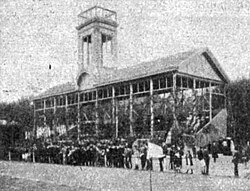
Located in the vibrant Palermo neighborhood of Buenos Aires, the Estadio GEBA (Estadio Gimnasia y Esgrima de Buenos Aires) stands as a testament to Argentina's rich athletic and cultural evolution. Owned by the Club Gimnasia y Esgrima and situated within the "Sede Jorge Newbery" facility, this venue has transitioned from a premier football ground to a rugby stronghold, and finally into a world-class concert destination.
With a current capacity of 12,133 spectators and a natural grass surface, the stadium has played a pivotal role in the development of South American sports since the turn of the 20th century.
Key Facts
- Inaugurated: October 12, 1902.
- Location: Av. Marcelino Freyre 3831, Palermo, Buenos Aires.
- Capacity: 12,133 spectators.
- Historic Milestone: Hosted the first Copa América in 1916.
- Current Primary Use: Music concerts and events.
- Notable Tenants: Argentina national football and rugby teams.
The Early Era: Football and the "Maldonado" Field
The stadium's origins date back to 1900 when the Municipality of Buenos Aires granted a land concession—previously used by the Buenos Aires and Rosario Railway (BA&RR)—to the club. Inaugurated in 1902, the field was affectionately known as "Maldonado" due to its proximity to the Maldonado stream.
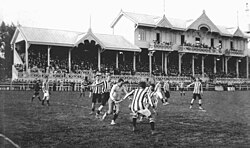
During the 1900s and 1910s, GEBA was a central hub for football. The club's own team competed in the Primera División (the top flight of Argentine football) from 1911 to 1917. The venue also hosted the legendary Alumni team, who played their final official match there on November 26, 1911, defeating Porteño 2–1 to secure their 10th title before the club's dissolution.
A Cradle for the National Team
The Estadio GEBA holds a special place in the history of the Argentina national football team. On September 13, 1908, during a Copa Newton match against Uruguay, the national squad wore the light blue and white striped jersey for the first time—a design that remains the definitive uniform today.
Expansion, Tragedy, and Transformation
As popularity grew, the club expanded. In 1909, a grandstand was built beneath a BA&RR viaduct. Following the removal of the viaduct in 1910, the club further expanded its lateral stands. The venue was later refurbished for the "Juegos Deportivos del Centenario," featuring a two-floor wooden structure inspired by the Hipódromo Argentino de Palermo.
However, the stadium's footballing peak ended in chaos. In 1916, GEBA hosted all matches of the first Copa América. The final between Argentina and Uruguay attracted over 40,000 fans—four times the venue's 10,000-person capacity. When the match was suspended due to overcrowding, an angry crowd set fire to the grandstands.
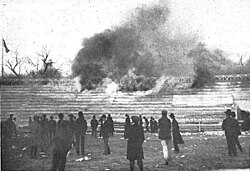
The arson led to a period of inactivity until 1918. Rather than rebuilding the wooden stands, the club installed a running track. The Argentina national football team played its final match at the venue on October 19, 1919, defeating Uruguay 6–1 to win the Copa Premier Honor Argentino.
The Rugby Era (1925–1969)
From 1925 onward, the focus shifted to rugby union. For 45 years, GEBA was the primary home for the Argentina national rugby team. The stadium hosted its first international rugby match in 1927 against the British Isles.
A major renovation in the mid-1930s replaced old structures with concrete grandstands, ensuring the venue could handle high-profile tours. Notable events included the 1936 match against the British Lions and the first South American Rugby Championship in 1951.
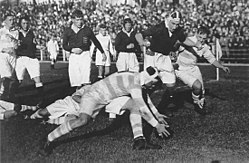
The national rugby team continued to use GEBA as its primary home until 1969, after which they moved to larger venues like Ferro Carril Oeste and Vélez Sársfield to accommodate growing crowds.
Modern Use: A Hub for Global Music
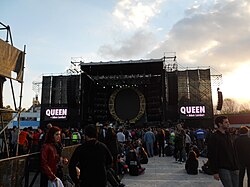
In recent decades, the Sede Jorge Newbery has evolved into one of Buenos Aires' most sought-after venues for international music concerts. Its intimate yet professional setting has attracted a diverse array of global superstars across various genres.
| Era | Primary Sport/Use | Key Milestone | Notable Event |
|---|---|---|---|
| 1902–1924 | Football | First Copa América (1916) | Argentina's first striped jersey (1908) |
| 1925–1969 | Rugby Union | Concrete renovation (1935) | British Lions Tour (1936) |
| 1970–Present | Concerts & Events | Transition to entertainment | Queen + Adam Lambert (2015) |
Frequently Asked Questions
Why is the 1908 match at GEBA historically significant?
It was the first time the Argentina national football team wore the light blue and white striped jersey, which became the permanent official uniform of the national team.
What happened during the 1916 Copa América final?
Due to extreme overcrowding (over 40,000 people in a 10,000-capacity venue), the match was suspended. This led to a riot where spectators set fire to the stadium's grandstands.
Which legendary football team played its last game at GEBA?
The defunct team Alumni played its final official match at GEBA on November 26, 1911, winning the Primera División title against Porteño.
When did the national rugby team stop using GEBA as its main home?
The national team played its last regular home matches at GEBA in 1969, moving to larger stadiums like Ferro Carril Oeste starting in 1970.
Who are some of the famous artists who have performed at Estadio GEBA?
The venue has hosted a wide range of artists, including Bruce Springsteen, Queen + Adam Lambert, Muse, Katy Perry, Ozzy Osbourne, and Luis Miguel.