Ernst Mach: The Physicist and Philosopher of Sensation
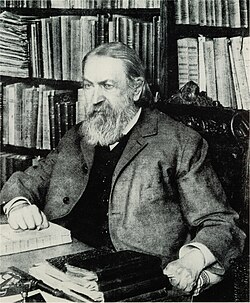
Ernst Mach was a towering figure of the 19th and early 20th centuries whose work bridged the gap between rigorous physics and profound philosophy. An Austrian polymath, Mach is perhaps most famous today for the Mach number—the ratio of an object's speed to the speed of sound—but his intellectual legacy extends far beyond aerodynamics. From the study of shock waves to the nature of human perception, Mach sought to strip science of metaphysical assumptions and ground it entirely in observable phenomena.
His critical approach to the concepts of absolute space and time provided a vital intellectual stepping stone for Albert Einstein's theory of relativity, while his philosophical leanings helped shape the trajectory of logical positivism and American pragmatism.
Key Facts
- Scientific Legacy: Defined the physics of shock waves; the Mach number is named in his honor.
- Philosophical Impact: Developed empirio-criticism, influencing the Vienna Circle and logical positivism.
- Physiological Discovery: Co-discovered how the inner ear's semicircular canals manage the sense of balance.
- Academic Career: Held prestigious chairs at the Universities of Graz, Prague (Charles-Ferdinand University), and Vienna.
- Key Theory: Argued that physics should be based solely on directly observable phenomena, eschewing absolute space and time.
Life and Academic Journey
Born in 1838 in Brno, Moravia, Ernst Mach was homeschooled until age 14 before attending a gymnasium in Kroměříž. He pursued higher education at the University of Vienna, where he earned his doctorate in physics in 1860 under Andreas von Ettingshausen. His early research focused on the Doppler effect—the change in frequency of a wave in relation to an observer moving relative to the wave source—within the realms of optics and acoustics.
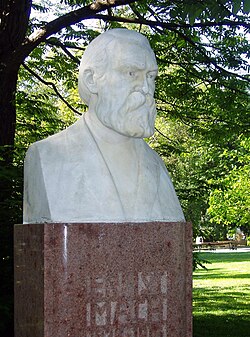
Mach's professional trajectory took him through several major institutions. He served as a professor of mathematics and physics at the University of Graz before spending 28 years at Charles-Ferdinand University in Prague. He eventually returned to the University of Vienna, where he held a unique chair for the history and philosophy of the inductive sciences from 1895 to 1901.
Contributions to Physics and Aerodynamics
Mach's most enduring contribution to physics is his study of supersonic motion. He was the first to provide a visual record of a bow shockwave—the compressed wave of air that forms in front of an object moving faster than sound. In 1887, he captured a historic shadowgraph of a bullet fired from a Werndl carbine, proving the existence of these waves.
![Ernst Mach's historic 1887 photograph (shadowgraph) of a bow shockwave around a supersonic bullet[11] fired from a Werndl carbine.[12]](/images/91/96/91963344f94c205d5a2fe7c43c6431c97b09833daa7539cfccb87b9ca72a77de.jpg)
This work led to the establishment of the Mach number, a fundamental unit in fluid mechanics used to describe the speed of a flow relative to the speed of sound. Beyond aerodynamics, Mach's critique of Isaac Newton's theories of absolute space and time suggested that motion should only be described relative to other bodies, a concept known as Machian physics.
Philosophy of Science and Empirio-criticism
As a philosopher, Mach championed empirio-criticism, a radically empiricist view developed alongside Richard Avenarius. This philosophy posits that the only things we can truly know are our sensations. According to Mach, the physical world is essentially a complex of these sensations.
This phenomenalistic approach had a profound impact on subsequent thinkers. Friedrich Hayek noted that Mach's ideas dominated philosophical discussions at the University of Vienna in the early 20th century. Furthermore, the Vienna Circle, a group of philosophers and scientists, viewed Mach as a major precursor to logical positivism, which asserts that only statements verifiable through direct observation or logical proof are meaningful.
Physiology and the Psychology of Perception
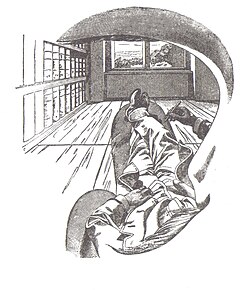
Mach's curiosity extended to how humans perceive the world. In 1873, he and Josef Breuer independently discovered that the sense of balance is managed by the brain receiving information from fluid movement within the semicircular canals of the inner ear.
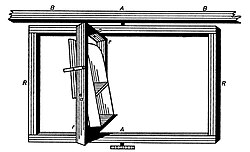
To investigate the experience of motion, Mach devised a specialized spinning chair. This experimental setup allowed him to test the physiological basis of balance and further informed his philosophical rejection of absolute motion.
In the realm of psychology, he identified Mach bands, an optical illusion where the human eye perceives exaggerated contrast at the edges of slightly differing shades of gray. This discovery highlighted the brain's tendency to enhance edges to better define shapes.

Summary of Ernst Mach's Legacy
| Field | Key Contribution | Impact/Eponym |
|---|---|---|
| Physics | Study of supersonic shock waves | Mach number |
| Philosophy | Empirio-criticism & Phenomenalism | Influence on Logical Positivism |
| Physiology | Mechanism of the sense of balance | Inner ear fluid dynamics |
| Psychology | Visual edge contrast perception | Mach bands |
Frequently Asked Questions
What is the Mach number?
The Mach number is a dimensionless quantity representing the ratio of the speed of an object or flow to the speed of sound in the surrounding medium. It is named after Ernst Mach to honor his pioneering work on shock waves.
How did Ernst Mach influence Albert Einstein?
Mach criticized Newton's concept of absolute space and time, arguing that motion can only be measured relative to other matter. This perspective foreshadowed and influenced Einstein's development of the theory of relativity.
What are Mach bands?
Mach bands are an optical illusion where the human visual system perceives an exaggerated contrast or a "glow" at the boundary between two different shades of gray, making the edge appear sharper than it actually is.
What is empirio-criticism?
Empirio-criticism is a positivist philosophy developed by Mach and Richard Avenarius. It suggests that all knowledge is derived from sensations and that science should avoid metaphysical constructs that cannot be directly observed.
What was Mach's contribution to the study of balance?
Mach discovered that the perception of head imbalance is caused by the movement of fluid within the semicircular canals of the inner ear, which sends critical spatial information to the brain.