Ernst Haeckel: The Artist and Naturalist of Evolutionary Theory
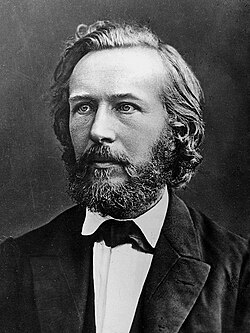
Ernst Heinrich Philipp August Haeckel was a towering figure in 19th-century science, blending the precision of zoology with the vision of an artist. A German naturalist, philosopher, and physician, Haeckel is remembered as one of the most influential popularizers of Charles Darwin's theories in Germany. His work spanned multiple disciplines, from marine biology to philosophy, and he is credited with coining fundamental biological terms that remain in use today.
Beyond his academic contributions, Haeckel was a prolific illustrator whose detailed depictions of nature bridged the gap between scientific documentation and fine art, eventually influencing the Art Nouveau movement.
Key Facts
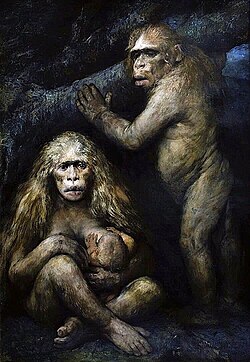
- Scientific Contributions: Coined the terms ecology, phylum, phylogeny, ontogeny, and Protista.
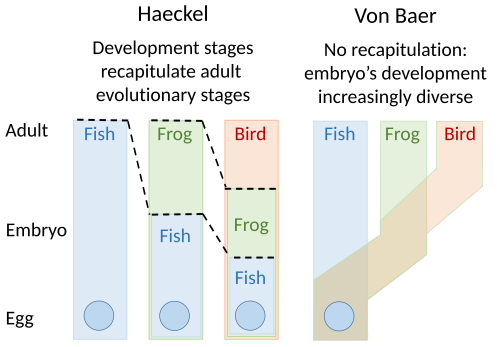
- Major Theory: Developed the recapitulation theory (the Biogenetic Law), which suggested that an embryo's development mirrors the evolutionary history of its species.
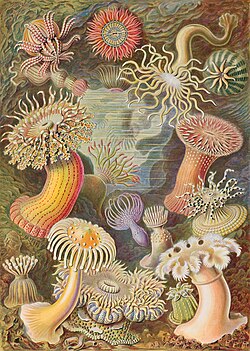
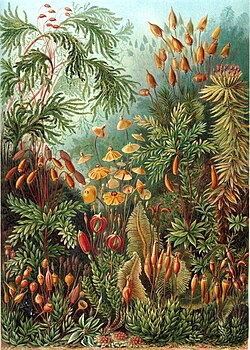
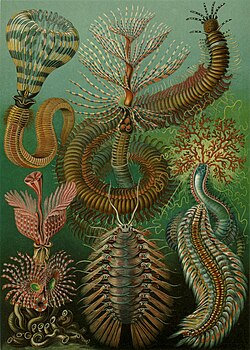
- Artistic Legacy: Published Kunstformen der Natur (Art Forms in Nature), featuring over 100 detailed illustrations of sea creatures.
- Academic Career: Served as a professor of zoology at the University of Jena for 47 years (1862–1909).
- Honors: Recipient of the Linnean Medal (1894) and the Silver Darwin–Wallace Medal (1908).
Early Life and Academic Journey
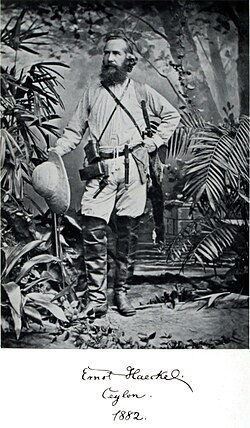
Born on February 16, 1834, in Potsdam, Kingdom of Prussia, Haeckel pursued an extensive education at the Universities of Berlin, Würzburg, and Jena. Under the guidance of Carl Gegenbaur at the University of Jena, he focused on comparative anatomy. By 1861, he earned his habilitation and began a lifelong tenure at the University of Jena, where he would teach for nearly five decades.
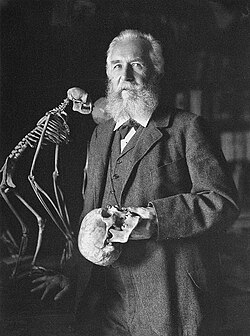
Contributions to Zoology and Marine Biology
Haeckel's early career was marked by an obsession with the diversity of life. Between 1859 and 1866, he conducted extensive research on various phyla, including annelids (segmented worms), poriferans (sponges), and radiolarians. During a voyage to the Mediterranean, he identified and named nearly 700 new species of radiolarians.
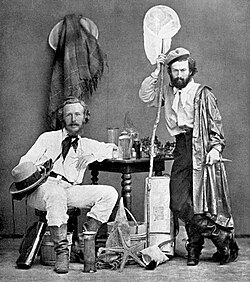
His passion for exploration led him to the Canary Islands (1866–1867), Norway (1869), Croatia (1871), and later to Egypt, Turkey, Greece, and Ceylon. These journeys allowed him to map a genealogical tree relating all known life forms, further cementing his role as a pioneer of natural history.
The Art of Nature
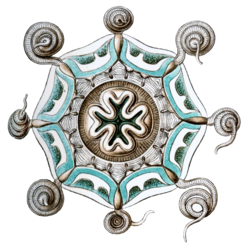
Haeckel believed that nature possessed an inherent geometric beauty. This philosophy culminated in his 1904 masterpiece, Kunstformen der Natur (Art Forms in Nature). The book's intricate, multi-colored plates of medusae and other marine organisms became a source of inspiration for artists and architects worldwide.
The Recapitulation Theory and Controversy
Haeckel is perhaps most famous—and controversial—for his recapitulation theory, often summarized by the phrase "ontogeny recapitulates phylogeny." In this context, ontogeny refers to the biological development of an individual organism, while phylogeny refers to the evolutionary development of the species.
Haeckel claimed that the embryonic stages of an animal repeat the adult stages of its evolutionary ancestors. To support this, he produced drawings of embryos from various species, including humans, dogs, and chickens, suggesting they looked nearly identical in early stages.
![Illustrations of dog and human embryos, looking almost identical at 4 weeks then differing at 6 weeks, shown above a 6-week turtle embryo and 8-day hen embryo, presented by Haeckel in 1868 as convincing proof of evolution. The pictures of the earliest embryonic stages are now considered inaccurate.[55]](/images/e6/ce/e6ce844ff804adf808994bdee2dbbddff722d3e3a0d0bc5346b14944e1db8928.jpg)
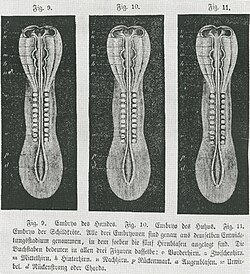
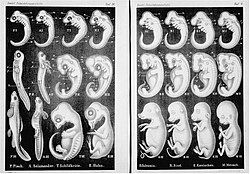
These illustrations became a point of intense scientific debate. Critics argued that Haeckel had falsified the drawings to fit his theory, while later defenders suggested the inaccuracies may have been due to the limited materials available at the time. While the "Biogenetic Law" is now considered disproven, it remained highly influential for decades.
Philosophical Works and Public Influence
Haeckel was not content with biology alone; he sought to answer the "world riddle" (Welträtsel). In his work Die Welträthsel (1895–1899), he explored the intersection of science and philosophy. He was a fierce advocate for the teaching of evolution and wrote Freedom in Science and Teaching to support this cause.
His ability to communicate complex ideas made him a celebrity scientist. His book Natürliche Schöpfungsgeschichte (The History of Creation, 1868) became a bestseller, translated into 25 languages and helping to embed Darwinism into the German cultural consciousness.
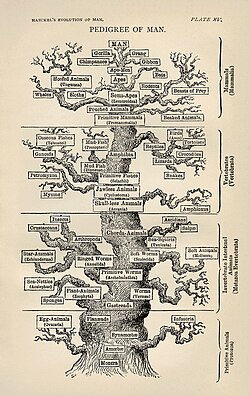
Summary of Haeckel's Life and Legacy
| Category | Details |
|---|---|
| Lifespan | 1834 – 1919 (85 years) |
| Primary Institution | University of Jena |
| Key Terms Coined | Ecology, Phylum, Phylogeny, Ontogeny, Protista |
| Major Publication | Kunstformen der Natur (1904) |
| Scientific Focus | Zoology, Marine Biology, Embryology |
| Notable Awards | Linnean Medal, Darwin–Wallace Medal |
Frequently Asked Questions
What is the "Biogenetic Law"?
The Biogenetic Law is Haeckel's theory that "ontogeny recapitulates phylogeny," meaning the development of an embryo (ontogeny) repeats the evolutionary history of its species (phylogeny).
Did Ernst Haeckel discover ecology?
While he did not "discover" the study of organisms and their environment, he is credited with coining the term "ecology" to describe this field of science.
Why are Haeckel's embryo drawings controversial?
They are controversial because they were used to provide proof for the recapitulation theory, but were later found to be inaccurate. Some historians argue they were intentionally falsified, while others believe they were poorly drawn based on the data available at the time.
How did Haeckel influence the art world?
Through his book Kunstformen der Natur, Haeckel provided highly detailed and aesthetically pleasing illustrations of nature's symmetry and form, which significantly influenced the Art Nouveau movement.
What was Haeckel's relationship with Charles Darwin?
Haeckel was a devoted proponent of Darwin's work. He visited Darwin at Down House in 1866 and spent much of his career popularizing and expanding upon Darwin's theories of evolution within Germany.