Ernesto Sabato: The Physicist Who Became Argentina's Literary Conscience
Ernesto Sabato was a polymath of extraordinary range—a PhD physicist who abandoned the laboratory to become one of the most influential novelists and essayists in Latin American history. Described by El País as the "last classic writer in Argentine literature," Sabato's life was a journey from the rigid structures of science and political ideology to the fluid, often dark explorations of the human psyche.
His work is characterized by a deep engagement with existentialism—a philosophical inquiry into the nature of human existence, freedom, and choice—and a lifelong commitment to human rights in his native Argentina.
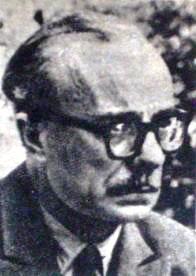
Key Facts
- Full Name: Ernesto Sabato
- Lifespan: June 24, 1911 – April 30, 2011
- Academic Background: PhD in Physics from Universidad Nacional de La Plata
- Major Novels: El Túnel, Sobre héroes y tumbas, and Abaddón el exterminador
- Human Rights Contribution: Presided over the CONADEP commission, resulting in the report Nunca Más
- Top Honors: Miguel de Cervantes Prize, Legion of Honour, and the Jerusalem Prize
Early Life and Intellectual Evolution
Born in Rojas, Buenos Aires Province, Sabato's early intellectual curiosity was sparked by his secondary education at the Colegio Nacional de La Plata under the mentorship of professor Pedro Henríquez Ureña. By 1929, he was studying physics and mathematics, but his youth was also marked by intense political engagement.
In 1933, Sabato served as the Secretario General of the Communist Youth Federation. However, his faith in the movement wavered as he grew disillusioned with Joseph Stalin's regime. This tension culminated in a dramatic escape; while attending a congress in Brussels, fearing he would never return from a planned trip to Moscow, he fled to Paris. It was during this period of exile that he wrote his first (though unpublished) novel, La Fuente Muda.
From Atomic Radiation to the Arts
Sabato's scientific credentials were formidable. After earning his PhD in physics in 1938, he conducted research on atomic radiation at the Curie Institute in Paris. During his time in France, he encountered the surrealist movement—an artistic and literary movement seeking to release the unconscious mind—studying artists like Oscar Domínguez and Roberto Matta Echaurren. This exposure profoundly shaped his later literary style.
Despite a stint at the Massachusetts Institute of Technology (MIT) and teaching quantum mechanics and relativity at the Universidad de La Plata, Sabato suffered an "existential crisis" in 1943. He decided to leave science permanently to dedicate his life to writing and painting.
Literary Career and Masterpieces
Sabato's transition to literature was swift and impactful. In 1945, he published Uno y el Universo, a collection of essays warning against the dehumanization caused by technological societies. However, it was his fiction that brought him global fame.
His first novel, El Túnel (1948), a psychological study narrated in the first person, received immediate acclaim from literary giants Albert Camus and Thomas Mann. His second novel, Sobre héroes y tumbas (1961), is widely regarded as his masterpiece, despite the author's own tendency to nearly destroy his manuscripts.
Summary of Major Literary Works
| Title | Year | Genre | Significance |
|---|---|---|---|
| El Túnel | 1948 | Novel | Existentialist psychological novel; translated into 10+ languages. |
| Sobre héroes y tumbas | 1961 | Novel | Regarded as his literary masterpiece. |
| Abaddón el exterminador | 1974 | Novel | Named best foreign book of 1976 by the French literary industry. |
| Nunca Más | 1984 | Report | Documented human rights violations during the Dirty War. |
| Antes del fin | 1998 | Autobiography | Reflections on globalization, rationalism, and personal loss. |
Political Activism and the Fight for Human Rights
Sabato's relationship with Argentine politics was complex. He was a vocal critic of Peronism, though he maintained a paradoxical admiration for Eva Perón, whom he called a "true revolutionary." During the military dictatorship of 1976–1983, Sabato navigated a dangerous landscape, occasionally challenging censorship and demanding information on the "disappeared."
His most significant political contribution came after the return to democracy. At the request of President Raúl Alfonsín, Sabato presided over the National Commission on the Disappearance of Persons (CONADEP). This commission investigated the forced disappearances, torture, and killings of the "Dirty War." The resulting report, Nunca Más (Never Again), was presented in 1984 and became a foundational document for the Trial of the Juntas, ensuring that the atrocities of the regime were documented for history.
Frequently Asked Questions
Why did Ernesto Sabato leave physics for literature?
Sabato experienced an "existential crisis" in 1943. Despite his success in atomic radiation research and teaching quantum mechanics, he felt a calling toward the arts and decided to become a full-time writer and painter.
What is the significance of the report 'Nunca Más'?
Nunca Más was the result of the CONADEP commission chaired by Sabato. It documented the systemic human rights violations, including torture and forced disappearances, committed during Argentina's military dictatorship from 1976 to 1983.
Which of Sabato's novels is considered his masterpiece?
While El Túnel brought him early international fame and praise from Albert Camus, Sobre héroes y tumbas is generally regarded as his greatest literary achievement.
What awards did Ernesto Sabato receive?
He won several of the most prestigious prizes in Hispanic literature, including the Miguel de Cervantes Prize from Spain, the Legion of Honour from France, the Jerusalem Prize from Israel, and the Prix du Meilleur Livre Étranger.
How did surrealism influence his writing?
During his research fellowship in Paris, Sabato studied the works of surrealist artists. This movement's focus on the unconscious and the irrational deeply influenced the psychological depth and atmospheric quality of his novels.