Erasmus Darwin: The Polymath of the Midlands Enlightenment
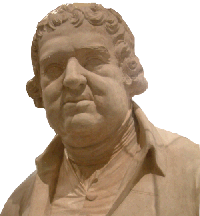
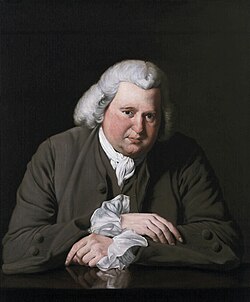
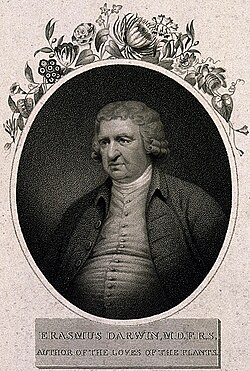
Erasmus Robert Darwin (1731–1802) was a towering figure of the Midlands Enlightenment, a period of intense intellectual and industrial growth in central England. A man of vast curiosity and ambition, Darwin was not merely a physician, but a natural philosopher, physiologist, inventor, poet, and abolitionist. His wide-ranging interests and speculative theories on the origin of life laid a conceptual foundation that would later influence his grandson, the famed naturalist Charles Darwin.
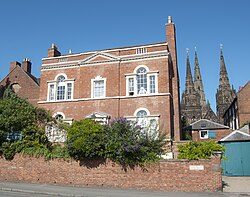
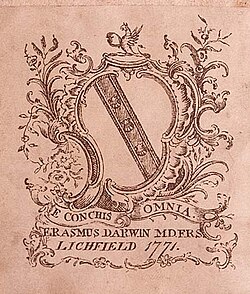
Born in Elston Hall, Nottinghamshire, as the youngest of seven children to Robert Darwin and Elizabeth Hill, Erasmus was educated at St John's College, Cambridge, and the University of Edinburgh Medical School. His early career saw a modest start in Nottingham, but his reputation soared after he moved to Lichfield in 1757, where he successfully treated a young fisherman previously thought beyond help. This victory established him as a premier physician in the Midlands for over five decades.
Key Facts
- Profession: Highly successful physician and Fellow of the Royal Society (elected 1761).
- Scientific Contribution: Authored Zoonomia, which foreshadowed modern evolutionary theory.
- Inventions: Developed the Ackermann linkage for carriage steering, still used in modern cars.
- Intellectual Circle: Core member of the Lunar Society, collaborating with James Watt and Josiah Wedgwood.
- Legacy: Grandfather of Charles Darwin; his work on botany and organic life influenced later biological science.
Scientific Contributions and Writings
Botany and the Lichfield Society
Darwin's passion for plants led him to form a botanical society in Lichfield. Alongside Sir Brooke Boothby and John Jackson, he spent seven years translating the works of Swedish botanist Carl Linnaeus from Latin into English. This effort resulted in A System of Vegetables (1783–1785) and The Families of Plants (1787), publications that introduced many English plant names still in use today.
Zoonomia and Early Evolutionary Thought
His most significant scientific achievement, Zoonomia (1794–1796), detailed a system of pathology and explored the concept of "Generation." In this work, Darwin speculated that all organic life originated from a single "living filament," anticipating the views of Jean-Baptiste Lamarck and the eventual theory of evolution. He based these theories on associationism, a psychological theory proposed by David Hartley.
Poetry as a Scientific Tool
Darwin often blended science with art. In his popular poem The Botanic Garden (originally The Loves of the Plants, 1789), he used anthropomorphism—attributing human characteristics to non-human entities—to describe the sexual organs of plants. Within the footnotes of this work, he provided early glimpses of his evolutionary theories by discussing vestigial organs, such as male nipples and the wings of flies.
The Lunar Society and Social Activism
Darwin was a central figure in the Lunar Society (1765–1813), an informal group of scientists, inventors, and industrialists who met during the full moon. His circle included pioneers such as James Watt (steam engine improver), Josiah Wedgwood (potter), and Matthew Boulton. Together, they pushed the boundaries of chemistry, geology, and engineering.
Beyond science, Darwin was a staunch abolitionist. He used his literary works, including The Botanic Garden and Phytologia, to attack the slave trade and advocate for human rights.
Inventions and Cosmological Speculation
Darwin's inventive mind produced practical solutions for his time. In 1759, he created a steering mechanism for carriages known as the Ackermann linkage, a design that would be adopted by the automotive industry 130 years later. He also designed a carriage that would not tip over in 1766.
His curiosity extended to the cosmos. In The Economy of Vegetation (1791), Darwin speculated on events resembling the modern concepts of the Big Bang and Big Crunch, suggesting a cyclical nature to the universe long before these theories were formalized in the 19th and 20th centuries.
Personal Life and Legacy
Darwin's personal life was complex. He married Mary Howard in 1757, with whom he had five children (including Robert Waring Darwin, the father of the naturalist Charles Darwin). Following Mary's death in 1770, he had two daughters with his governess, Mary Parker. He later married Elizabeth Pole, the daughter of the 2nd Earl of Portmore.
Darwin's influence extended even into fiction; Mary Shelley noted that her husband Percy Bysshe Shelley discussed "experiments of Dr. Darwin" when conceptualizing the creation of life in the novel Frankenstein.
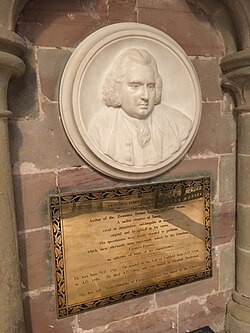
Erasmus Darwin died suddenly on April 18, 1802, at Breadsall Priory. He is buried at All Saints Church in Breadsall.
| Publication | Year | Primary Focus |
|---|---|---|
| A System of Vegetables | 1783–1785 | Translation of Linnaeus' botanical works |
| The Botanic Garden | 1791 | Botanical poetry and evolutionary hints |
| Zoonomia | 1794–1796 | Pathology and the laws of organic life |
| Phytologia | 1800 | Philosophy of agriculture and gardening |
| The Temple of Nature | 1803 | The origin of society (published posthumously) |
Frequently Asked Questions
How is Erasmus Darwin related to Charles Darwin?
Erasmus Darwin was the grandfather of Charles Darwin. He was the father of Robert Waring Darwin, who in turn was the father of the naturalist Charles Darwin.
What was the Ackermann linkage?
The Ackermann linkage is a steering mechanism for carriages invented by Erasmus Darwin in 1759. It allows the wheels to turn at different angles to prevent scrubbing, a principle still used in modern automobile steering.
What was the Lunar Society?
The Lunar Society was an intellectual circle of scientists and industrialists in the English Midlands who met during the full moon to discuss science, technology, and philosophy.
Did Erasmus Darwin believe in evolution?
Yes, though he did not use the modern term. In Zoonomia and The Botanic Garden, he proposed that all life evolved from a single living filament and discussed the role of vestigial organs.
What was Darwin's contribution to botany?
He translated Carl Linnaeus' works into English and coined many of the English plant names that are still used today through his publications with the botanical society at Lichfield.