Ella Fitzgerald and Louis Armstrong: A Legendary Jazz Partnership
The musical union of Ella Fitzgerald and Louis Armstrong stands as one of the most celebrated collaborations in the history of 20th-century popular music. Both icons, deeply rooted in the traditions of big band, swing, and jazz, brought distinct styles that complemented each other perfectly. Their partnership resulted in three landmark official releases that achieved both critical acclaim and commercial success, cementing their status as titans of the genre.
Key Facts
- Official Albums: The duo released three primary albums: Ella and Louis (1956), Ella and Louis Again (1957), and Porgy and Bess (1959).
- Key Producer: Norman Granz of Verve Records masterminded the pairing and the musical direction.
- Musical Contrast: The collaborations are praised for the contrast between Fitzgerald's pure, melodic tone and Armstrong's coarse, raspy vocals.
- Accolades: Both Ella and Louis and Porgy and Bess have been inducted into the Grammy Hall of Fame.
- Backing Ensemble: The Oscar Peterson Quartet provided the instrumental foundation for their primary studio work.
The Artists Behind the Music
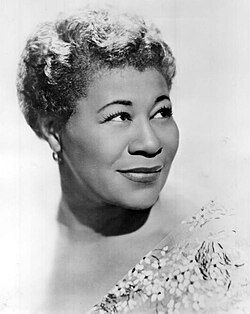
Ella Fitzgerald: The First Lady of Song
Known as the "Queen of Jazz," Ella Fitzgerald (1917–1996) was revered for her impeccable diction, purity of tone, and precise vocal intonation. She was particularly famous for her scat singing—a vocal improvisation technique where the singer uses nonsense syllables to mimic the sound of a musical instrument. By the 1950s, she was widely regarded as one of the premier female vocalists in the world.
Louis Armstrong: The Elder Statesman of Jazz
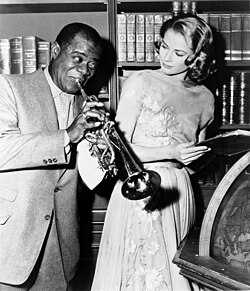
Louis Armstrong (1901–1971), affectionately known as "Pops" or "Satchmo," was a pivotal trumpeter, singer, and composer. His influence shifted the trajectory of jazz by moving the focus from collective improvisation to individual solo performances. Spanning five decades, his career bridged multiple eras of American culture, earning him a reputation as a foundational figure in popular music.
The Verve Collaborations
The idea to pair these two legends came from Norman Granz, the founder of Verve Records. Granz encouraged Armstrong to move away from his traditional jazz group and embrace a more modern sound, utilizing the talents of pianist Oscar Peterson and the compositions of greats like Cole Porter and Irving Berlin. To ensure musical harmony, Fitzgerald allowed Armstrong to choose the keys for their repertoire.
Ella and Louis (1956)
Recorded in August 1956, this debut studio album featured the Oscar Peterson Quartet, with Oscar Peterson on piano, Ray Brown on bass, Herb Ellis on guitar, and Buddy Rich on drums. The album consists of vocal duets, including Gershwin classics such as "A Foggy Day" and "They Can't Take That Away from Me." It was later inducted into the Grammy Hall of Fame in 2016.
Ella and Louis Again (1957)
The follow-up album contains nineteen songs. While primarily focused on duets, it includes seven tracks where Fitzgerald or Armstrong perform solo. Notable standards include Irving Berlin's "I've Got My Love to Keep Me Warm" and Vernon Duke's "Autumn in New York." The rhythm section remained consistent with the first album, though Louie Bellson replaced Buddy Rich on drums.
Porgy and Bess (1959)
Released in April 1959, this album is based on the 1935 operatic stage drama by George and Ira Gershwin. This project further showcased the duo's versatility and was inducted into the Grammy Hall of Fame in 2001.
Live Performances and Later Compilations
Beyond the studio, Fitzgerald and Armstrong took their chemistry to the stage, performing a series of popular concerts at the Hollywood Bowl following the success of their first album. While not released at the time, two live tracks from these 1956 performances were eventually issued as bonus material in the 1990s.
In later years, several compilations were released to preserve their work, including The Complete Ella Fitzgerald & Louis Armstrong on Verve (1997) and The Complete Studio Recorded Duets (2008), the latter of which features a curated selection of thirty-five tracks.
Summary of Major Releases
| Album Title | Release Year | Key Features | Grammy Hall of Fame |
|---|---|---|---|
| Ella and Louis | 1956 | Debut duets; Oscar Peterson Quartet | Yes (2016) |
| Ella and Louis Again | 1957 | 19 songs; includes solo performances | No |
| Porgy and Bess | 1959 | Based on Gershwin's opera | Yes (2001) |
Critical Reception
Critics have consistently lauded the duo as a "match made in heaven." David Rickert of All About Jazz highlighted the beautiful contrast between Fitzgerald's "sweetly melodic voice" and Armstrong's "coarse rasp." Similarly, Scott Yanow of AllMusic described them as a "charming team," while Alex Henderson praised the "solid rhythm section" led by Oscar Peterson.
Frequently Asked Questions
Who was responsible for pairing Ella Fitzgerald and Louis Armstrong?
Norman Granz, the founder of Verve Records, was the producer who conceived the idea of pairing the two artists for a series of duet albums.
What is scat singing?
Scat singing is a vocal improvisation technique used by Ella Fitzgerald where the singer uses nonsense syllables to imitate the sound of a musical instrument.
Which musicians provided the backing for the first two albums?
The albums featured the Oscar Peterson Quartet, consisting of Oscar Peterson (piano), Ray Brown (bass), and Herb Ellis (guitar). Buddy Rich played drums on the first album, and Louie Bellson played drums on the second.
How many official studio albums did the duo record together?
They produced three official releases: Ella and Louis, Ella and Louis Again, and Porgy and Bess.
Did Ella Fitzgerald and Louis Armstrong perform live together?
Yes, they performed a series of concerts at the Hollywood Bowl in 1956, which were highly popular with audiences.