Electronic Dance Music: History, Evolution, and Global Impact
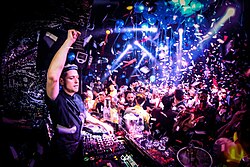
Electronic Dance Music (EDM), often referred to as club or dance music, encompasses a vast array of percussive electronic genres designed specifically for nightclubs, raves, and music festivals. At its core, EDM is built for the dance floor, typically delivered by DJs who create a DJ mix—a seamless sequence of tracks where one recording segueues into the next to maintain a continuous flow of energy.
While many associate EDM with modern festivals, the movement has evolved over decades. Producers often transition from the studio to the stage, performing what is known as a live PA (public address) set. From its underground origins to its current status as a global commercial powerhouse, EDM has branched into numerous subgenres that define the sound of modern nightlife.
Key Facts
- Core Purpose: Originally created for playback in nightclubs, raves, and festivals.
- Primary Delivery: Performed by DJs via seamless mixes or by producers in live PA settings.
- Global Reach: Achieved early mainstream success in Europe and Japan before exploding in the US and Australia.
- Umbrella Term: "EDM" serves as a broad category for genres like house, techno, trance, and dance-pop.
- Industry Influence: The term "EDM" was heavily promoted by the American music industry in the early 2010s to rebrand rave culture.
The Evolution of the Sound
Foundations and Precursors
The roots of EDM are found in a blend of early electronic experimentation and rhythmic genres. Dub, hip-hop, disco, and synth-pop provided the structural and sonic blueprints. By the 1980s, the emergence of specialized electronic instruments allowed for more precise control over rhythm and texture.
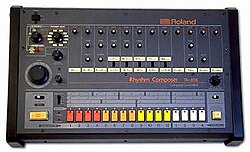
One of the most influential tools in this era was the Roland TR-808, a drum machine that provided the synthesized programmed beats essential to the electro sound.
The Rise of House, Techno, and Acid
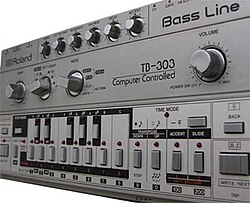
The 1980s saw the birth of pioneer genres such as Chicago house and Detroit techno. These styles were influential globally, though they faced significant resistance from the US mainstream media and record industry until the 1990s. A pivotal development was the rise of acid house, characterized by the squelching bass lines produced by the Roland TB-303 synthesizer.
Mainstream Expansion and Rave Culture
Between the late 1980s and early 1990s, EDM gained massive popularity in Europe and Japan, fueled by pirate radio, party crews, and underground festivals. In the United States, rave culture remained regional, centered primarily in New York City, Florida, California, and the Midwest. During this time, governments often enacted restrictive policies to halt the spread of rave culture due to perceived associations with drug use.
Modern Production and Commercialization
From Bedrooms to Main Stages
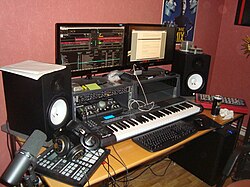
The digital revolution transformed how dance music is made. Bedroom production allows artists to create professional-grade tracks using a computer, audio interface, and MIDI instruments. In some cases, the industry utilizes ghost production, where tracks are written by uncredited producers for a known artist.
The US Rebrand and Global Festivals
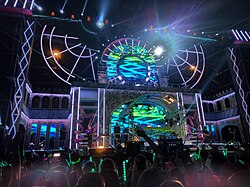
In the early 2010s, the American music industry pushed the initialism "EDM" to commercialize and rebrand the existing rave scene. This led to the rise of massive festivals featuring dramatic lighting and enormous crowds, often exceeding 100,000 attendees.
![An EDM festival in 2013 in Plainfeld, Austria with over 100,000 attendees,[204] exhibiting the large crowds and dramatic lighting common at such events since the early 2000s.[3]](/images/0b/b6/0bb627cae253f00780f19fabd5aa92576dca6f77e0bbffc074722a078a5ba255.jpg)
Events like the Spectrum Dance Music Festival exemplify the scale of this modern era, where the music has moved from dark warehouses to bright, corporate-sponsored arenas.
Industry Recognition and Challenges
Awards and Accolades
The success of the genre is reflected in its presence at major award ceremonies. From the Grammys to the BRIT Awards, electronic music has moved from the fringes to the center of the music industry.
| Organization | Award/Category | Years Active | Notes |
|---|---|---|---|
| Grammy Awards | Best Dance/Electronic Recording | 1998–present | Includes Album category since 2005 |
| DJ Mag | Top 100 DJs poll | 1991–present | Industry standard popularity poll |
| BRIT Awards | British Dance Act | 1994–present | Hiatus 2005–2021 |
| American Music Awards | Favorite Dance/Electronic Artist | 2012–present | Mainstream US recognition |
| WMC (IDMA) | International Dance Music Awards | 1998–present | Associated with Winter Music Conference |
Social and Legal Issues
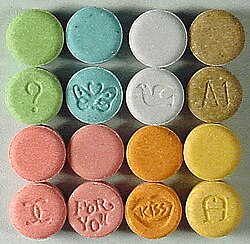
Despite its success, EDM has faced ongoing challenges. The association with recreational drug use, specifically ecstasy, has led to legal crackdowns and safety concerns at large-scale events.
Frequently Asked Questions
What is the difference between a DJ mix and a live PA?
A DJ mix involves a DJ seamlessly transitioning between pre-recorded tracks to keep the music flowing. A live PA (public address) set occurs when a producer performs their own music live, often incorporating real-time synthesis or triggering elements of their tracks.
What does the term "EDM" actually cover?
EDM is an umbrella term that includes a wide variety of genres, including house, techno, trance, dance-pop, and electro, as well as more modern styles like dubstep, riddim, and EDM trap.
How did the Roland TR-808 and TB-303 influence the genre?
The TR-808 provided the foundational synthesized drum beats for electro and early dance music, while the TB-303 created the distinct, resonant bass lines that defined the acid house movement.
Why was EDM slower to gain mainstream popularity in the US?
While popular in Europe and Japan, EDM faced hostility from the US record industry and mainstream media until the 1990s. Additionally, government policies aimed at stopping rave culture due to drug associations hindered its growth.
What is ghost production?
Ghost production is a practice where a producer is hired to create a track for another artist, but the hired producer remains uncredited, allowing the performing artist to take full credit for the work.