Electrolux: A Century of Innovation in Home Appliances
From its humble beginnings in Stockholm to its current status as a global leader in home technology, Electrolux has spent over a century redefining how we maintain our living spaces. Founded on the principles of engineering excellence and strategic growth, the company has evolved from a niche manufacturer of vacuum cleaner motors into a diversified giant producing everything from major kitchen appliances to advanced service robots.
Key Facts
- Founded: January 19, 1910, in Stockholm, Sweden.
- Founders: Engineer Sven Carlstedt and salesman Axel Wenner-Gren.
- Global Reach: Operates worldwide with approximately 41,000 employees (as of 2024).
- Core Portfolio: Major and small home appliances, and service robots.
- Key Subsidiaries: AEG, Frigidaire, Westinghouse, and Kelvinator.
- 2022 Revenue: 134.880 billion kr.
The Early Years: Elektromekaniska and Lux (1910–1919)
The story of Electrolux began with Elektromekaniska, a company established by engineer Sven Carlstedt. Carlstedt, alongside Eberhardt Seger, focused on the production of universal motors—electric motors capable of running on either AC or DC power—specifically designed for vacuum cleaners.
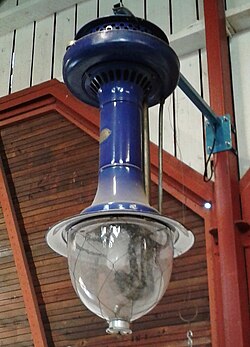
A pivotal shift occurred in 1912 when Carlstedt partnered with Axel Wenner-Gren. Wenner-Gren suggested a collaboration with Lux, a firm founded in 1901 by Carl G. Lindblom that specialized in kerosene lamps for outdoor use.
Expansion and Diversification (1919–1957)
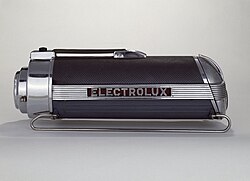
By 1919, the company transitioned into Elektrolux AB. The following decades were marked by aggressive financial growth and product diversification. The company went public on the London Stock Exchange in 1928 and the Stockholm Stock Exchange in 1930.
Electrolux quickly expanded its catalog beyond vacuum cleaners. After acquiring Arctic in 1923, the company introduced absorption refrigerators (cooling systems that do not require a mechanical compressor). This paved the way for other essential household goods, including washing machines in 1951 and dishwashers in 1959.
Global Growth and Strategic M&A (1957–Present)
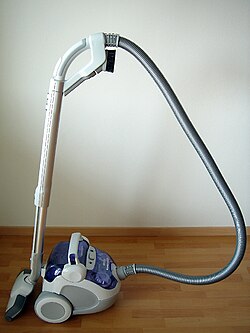
The 1960s ushered in a wave of mergers and acquisitions (M&A). Electrolux acquired several European brands, including ElektroHelios (Norway), Atlas (Denmark), and Slev (Finland). While the company briefly exited the American market in 1968, it returned in 1974 by acquiring Eureka-Williams, a venerable name in the vacuum industry.

Throughout the late 20th century, the company focused on centralizing administration and achieving economies of scale. This era saw the integration of major brands like Zanussi and AEG, cementing its position as a "white-goods" giant—a term referring to large household appliances such as refrigerators and stoves.
Regional Focus: The Norwegian Operations
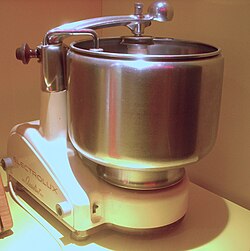
Norway played a significant role in Electrolux's industrial history. A subsidiary was established in 1920, initially focusing on sales and service. By the 1930s and 50s, local production of vacuum cleaners in Oslo helped bypass postwar supply shortages and import restrictions.
A notable industrial milestone was the cooker factory at Eidsvoll. Built at a former paper mill, this facility became a powerhouse of Norwegian manufacturing. By 1977, it had produced 500,000 cookers, reaching the one-million mark by 1984. Despite its success and modernization, the factory was eventually wound down in 2002 as production shifted to more cost-effective regions in Eastern Europe.
Brand Portfolio and Market Presence
Electrolux manages a vast array of brands tailored to different markets and consumer needs across the globe.
| Region | Notable Brands |
|---|---|
| Americas | Frigidaire, Gibson, Mademsa, Somela |
| Europe | AEG, Arthur Martin, Zanussi, Faure, Voss |
| Oceania | Kelvinator, Volta |
| Middle East | Olympic Group |
| Global | Electrolux Professional, Dito, Molteni |
Frequently Asked Questions
Who founded Electrolux?
The company was founded on January 19, 1910, by engineer Sven Carlstedt, who later collaborated with salesman Axel Wenner-Gren to merge interests with the Lux kerosene lamp company.
What are "white goods"?
White goods are large household electrical appliances, such as refrigerators, washing machines, and stoves, which Electrolux specializes in producing.
Which major brands are owned by Electrolux?
Some of the most prominent brands under the Electrolux umbrella include AEG, Frigidaire, Zanussi, and Westinghouse.
When did Electrolux enter the refrigerator market?
Electrolux entered the refrigeration market in 1923 following the acquisition of the company Arctic, which allowed them to introduce absorption refrigerators.
Does Electrolux still operate in the United States?
Yes. Although they exited the US market in 1968, they returned in 1974 through the acquisition of Eureka-Williams.