El Alto International Airport: The World's Highest International Gateway
Perched high in the Andes, El Alto International Airport (IATA: LPB, ICAO: SLLP) serves as the primary aerial gateway to La Paz, Bolivia. Located in the city of El Alto, approximately 13 kilometers (8 mi) west of the capital, this facility is renowned globally for its extreme elevation. At 4,061.5 meters (13,325 ft) above mean sea level, it holds the title of the highest international airport in the world.
Due to Bolivia's rugged topography—which includes high plateaus, deep valleys, and tropical forests—aviation is more than a convenience; it is a vital lifeline for connecting isolated communities across the country's varied terrain.

Key Facts
- Elevation: 4,061.5 meters (13,325 ft), making it the highest international airport globally.
- Location: El Alto, Bolivia, serving the city of La Paz.
- Operator: Navegación Aérea y Aeropuertos Bolivianos (NAABOL).
- Primary Hub: Focus city for the state-owned airline Boliviana de Aviación.
- Runways: One primary asphalt runway (4,000m) and one parallel grass runway (2,050m).
- Passenger Volume: 2,607,457 passengers in 2023.
History and Evolution
While Bolivian air transport began as early as 1916 with the formation of the Military School of Aviation in La Paz, the formal planning for a dedicated airport began in 1929. The facility was officially inaugurated in its modernized form on June 18, 1965, featuring a lengthened runway and a new passenger terminal.

The airport underwent further reconstruction and modernization in 1974. Interestingly, until 1999, the airport was officially named John F. Kennedy (JFK), though this name was rarely used by the public. Following Law 1944 under the government of Hugo Banzer Suárez, it was officially renamed El Alto International Airport.
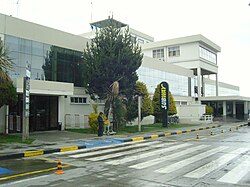
Modernization and Management
In 2006, the operator SABSA (Servicios Aeroportuarios Bolivianos S.A.) invested approximately 2.3 million dollars to upgrade the main terminal. These improvements focused on the check-in areas, baggage claim, and the corridors leading to air bridges, as well as the international area and administrative offices.

Management of the airport has shifted over the decades. After being managed by TBI plc and later the Spanish conglomerate Abertis, the Government of Bolivia nationalized SABSA in February 2013. In March 2022, SABSA was replaced by the current government agency, Navegación Aérea y Aeropuertos Bolivianos (NAABOL).
Technical Characteristics and Operations
Operating an airport at such a high altitude presents unique challenges. The thin air significantly impacts aircraft performance, meaning most commercial wide-body aircraft, such as the Boeing 747 and Airbus A330, cannot take off at full load. Consequently, much of Bolivia's heavy international traffic is routed through Viru Viru International Airport in Santa Cruz de la Sierra, which sits at a much lower elevation.
Despite these limitations, the airport is well-equipped with VOR/DME and DVOR/DME navigation systems, along with ILS CAT I approach systems to ensure safety.

A Global Hub for Flight Testing
The extreme altitude makes El Alto an ideal laboratory for aircraft manufacturers. Companies such as Airbus, Boeing, and Bombardier utilize the airport to conduct high-altitude takeoff and landing certification tests. Notable aircraft that have performed tests here include the Boeing 787 Dreamliner, the Airbus A350 XWB, and the Airbus A330neo.
Airport Infrastructure and Services
The terminal is designed to accommodate both domestic and international travelers, featuring a variety of restaurants, cafes, bookstores, and shops selling traditional Bolivian handicrafts and duty-free goods.
| Feature | Details |
|---|---|
| IATA / ICAO Codes | LPB / SLLP |
| Elevation (AMSL) | 4,061.5 m (13,325 ft) |
| Main Runway (10R/28L) | 4,000 m (13,123 ft) - Asphalt |
| Secondary Runway (10L/28R) | 2,050 m (6,725 ft) - Grass |
| Average Temperature | 6 °C (43 °F) |
| 2023 Passenger Count | 2,607,457 |
Airlines and Destinations
The airport serves as a critical node for regional and international connectivity. Boliviana de Aviación maintains a strong presence, connecting El Alto to domestic cities like Sucre, Tarija, and Uyuni, as well as international destinations including Lima and Santiago de Chile. Other operators include Avianca, LATAM, and EcoJet.
Frequently Asked Questions
Why can't some large planes fly out of El Alto at full capacity?
Because of the high altitude, the air is thinner, which reduces the lift generated by wings and the efficiency of engines. This prevents wide-body aircraft like the Boeing 747 from taking off with a full load of passengers and cargo.
Who currently operates the airport?
The airport is operated by the Bolivian government agency Navegación Aérea y Aeropuertos Bolivianos (NAABOL), which took over from SABSA in March 2022.
What makes El Alto useful for aircraft manufacturers?
Its extreme elevation provides a unique environment for testing high-altitude takeoff and landing performance, which is essential for the certification of new aircraft models like the Airbus A350 XWB.
Is El Alto the only airport serving La Paz?
Yes, El Alto International Airport is the primary airport serving the city of La Paz, located approximately 13 kilometers to the west.