Edward Lear: The Master of Literary Nonsense and Naturalist Art
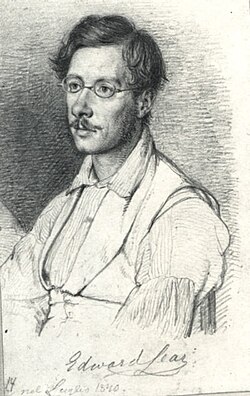
Edward Lear was a true polymath of the 19th century. While modern audiences primarily remember him as the whimsical creator of literary nonsense—a genre of writing that uses illogical situations and playful language—he was equally accomplished as a professional artist, musician, and naturalist. From the meticulous rendering of exotic birds to the sweeping landscapes of the Mediterranean, Lear's life was a blend of scientific precision and imaginative chaos.
Key Facts
- Born: May 12, 1812, in Holloway, Middlesex, England.
- Died: January 29, 1888, in Sanremo, Italy.
- Primary Legacy: Popularized the limerick, though he never used the term himself.
- Artistic Specialization: A pioneer in ornithological drawing, sketching birds from life rather than preserved specimens.
- Notable Works: The Book of Nonsense and the poem "The Owl and the Pussy-Cat".
- Musical Contribution: Composed the only musical settings of Alfred Tennyson's poetry that the poet himself approved.
Early Life and Family Struggles
Born into a middle-class family, Lear was the penultimate of 21 children. His early life was marked by financial instability after his father, Jeremiah Lear, a stockbroker, defaulted during the economic upheaval following the Napoleonic Wars. This forced Edward and his eldest sister, Ann, to leave their family home, Bowmans Lodge, when he was only four years old.
Ann, who was 21 years his senior, became his primary caregiver and maternal figure, supporting him until her death when Lear was nearly 50. This early independence pushed Lear toward professional art at a young age; by 16, he was already drawing to earn a living.
A Pioneer of Ornithological Art
Lear established himself as a serious ornithological draughtsman (a specialist in drawing birds). He was employed by the Zoological Society and later by the Earl of Derby at Knowsley Hall between 1832 and 1836. Lear broke new ground by drawing birds from life, a departure from the common practice of using dead skins.
His first major publication, Illustrations of the Family of Psittacidae, or Parrots (1830), showcased his skill. His influence extended to other artists, including Elizabeth Gould, and his work was compared to that of the great naturalist John James Audubon. In recognition of his contributions, the macaw species Anodorhynchus leari (Lear's macaw) was named in his honor.
Global Travels and Landscape Painting
Lear was a prolific traveler, venturing through Greece, Egypt, Albania, and Vardar Macedonia (then part of the Ottoman Empire) between 1848 and 1849, and later touring India and Ceylon from 1873 to 1875. He developed a distinctive style of colored wash drawings characterized by intense color contrasts and strong sunlight.
Between 1842 and 1847, Lear focused heavily on Italy. He traveled through regions including Lazio, Rome, and Sicily, with a particular fascination for the Abruzzo region. He documented the local folk traditions and ancient monuments, often following old sheep tracks to reach remote areas.
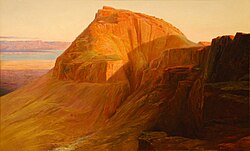
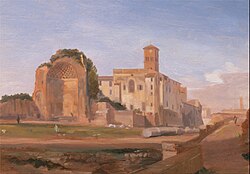
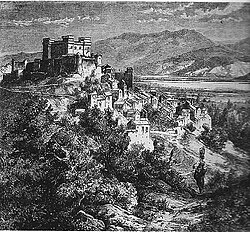
In his later years, Lear spent summers on Monte Generoso, a mountain on the border of Switzerland and Italy, where he produced significant oil paintings, including The Plains of Lombardy from Monte Generoso.
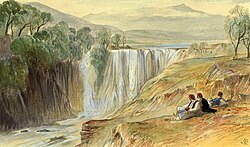
![Shkodra depicted by Edward Lear: Albanians smoking by the river Drin, with the Rozafa Castle and the Lead Mosque in the background, 4 October 1848[32]](/images/f5/65/f565f1c0acbd710f6cc9b10283240cdddba00b52b5e9b404d368b2a911062ea3.jpg)
The World of Nonsense and Music
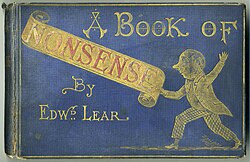
Despite his scientific work, Lear is most famous for his contributions to children's literature. In 1846, he published The Book of Nonsense, which helped popularize the limerick. He later released Nonsense Songs, Stories, Botany and Alphabets (1871), featuring the beloved "The Owl and the Pussy-Cat".
Music was another pillar of Lear's life. A multi-instrumentalist proficient in piano, accordion, flute, and guitar, he composed settings for Victorian poetry. He was particularly close to Alfred Tennyson, creating musical arrangements for Tennyson's poems that received the author's explicit approval. Lear also composed music for his own nonsense songs, though only a few scores, such as "The Pelican Chorus", have survived.
Personal Life and Final Years
Lear's personal life was often solitary. He proposed twice to writer Augusta Bethell, but the relationship did not lead to marriage. He found companionship in his friends and his Albanian Souliote chef, Giorgis, who remained a faithful friend for 39 years. In his final years in San Remo, he was accompanied by his beloved cat, Foss.
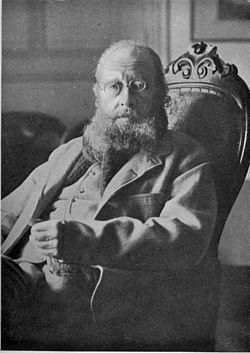
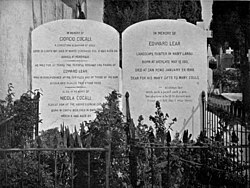
Lear suffered from heart disease starting around 1870 and eventually passed away in his villa in San Remo on January 29, 1888. He is buried alongside his loyal servant and friend, Giorgio Cocali.
Summary of Edward Lear's Contributions
| Field | Key Contribution | Notable Work/Achievement |
|---|---|---|
| Literature | Popularized the limerick and literary nonsense | The Book of Nonsense |
| Natural History | Life-drawing of birds (Ornithology) | Illustrations of the Family of Psittacidae |
| Fine Art | Landscape wash drawings and oil paintings | Illustrated Excursions in Italy |
| Music | Compositions for Romantic poetry | Musical settings of Tennyson's poetry |
Frequently Asked Questions
Did Edward Lear invent the limerick?
No, Lear did not invent the limerick, but he is credited with popularizing the form through his published works. Interestingly, he never actually used the term "limerick" himself.
What was Lear's contribution to science?
Lear was a highly respected ornithological artist. He was one of the first major artists to draw birds from live specimens rather than from preserved skins, contributing significantly to the visual documentation of bird species.
Who was Foss?
Foss was Edward Lear's beloved pet cat who lived with him in San Remo. Foss died in 1887 and was buried with a ceremony in a garden at Villa Tennyson.
Which famous poet did Lear collaborate with musically?
Lear composed musical settings for the poetry of Alfred, Lord Tennyson. These were the only musical interpretations of his work that Tennyson officially approved.
Where is Edward Lear buried?
Edward Lear is buried in San Remo, Italy, alongside his faithful friend and servant, Giorgio Cocali.