Edmund Gosse: A Legacy of Literary Criticism and Translation
Edmund Gosse was a versatile man of letters whose influence spanned poetry, art criticism, and the translation of foreign literature. From his early days as a librarian to his role as a pivotal figure in introducing Scandinavian drama to the English-speaking world, Gosse navigated the highest circles of Victorian and Edwardian intellectual life.
Early Career and Literary Beginnings
Gosse began his professional journey in 1867 as an assistant librarian at the British Museum, a position secured with the help of Charles Kingsley. During this period, he collaborated with John Arthur Blaikie on a book of poetry, which served as his entry point into the Pre-Raphaelite Brotherhood—a group of English painters, poets, and critics associated with the revival of romanticism.
Between 1872 and 1874, Gosse traveled to Denmark and Norway. These trips were transformative, allowing him to visit renowned figures such as Hans Christian Andersen and Frederik Paludan-Müller. His subsequent reviews of Henrik Ibsen and Bjørnstjerne Bjørnson in the Cornhill Magazine established him as a leading authority on Scandinavian literature.
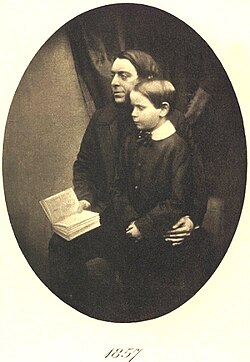
Professional Stability and Academic Pursuits
In 1875, Gosse took a position as a translator at the Board of Trade, a role he maintained until 1904. This stable employment provided the financial security necessary to start a family and pursue his writing. His literary output during this time included his first solo poetry volume, On Viol and Flute (1873), and the critical work Studies in the Literature of Northern Europe (1879).
Despite lacking formal academic qualifications, Gosse's expertise led him to lecture in English literature at Trinity College, Cambridge, from 1884 to 1890. His contributions were recognized by the university with an honorary MA in 1886, and he was formally admitted as a member of Trinity College in 1889.
Contributions to Art and Translation
Gosse's influence extended beyond literature into the realm of visual arts. In the 1880s, he became a prominent art critic specializing in sculpture, writing primarily for the Saturday Review. Inspired by his friendship with sculptor Hamo Thornycroft, Gosse authored a four-part series for The Art Journal in 1894. In this work, he coined the term New Sculpture to describe the renaissance of late-Victorian sculpture.
His commitment to translation was most evident in his work with Henrik Ibsen. Alongside William Archer and George Bernard Shaw, Gosse was instrumental in popularizing Ibsen's plays in Britain. He collaborated with Archer to translate Hedda Gabler and The Master Builder, versions that remained in performance throughout the 20th century. Additionally, in 1902, he translated Alexandre Dumas fils' Lady of the Camellias.
Later Career and Major Works
In 1904, Gosse was appointed librarian of the House of Lords Library, a position he held until his retirement in 1914. During this era, he became a recognized expert on several literary figures, including John Donne, Thomas Gray, William Congreve, Jeremy Taylor, and Coventry Patmore.
Gosse also used his influence to support emerging talent, securing official financial aid for W.B. Yeats in 1910 and James Joyce in 1915, ensuring both writers could sustain their careers.
Father and Son
Gosse's most enduring work is the 1907 autobiography Father and Son. Published anonymously, the book explores his strained relationship with his father, Philip, a member of the Plymouth Brethren (a conservative Christian movement). While praised for its psychological depth and literary quality—and later dramatized for television by Dennis Potter—historians note that the narrative sometimes conflicts with verifiable facts regarding his family's life.
Other notable late-career achievements include serving as the literary editor for the 1911 edition of the Encyclopædia Britannica and editing the Short Histories of the Literatures of the World series starting in 1898.
Key Facts
- Major Work: Wrote the influential autobiography Father and Son (1907).
- Artistic Legacy: Coined the term "New Sculpture" to describe late-Victorian sculpture.
- Literary Influence: Helped popularize Henrik Ibsen's plays in the English-speaking world.
- Philanthropy: Secured financial support for W.B. Yeats (1910) and James Joyce (1915).
- Public Service: Served as librarian for the British Museum (starting 1867) and the House of Lords Library (1904–1914).
| Period/Year | Role or Achievement | Key Contribution |
|---|---|---|
| 1867 | Assistant Librarian, British Museum | Early career start in curation |
| 1875–1904 | Translator, Board of Trade | Provided financial stability for writing |
| 1884–1890 | Lecturer, Trinity College, Cambridge | Taught English literature |
| 1894 | Art Critic, The Art Journal | Defined the "New Sculpture" movement |
| 1904–1914 | Librarian, House of Lords Library | Exercised significant literary influence |
| 1911 | Literary Editor, Encyclopædia Britannica | Edited the 1911 edition |
Frequently Asked Questions
What is Edmund Gosse's most famous book?
His most famous work is Father and Son, an autobiographical account of his difficult relationship with his father, Philip Gosse, published anonymously in 1907.
How did Gosse contribute to the popularity of Henrik Ibsen?
Gosse, along with William Archer and George Bernard Shaw, was a primary force in introducing Ibsen to British audiences. He specifically collaborated with Archer to translate Hedda Gabler and The Master Builder.
What was the "New Sculpture" movement?
The "New Sculpture" was a term coined by Gosse in 1894 in a series for The Art Journal to describe the renaissance of sculpture during the late-Victorian era.
Which famous writers did Gosse financially support?
Gosse was instrumental in obtaining official financial support for the Irish writers W.B. Yeats in 1910 and James Joyce in 1915.
What was Gosse's relationship with Cambridge University?
Despite lacking formal academic qualifications, he lectured at Trinity College from 1884 to 1890, received an honorary MA in 1886, and was formally admitted as a member of the college in 1889.