Eddie Lang: The Father of Jazz Guitar
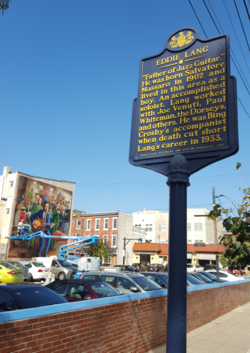
In the early days of jazz, the guitar was largely relegated to the background, serving as a rhythmic heartbeat rather than a melodic voice. This changed with Eddie Lang (born Salvatore Massaro), a virtuoso who transformed the instrument's role in American music. Credited as the father of jazz guitar, Lang elevated the instrument to a position of prominence as a solo voice, a band centerpiece, and a sophisticated accompaniment for the era's greatest vocalists.
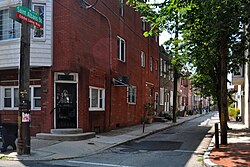
From his roots in Philadelphia to the recording studios of New York City, Lang's brief but brilliant career laid the groundwork for every jazz guitarist who followed. His ability to blend technical precision with melodic intuition allowed the guitar to step out of the shadow of the banjo and take center stage.
Key Facts
- Legacy: Widely recognized as the father of jazz guitar for pioneering the instrument's use as a solo voice.
- Key Collaborations: Frequent partnerships with violinist Joe Venuti and vocalist Bing Crosby.
- Technical Innovation: One of the first single-string guitar soloists in jazz.
- Career Span: Active from 1918 until his untimely death in 1933.
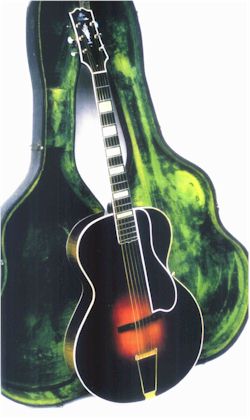
- Notable Gear: Primarily played Gibson L-4 and L-5 guitars.
Early Life and Musical Evolution
Born in Philadelphia to an Italian American instrument maker, Lang's musical journey began at age seven with the violin. By 1917, he was already performing in a trio. However, his instrumental focus shifted as the musical landscape evolved; in 1920, he transitioned to the banjo, performing with various ensembles including the Scranton Siren Orchestra.
Lang eventually traded the banjo for the guitar upon joining Red McKenzie's Mound City Blue Blowers. In 1924, he recorded "Deep 2nd Street Blues," which featured one of the first recorded guitar solos. This marked a pivotal shift in jazz history, as the guitar began to move beyond a simple rhythm part to become a featured solo instrument.
Collaborations and the "Blind Willie Dunn" Persona
Lang's versatility made him a sought-after freelance musician. He formed a legendary partnership with violinist Joe Venuti, and together they recorded with figures such as Roger Wolfe Kahn and Jean Goldkette. His reach extended across genres, working with jazz and blues icons including Bessie Smith, Clarence Williams, and Frankie Trumbauer.
In a fascinating intersection of jazz and blues, Lang recorded duets with guitarist Lonnie Johnson. To hide his race and pay homage to the legendary Blind Lemon Jefferson, Lang used the pseudonym Blind Willie Dunn for these sessions.
The Partnership with Bing Crosby
In 1929, Lang joined the Paul Whiteman Orchestra. Despite having little formal education and an inability to read music, Lang's extraordinary ear and ability to learn songs quickly impressed Whiteman. It was during this period that Lang began his enduring professional and personal relationship with Bing Crosby.
Crosby, recognizing Lang's unique talent, insisted on having him as his accompanist for radio work and tours. The two became close friends, a bond mirrored by their wives—Lang's wife Kitty, a Ziegfeld girl, and Crosby's wife Dixie. Lang's presence was a staple of Crosby's sound in the early 1930s, and he even appeared in the 1932 film The Big Broadcast.
Technical Influence and Innovation
Lang's impact on the guitar was both technical and conceptual. Along with Lonnie Johnson, he pioneered single-string soloing, a technique where the melody is played on one string while occasionally incorporating chords. This approach gave the guitar a linear, horn-like quality that was previously unheard of.
To ensure his acoustic guitar could be heard over the loud brass and percussion of the era's orchestras, Lang used heavy gauge strings and a high action (the height of the strings above the fretboard). His success was so absolute that many contemporary banjo players felt compelled to switch to the guitar to remain relevant.
Tragic Death and Lasting Honors
Lang's life was cut short at the age of 30. Suffering from chronic sore throat and digestion issues, he underwent a routine tonsillectomy at Park West Hospital in Manhattan in 1933. Tragically, he never awoke from the surgery. He is buried at Holy Cross Cemetery in Yeadon, Pennsylvania.
Despite his short life, Lang's influence persisted. George Harrison later cited him as one of his favorite guitarists. His recording of "Singin' the Blues" earned a place in the Grammy Hall of Fame and the U.S. Library of Congress National Recording Registry. He has also been inducted into the ASCAP Jazz Wall of Fame and the Big Band and Jazz Hall of Fame.
In 2016, Philadelphia honored its native son with a mural titled Eddie Lang: The Father of Jazz Guitar, located near his childhood home and the school where he first learned to play.
| Category | Details |
|---|---|
| Birth Name | Salvatore Massaro |
| Active Years | 1918–1933 |
| Primary Instruments | Guitar (previously Violin and Banjo) |
| Key Labels | Columbia, Brunswick, Okeh |
| Major Influence | Pioneered single-string jazz guitar solos |
Frequently Asked Questions
Why is Eddie Lang called the father of jazz guitar?
He is given this title because he was one of the first musicians to move the guitar from a purely rhythmic background role to a prominent solo instrument within jazz bands and orchestras.
Who was "Blind Willie Dunn"?
Blind Willie Dunn was a pseudonym used by Eddie Lang when recording with blues guitarist Lonnie Johnson to hide his race and pay tribute to Blind Lemon Jefferson.
How did Eddie Lang make his acoustic guitar audible in large orchestras?
Lang used heavy gauge strings and a high action to increase the volume and projection of his acoustic guitar, allowing it to be heard against other loud instruments.
What was Eddie Lang's relationship with Bing Crosby?
Lang was Crosby's favored accompanist and a close personal friend. Crosby insisted on Lang's presence for his radio work and tours, and they appeared together in the film King of Jazz.
What caused Eddie Lang's death?
Lang died in 1933 at age 30 after undergoing a routine tonsillectomy at Park West Hospital in Manhattan; he never regained consciousness after the surgery.