Ecuador-Peru Territorial Dispute of 1857-1860
Between 1857 and 1860, Ecuador and Peru engaged in a tense territorial dispute centered on the ownership of Amazonian lands. What began as a financial maneuver by the Ecuadorian government to settle debts with British creditors quickly escalated into a diplomatic crisis and a military confrontation, coinciding with a period of internal political instability within Ecuador.
The Origins of the Conflict
The friction began when Ecuador attempted to sell land in the Amazon region—territory that Peru claimed as its own—to pay off debts owed to British creditors. Peru viewed this sale as an infringement on its sovereignty. As diplomatic channels failed, the Peruvian government implemented a blockade of Ecuadorian ports. This strategic move was designed to force Ecuador to cancel the land sale and officially recognize Peruvian ownership of the disputed territories.
Internal Division and the Treaty of Mapasingue
While facing external pressure from Peru, Ecuador suffered from internal fragmentation. By late 1859, the country was split between two competing factions: General Guillermo Franco, who held power in the city of Guayaquil, and a provisional government based in Quito, led by Gabriel García Moreno.
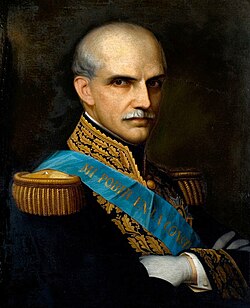
Taking advantage of this division, Peruvian President Ramón Castilla arrived in Guayaquil in October 1859 with several thousand soldiers. In January 1860, Castilla and General Franco signed the Treaty of Mapasingue, an agreement in which Franco conceded to all of Peru's demands regarding the disputed lands.
The Unification of Ecuador
The signing of the treaty backfired on General Franco. Rather than securing his position, the agreement united the disparate Ecuadorian factions against him. Franco was branded El Traidor (the traitor) for betraying the nation by negotiating on Peru's terms.
In a bid to secure a powerful ally against Franco, Gabriel García Moreno sent secret letters to Emile Trinité, the French chargé d'affaires, in December 1859, proposing that Ecuador become a French protectorate. Although this attempt was unsuccessful, García Moreno found a domestic ally in General Juan José Flores. Despite their past differences, Flores—the fourth president of Ecuador who had been deposed in the 1845 Marcist Revolution—offered his military expertise to the provisional government.
With the backing of the church establishment and large landowners, García Moreno appointed Flores as Commander of the army. As they marched toward Guayaquil to repel the Peruvian occupation and remove Franco, García Moreno famously rallied his troops in the city of Guaranda, declaring, "Soldiers, I order you to march on to victory!"
Military Escalation and Peruvian Withdrawal
The tide of the conflict shifted when Peru faced its own internal challenges. Domestic revolts and tensions on the Bolivian front forced President Castilla to return to Callao on February 19, 1860. However, he left behind a contingent of Peruvian troops and vessels, as well as 3,000 rifles, uniforms, and boots to support Franco's forces.
The military resolution began on August 7, 1860, when General Francisco Javier Salazar led a small group of soldiers in an ambush against Franco's forces at the site that would later become the city of Babahoyo, the capital of Los Ríos province. This defeat forced Franco to retreat to Guayaquil, where he relied on the remaining Peruvian support.
García Moreno's army, bolstered by deserters from Franco's ranks, advanced to Daule, across the Guayas River from Guayaquil. Simultaneously, the province of Manabí fell to the provisional government, forcing Juan José Franco—the brother of Guillermo Franco and governor of Manabí—to retreat to Guayaquil to assist his brother.
Key Facts
- Cause: Ecuador's attempt to sell Peruvian-claimed Amazonian land to British creditors.
- Peruvian Response: A naval blockade of Ecuadorian ports.
- The Treaty of Mapasingue: Signed in January 1860 between General Guillermo Franco and President Ramón Castilla.
- Internal Conflict: Ecuador was split between the provisional government in Quito (García Moreno) and the regime in Guayaquil (Franco).
- Military Leadership: General Juan José Flores served as the military commander for the provisional government.
- Turning Point: Peruvian President Castilla's return to Peru due to domestic revolts and Bolivian border issues.
| Figure | Role/Affiliation | Key Action |
|---|---|---|
| Gabriel García Moreno | Leader, Provisional Government of Quito | Led the effort to unify Ecuador and repel Peruvian forces. |
| Guillermo Franco | General in Guayaquil | Signed the Treaty of Mapasingue; labeled "El Traidor." |
| Ramón Castilla | President of Peru | Ordered the blockade and negotiated the treaty with Franco. |
| Juan José Flores | Former President of Ecuador | Served as military commander for the provisional government. |
| Francisco Javier Salazar | General | Led the ambush against Franco's forces at Babahoyo. |
Frequently Asked Questions
What triggered the conflict between Ecuador and Peru?
The conflict was triggered when Ecuador attempted to sell Amazonian land, which Peru claimed as its own, to British creditors to settle a debt.
What was the Treaty of Mapasingue?
The Treaty of Mapasingue was an agreement signed in January 1860 between Peruvian President Ramón Castilla and General Guillermo Franco, in which Ecuador complied with Peru's territorial demands.
Why was General Guillermo Franco called "El Traidor"?
He was called "El Traidor" (the traitor) because he negotiated the Treaty of Mapasingue with Peru on their terms, which the other Ecuadorian factions viewed as a betrayal of the nation.
How did the internal political situation in Ecuador affect the war?
Ecuador was divided between two governments (Quito and Guayaquil). While this initially allowed Peru to negotiate a favorable treaty with General Franco, the treaty eventually unified the two factions against Franco as a common enemy.
Why did President Ramón Castilla leave Ecuador in 1860?
Castilla was forced to return to Peru due to a domestic revolt and ongoing problems on the Bolivian front.
Who was Juan José Flores and what was his role?
Juan José Flores was the fourth president of Ecuador. Despite previous political differences, he served as the military commander for Gabriel García Moreno's provisional government, utilizing his tactical knowledge to fight Franco's forces.