Ecuador National Football Team: A Journey of Passion and Progress
Known affectionately as La Tri, La Tricolor, or La Selección, the Ecuador national football team represents the heart and soul of Ecuadorian sport. From its humble beginnings at the turn of the 20th century to becoming a consistent competitor on the global stage, the team has evolved into a formidable force within CONMEBOL, the South American football confederation.
While the team faced early challenges—including declining an invitation to the first-ever FIFA World Cup due to financial constraints—the modern era has seen Ecuador establish itself as a respected international side, characterized by technical skill and a fierce competitive spirit.
Key Facts

- Most Capped Player: Iván Hurtado (168 appearances).
- All-Time Top Scorer: Enner Valencia (49 goals).
- World Cup Best Finish: Round of 16 (2006).
- Copa América Best Finish: Fourth place (1959, 1993).
- Highest FIFA Ranking: 10th (June 2013).
- Current Captain: Moisés Caicedo.
The Origins of Ecuadorian Football
Football was introduced to Ecuador by Juan Alfredo Wright, who brought the sport back from his university studies in England. On April 23, 1899, Wright and his brother Roberto founded the Guayaquil Sport Club, the nation's first football team. As the sport's popularity surged, the Federación Deportiva Nacional del Ecuador was established on May 30, 1925.
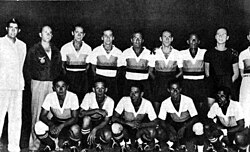
The national team played its first official international match on August 8, 1938, during the I Bolivarian Games, resulting in a 1–1 draw against Bolivia. This tournament marked a successful start for the squad, as they eventually secured the bronze medal after a playoff loss to Bolivia.
The Road to the World Cup
For decades, the World Cup remained an elusive goal. However, the appointment of coach Hernán Darío Gómez sparked a golden era. During the 2002 qualifying campaign, Ecuador achieved a historic 1–0 victory over Brazil and a crucial 1–1 draw with Uruguay to secure their first-ever World Cup berth.
The 2002 tournament in East Asia saw Agustín Delgado score the country's first World Cup goal. Ecuador's momentum continued into 2006, where they reached the Round of 16, marking their best-ever performance in the competition.
Recent World Cup Campaigns
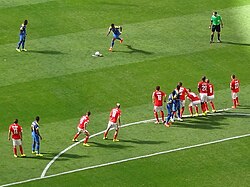
Ecuador has since appeared in five World Cups. While they have faced setbacks—including a three-point deduction and a CHF 100,000 fine during the 2026 qualification cycle due to passport irregularities involving player Byron Castillo—the team continues to compete at the highest level. In the 2026 tournament, they notably defeated Germany 2–1 before exiting in the Round of 32 against Mexico.
Continental Competition and Home Grounds
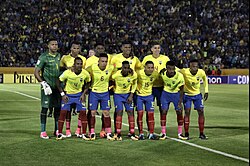
In the Copa América, Ecuador has made 30 appearances. Although they have yet to win the title, they achieved fourth-place finishes in 1959 and 1993, both times playing on home soil. Their regional success is complemented by a gold medal at the 1965 Bolivarian Games and trophies in the Korea Cup (1995) and Canada Cup (1999).
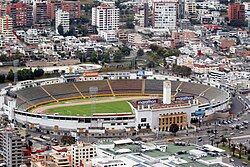
The team's spiritual home has long been the Estadio Olímpico Atahualpa in Quito. Opened in 1951, this stadium witnessed the historic 2002 qualification and a victory over Uruguay in the 1993 Copa América. Plans were initiated in late 2020 to replace the stadium with a modern facility, though Ecuador ultimately declined to host the 2022 Copa América.
Legendary Figures and Records
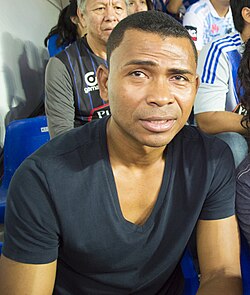
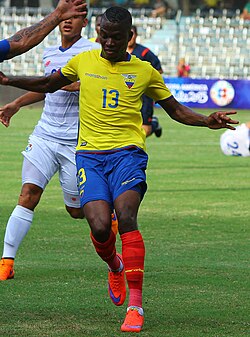
The history of La Tri is defined by iconic players who set the standard for future generations. Iván Hurtado remains the most capped player in history, providing a defensive bedrock for over two decades. Offensively, Enner Valencia has rewritten the record books, becoming the all-time leading scorer with 49 goals.
Team Summary Table
| Category | Detail |
|---|---|
| Association | Federación Ecuatoriana de Fútbol (FEF) |
| Confederation | CONMEBOL |
| FIFA Code | ECU |
| Home Stadium | Estadio Rodrigo Paz Delgado / Estadio Olímpico Atahualpa |
| Kit Supplier | Marathon (1994–present) |
Frequently Asked Questions
Who is the all-time leading goalscorer for Ecuador?
Enner Valencia is the top scorer for the national team, having netted 49 goals in 109 appearances as of June 2026.
What is Ecuador's best result in the FIFA World Cup?
Ecuador's best World Cup performance was reaching the Round of 16 during the 2006 tournament.
Which player has the most appearances for La Tri?
Iván Hurtado holds the record for the most caps, with 168 appearances for the national team.
When did Ecuador first qualify for the World Cup?
Ecuador made its World Cup debut in 2002 after a successful qualifying campaign that included a victory over Brazil.
What is the significance of the Estadio Olímpico Atahualpa?
It has served as the primary home stadium since 1951 and was the site of many of the team's most historic victories, including their first World Cup qualification.