Eberhard Karls University of Tübingen
Founded in the heart of Baden-Württemberg, the Eberhard Karls University of Tübingen stands as one of Germany's most prestigious public research institutions. With a history spanning over five centuries, it has evolved from a Renaissance center of learning into a global powerhouse of science, medicine, and the humanities.
The university is deeply integrated into the urban fabric of Tübingen, creating a vibrant university town atmosphere where academic pursuit and civic life intertwine. Today, it is recognized as a member of the U15 and the German Universities Excellence Initiative, reflecting its commitment to cutting-edge research and high-level teaching.
Key Facts
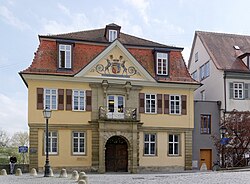
- Established: October 9, 1477, by Count Eberhard V.
- Student Population: 28,619 students (WS2023/24), including approximately 2,000 doctoral candidates.
- Global Standing: Ranked 8th nationally in Germany by Times Higher Education (2025).
- Scientific Milestone: The site of the discovery of DNA in 1868 by Friedrich Miescher.
- Budget: EUR 766.5 million.
- Academic Scope: Seven diverse faculties ranging from Theology to Science.
A Rich Historical Evolution
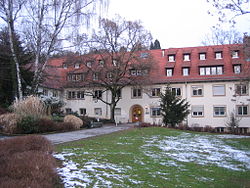
The university was established by Count Eberhard V (later Duke Eberhard I), a reformer inspired by the Renaissance revival of learning he encountered during his travels in Italy. Its early years were not without hardship; in 1482, a plague outbreak forced the staff and students to flee to towns such as Dornstetten and Waiblingen before returning in 1483.
By the mid-19th century, Tübingen became a center of intellectual revolution. The "Tübingen School," led by theologian Ferdinand Christian Baur, pioneered higher criticism—the historical-critical analysis of early Christian and biblical texts. Simultaneously, the university pushed the boundaries of science, establishing Germany's first faculty of natural sciences in 1863 and the first faculty for economics and business in 1817.
Darker Chapters and Modern Recovery
The institution's history also includes the tragedies of the Nazi period. Prominent scholars, including physicist Hans Bethe, were dismissed due to "non-Aryan" origins, and the University Hospital was the site where at least 1,158 people were sterilized. In the post-war era, the university became a site of theological and philosophical renewal, notably with the appointment of Jürgen Moltmann in 1967.
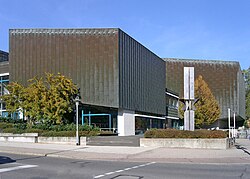
More recently, the university has been a focal point for student activism. In 2009, students occupied the Kupferbau lecture hall to protest the introduction of tuition fees, which were eventually abolished in 2012.
Campus and Academic Infrastructure
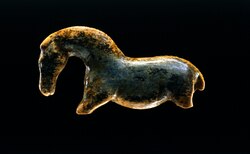
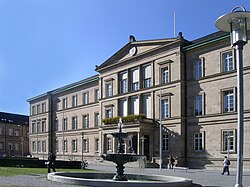
The university operates across an urban campus, with a significant concentration of medical facilities in the Klinikum area. This medical hub, stretching between Wilhelmstraße and the Morgenstelle campus, comprises 17 affiliated hospitals with 1,500 beds, treating hundreds of thousands of patients annually.
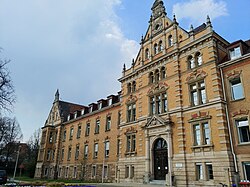
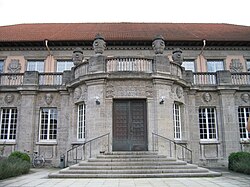
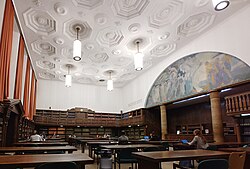
The university's intellectual life is supported by its historic libraries and museums. The Historical Reading Hall remains a symbol of the institution's dedication to the humanities and archival research.
The Naming Controversy
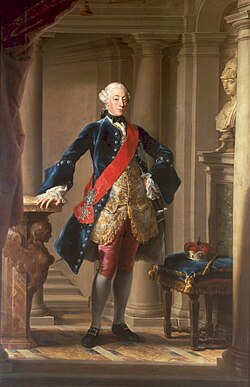
The university's double name honors its founder, Eberhard I, and Duke Carl Eugen. However, this has been a point of contention since the 1970s. In 1977, students symbolically renamed the institution "Ernst Bloch University" after the Marxist philosopher. Despite a senate vote in 2022, the official name remains unchanged as the motion for renaming failed to reach the required two-thirds majority.
Academic Excellence and Global Rankings
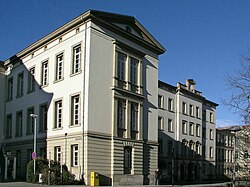
Tübingen consistently ranks among the top universities globally and nationally. It is particularly dominant in the fields of Theology, Archaeology, and Education.
| Ranking Body | Global Rank | National Rank (Germany) |
|---|---|---|
| QS World 2025 | =222 | 11 |
| THE World 2025 | =100 | 8 |
| ARWU World 2023 | 151–200 | 6–9 |
The university's research quality is further validated by the German Research Foundation (DFG), which ranked Tübingen 8th overall in its 2018 funding report, with particularly high marks in humanities and life sciences.
Nobel Laureates and Distinguished Faculty
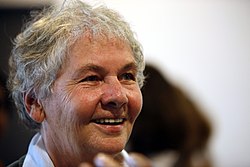
The university's commitment to excellence is evidenced by its long list of Nobel Prize winners. From the chemistry of William Ramsay to the developmental biology of Christiane Nüsslein-Volhard, the first German woman to win a Nobel Prize in Medicine, Tübingen continues to attract world-class talent.
Frequently Asked Questions
Who founded the University of Tübingen?
The university was founded on October 9, 1477, by Count Eberhard V, who later became Duke Eberhard I of Württemberg.
What is the "Tübingen School"?
The Tübingen School refers to a circle of theologians and scholars in the 19th century, led by Ferdinand Christian Baur, who pioneered the historical-critical analysis of biblical texts.
What major scientific discovery happened at Tübingen?
In 1868, Friedrich Miescher discovered DNA at the University of Tübingen, marking a pivotal moment in the history of biology and genetics.
Why was there a debate about the university's name?
Some students and faculty members have argued that the namesakes, Eberhard I and Carl Eugen, are unsuitable for a 21st-century institution, leading to proposals to rename the university, such as after philosopher Ernst Bloch.
How many students attend the university?
As of the Winter Semester 2023/24, the university has 28,619 students, consisting of approximately 16,150 undergraduates and 12,469 postgraduates.