East Asia: A Comprehensive Overview of Geography, Economy, and Culture
East Asia is a dynamic and influential region comprising six countries and several special administrative regions. Spanning an area of approximately 11,840,000 km², it serves as a global powerhouse for both economic production and cultural heritage. Home to roughly 1.6 billion people, the region represents over 20% of the world's population, making it one of the most densely populated and significant areas on Earth.

Key Facts
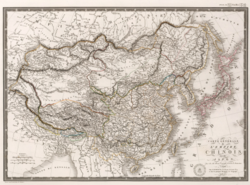
- Total Area: 11,840,000 km²
- Population: Approximately 1.6 billion (2023)
- Major Countries: China, Japan, Mongolia, North Korea, South Korea, and Taiwan
- Economic Strength: Projected GDP (PPP) of $60 trillion by 2026
- Primary Languages: Chinese, Japanese, Mongolian, and Korean
Geography and Political Structure

The region is defined by a diverse array of territories, including the sovereign nations of China, Japan, Mongolia, North Korea, South Korea, and Taiwan. Additionally, the region includes two Special Administrative Regions (SARs) of China: Hong Kong and Macau.
![The United Nations Statistics Division (UNSD) geoscheme for Asia works with subregions defined in terms of UN political geography statistics.[87] The UNSD geoscheme is based on statistic convenience rather than implying any assumption regarding political or other affiliation of countries or territories:[88] East Asia](/images/80/b3/80b3127c0e226e38758c771d6f58f88da84de28f52f2e28b77b5bebf534b58e7.png)
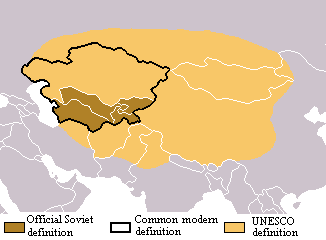
Geographically, the region is vast and varied. While the United Nations Statistics Division (UNSD) uses specific geoschemes for statistical convenience, the boundaries of East Asia are often discussed in relation to broader Asian or Central Asian conceptions.
Major Urban Centers
East Asia is home to some of the world's largest and most influential metropolitan areas. These cities serve as hubs for finance, technology, and culture. Notable population centers include:
- Tokyo, Japan: The largest urban area with a population of approximately 38.14 million.
- Seoul, South Korea: A major metropolitan hub of 25.52 million.
- Shanghai, China: A global financial center with 24.48 million residents.
- Beijing, China: The capital city with 21.24 million people.
- Osaka, Japan: A significant economic center of 20.34 million.

Economic Landscape
The economic profile of East Asia is characterized by massive scale and rapid development. The region's Gross Domestic Product (GDP)—the total value of goods and services produced—is a primary driver of the global economy. By 2026, the region's GDP (Purchasing Power Parity) is projected to reach $60 trillion.
Purchasing Power Parity (PPP) is an economic metric used to compare the buying power of different currencies by adjusting for the cost of living and inflation rates in different countries.
| Country/Territory | GDP Nominal (Millions USD) | GDP per Capita (Nominal USD) | GDP PPP (Millions USD) | GDP PPP per Capita (USD) |
|---|---|---|---|---|
| China | 18,532,633 | 13,136 | 35,291,015 | 25,015 |
| Japan | 4,110,452 | 33,138 | 6,720,962 | 54,184 |
| South Korea | 1,760,947 | 34,165 | 3,057,995 | 59,330 |
| Taiwan | 802,958 | 34,432 | 1,792,349 | 76,858 |
| Hong Kong | 406,775 | 53,606 | 570,082 | 75,128 |
| Macau | 54,677 | 78,962 | 92,885 | 125,510 |
| Mongolia | 21,943 | 6,182 | 58,580 | 16,504 |
| North Korea | 28,804 | 1,082 | N/A | N/A |
Demographics and Society
The demographic makeup of East Asia is incredibly diverse, featuring a wide array of ethnic groups and linguistic traditions. The Han Chinese represent the largest ethnic group in the region, with a population exceeding 1.3 billion. Other significant groups include the Yamato (Japanese), Koreans, Mongols, Uyghurs, and Tibetans.
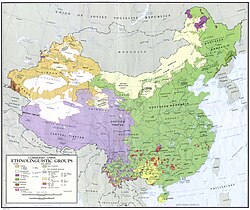
Linguistic diversity is also a hallmark of the region. While Chinese, Japanese, Mongolian, and Korean are primary languages, many other languages and writing systems exist, such as Tibetan, various Chinese dialects (Cantonese, Wu, Hakka), and the use of different scripts including Han characters, Hangul, and Cyrillic.

Climate and Environment
The climate across East Asia varies significantly, ranging from the temperate zones of Japan to the vast steppes of Mongolia. The Köppen climate classification system is often used to categorize these diverse environments.

Environmental challenges, particularly climate change, pose risks to the region. For instance, the North China Plain is vulnerable to increased heat stress due to widespread irrigation, which can lead to high humidity and physical risks for agricultural workers.
![Climate change is expected to exacerbate heat stress over at the North China Plain, which is particularly vulnerable as widespread irrigation results in very moist air. There is a risk that agricultural labourers will be physically unable to work outdoors on hot summer days at the end of the century, particularly under the scenario of greatest emissions and warming.[99]](/images/fd/59/fd59bdd3a6e51df2c6aa80c873a30aaab7c2e83301adefe5644253199832da55.png)
Culture and Traditions
East Asian cultures are rich with ancient traditions, religious practices, and seasonal festivals. Major religious and philosophical influences include Buddhism (East Asian, Tibetan), Taoism, Shinto, and various forms of Shamanism.
Festivals often follow lunisolar calendars and are central to social life. Common celebrations include:
- Chinese New Year: Celebrated by Chinese populations on the first day of the first lunisolar month.
- Korean New Year (Seollal): A major holiday for Koreans.
- Mid-Autumn Festival: A traditional festival celebrated by many East Asian cultures.
- Lunar New Year (Losar/Tsagaan Sar): Celebrated by Tibetan and Mongolian groups.

Frequently Asked Questions
What are the main countries in East Asia?
The primary countries in East Asia are China, Japan, Mongolia, North Korea, South Korea, and Taiwan.
How large is the population of East Asia?
As of 2023, the population of East Asia is approximately 1.6 billion people.
What are the most spoken languages in the region?
The most prominent languages include Chinese, Japanese, Mongolian, and Korean, along with various regional languages and dialects like Tibetan and Cantonese.
Which cities are the largest in East Asia?
Some of the largest cities include Tokyo, Seoul, Shanghai, Beijing, and Osaka.
What is the economic significance of East Asia?
East Asia is a global economic leader, with a projected GDP (PPP) of $60 trillion by 2026, driven by major economies like China and Japan.