Earl "Fatha" Hines: The Architect of Modern Jazz Piano
Earl Kenneth Hines, affectionately known as "Fatha" Hines, was more than just a musician; he was a transformative force in the evolution of jazz. As a virtuoso pianist and commanding bandleader, Hines developed a style that shifted the piano's role from a purely rhythmic accompaniment to a lead melodic instrument. His influence was so profound that he is regarded as one of the few pianists whose playing fundamentally shaped the history of jazz.
Key Facts
- Full Name: Earl Kenneth Hines
- Active Years: 1921–1983
- Primary Instrument: Piano
- Major Contribution: Pioneered a melodic, horn-like approach to jazz piano that influenced the birth of bebop.
- Notable Residency: Led the orchestra at Chicago's Grand Terrace Cafe for 12 years.
- Global Reach: Toured extensively in Europe, South America, Asia, and the Soviet Union.
The Chicago Years and the Grand Terrace
Hines's rise to prominence reached a peak on December 28, 1928, when he began leading his own big band at the Grand Terrace Cafe in Chicago. This was a prestigious appointment that placed him at the center of the city's musical life. For the next 12 years, spanning the Great Depression and Prohibition, Hines led his "Organization"—a band that grew to include up to 28 musicians.
The scale of his operation was immense, often performing three to four shows a night. Critics have noted that Hines and the Grand Terrace held a cultural significance in Chicago comparable to that of Duke Ellington and the Cotton Club in New York, though Hines's approach was often described as "fierier."
Wartime Challenges and the Birth of Bebop
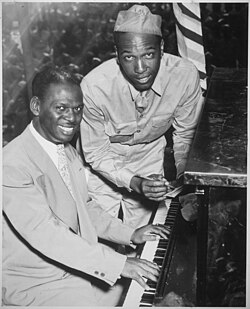
The onset of World War II brought significant disruptions. By 1943, the draft had depleted his ranks, forcing Hines to cancel a Southern tour. In a creative pivot, he hired a 12-piece all-woman group in New York, eventually expanding his ensemble to 28 members, including strings and French horn.
Despite these logistical hurdles, Hines remained a sought-after talent, even stepping in to front the Duke Ellington Orchestra in 1944 while Ellington was ill. This era of experimentation and high-energy performance contributed to the evolving sounds that would eventually lead to bebop—a complex, fast-tempo style of jazz characterized by intricate chord progressions and rapid melodic lines.
Collaborations and Personal Struggles
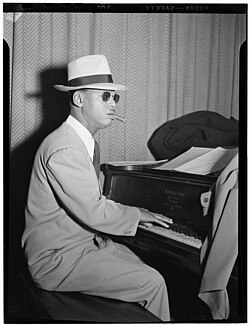
In 1948, Hines reunited with his longtime friend Louis Armstrong in the "Louis Armstrong and His All-Stars" small-band. While musically potent, the partnership was strained by professional friction. As Armstrong ascended to the status of a global American icon, Hines felt relegated to the role of a sideman. These tensions over billing and ego led Hines to leave the group in 1951.
Following his departure, Hines led various small combos and toured with the Harlem Globetrotters in 1954. However, by the 1960s, the declining popularity of big-band music and personal setbacks—including a severe car crash in 1946 that permanently affected his eyesight and a failed investment in the nightclub "The El Grotto"—led him to settle in Oakland, California, where he briefly opened a tobacconist's shop and nearly left music behind.
The Great Rediscovery
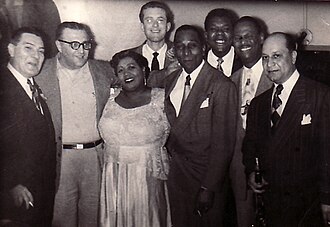
Hines's return to the spotlight began in 1964, when his friend and manager Stanley Dance convinced him to perform a series of piano recitals at the Little Theatre in New York. These performances caused a sensation, sparking a global rediscovery of his genius. He was subsequently named the world's "No. 1 Jazz Pianist" by DownBeat magazine in 1966, a title he would hold five more times.
In his later years, Hines became a prolific recording artist, producing over 100 LPs. He was legendary for his efficiency in the studio, often recording an entire unplanned solo album in just ninety minutes. He also became a cultural ambassador, touring the Soviet Union in 1966, where his popularity was so great that the Kremlin cancelled his Moscow and Leningrad concerts, deeming them "too culturally dangerous."
Summary of Career and Legacy
Earl Hines's career was marked by a relentless drive for innovation and a refusal to be confined by the conventions of his time.
| Period | Key Focus/Role | Notable Achievement |
|---|---|---|
| 1928–1940 | Big Band Leader | Residency at Grand Terrace Cafe, Chicago |
| 1943–1947 | Wartime Innovation | Led all-woman and mixed-gender ensembles |
| 1948–1951 | Small Group Work | Member of Louis Armstrong and His All-Stars |
| 1964–1983 | Soloist & Global Icon | Rediscovery via NY recitals; 100+ LPs recorded |
Frequently Asked Questions
Why was Earl Hines called "Fatha"?
The nickname "Fatha" reflected his status as a foundational figure and a "father" of modern jazz piano, acknowledging his role in shaping the instrument's direction.
How did Earl Hines change the way the piano was played in jazz?
Hines moved away from the traditional rhythmic role of the piano, instead using it to play melodic lines similar to a trumpet or saxophone, which paved the way for later developments in bebop.
What happened during his tour of the Soviet Union?
Hines performed 35 concerts across six weeks. After a sold-out show at the Kyiv Sports Palace, the Soviet government cancelled his remaining concerts in Moscow and Leningrad because they were considered "too culturally dangerous."
What was the significance of the Little Theatre recitals?
These 1964 performances were the first solo piano recitals of Hines's career. They triggered a massive professional comeback, leading to numerous awards and a surge in recording activity during his final two decades.
Which other jazz legends did he work with?
Hines had a long and complex relationship with Louis Armstrong and also fronted the Duke Ellington Orchestra for a period in 1944.