Durban Transport Infrastructure and Connectivity
Durban serves as a critical gateway to the southern African continent, boasting a sophisticated network of air, sea, rail, and road links. Its strategic position as a major port city makes it a vital hub for international trade, tourism, and regional commuting, connecting the economic heartland of Gauteng with the rest of the world.
Key Facts
- King Shaka International Airport opened in May 2010, replacing Durban International Airport.
- The Port of Durban is one of the few natural harbours between Port Elizabeth and Maputo.
- Durban is the most popular cruise hub in Southern Africa, featuring a R200 million dedicated terminal.
- The N3 Western Freeway is the primary freight artery linking Durban to the Witwatersrand.
- Minibus taxis remain the primary mode of transport for the majority of the local population.
Air Travel
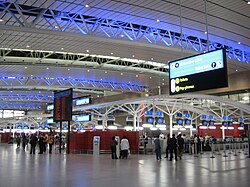
The primary aviation hub for the region is King Shaka International Airport, located at La Mercy, approximately 36 kilometres north of central Durban. Since its opening in May 2010, it has handled all operations previously managed by Durban International Airport. The airport is a key vertex of the "Golden Triangle," facilitating efficient travel and trade between Durban, Johannesburg, and Cape Town.
In the 2019/2020 period, the airport handled 6.1 million passengers, representing a 1.8 percent increase over the previous year. It offers domestic flights to eight destinations and international services to cities including Dubai, Doha, Istanbul, Harare, Manzini, and Gaborone, with further expansion plans for routes to Hong Kong, Singapore, Mumbai, Kigali, Luanda, Lilongwe, and Nairobi.
Maritime and Naval Operations
Durban has a storied history as a port city. The Port of Durban (formerly Port Natal) is a rare natural harbour in the region. Due to its geography and proximity to weather phenomena that create violent seas, it became a critical center for ship repairs starting in the 1840s.
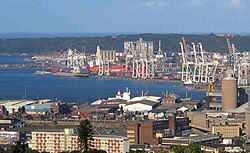
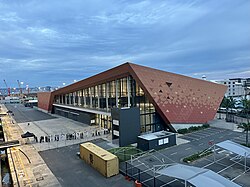
Today, the city is the premier cruise hub for Southern Africa. A R200 million cruise terminal, operational since October 2019, can accommodate two ships simultaneously. This facility is managed by KwaZulu Cruise Terminal (Pty) Ltd, a joint venture between MSC Cruises SA (70%) and Africa Armada Consortium (30%). MSC Cruises bases ships like the MSC Splendida here from November to April, offering voyages to Mauritius, Madagascar, Réunion, Mozambique, Cape Town, and Port Elizabeth. The port also welcomes some of the world's largest vessels, including the RMS Queen Mary 2.
Military operations are centered at Naval Base Durban on Salisbury Island. Established during World War II, the site was downgraded to a naval station in 2002 but was restored to full naval base status in 2015 to support the South African Navy's offshore patrol flotilla.
Rail Networks
Durban was the birthplace of steam rail in South Africa, with the Natal Railway Company launching a line between the Point and the city in 1860. Current rail services are divided into long-distance and commuter networks:
- Shosholoza Meyl: Operates long-distance passenger services from Durban railway station to Johannesburg (via Pietermaritzburg and Newcastle) and Cape Town (via Bloemfontein and Kimberley).
- Metrorail: Provides commuter services extending to KwaDukuza on the North Coast, Kelso on the South Coast, and Cato Ridge inland.
To further enhance connectivity, a high-speed rail link between Durban and Johannesburg has been proposed.
Road Infrastructure
Durban's road network is designed to facilitate the movement of freight and people across the province and into the interior. The N3 Western Freeway is the most critical route for freight moving to and from the Witwatersrand. It begins in the CBD and passes through Mayville and Sherwood before reaching the EB Cloete Interchange (known as "Spaghetti Junction"), which connects the N3 to the N2.
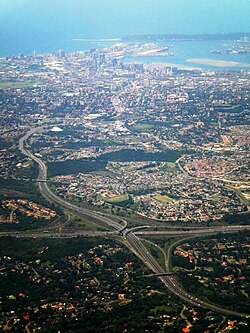
The N2 Outer Ring Road serves as the primary link to coastal towns such as Ballito, KwaDukuza, Scottburgh, and eManzimtoti, while also connecting Durban to Mpumalanga in the north and the Eastern Cape to the south.
Metropolitan Routes
The city utilizes several arterial routes to connect its suburbs:
- M4: Divided into the northern segment (Ruth First and Leo Boyd Highways) and the southern segment (Inkosi Albert Luthuli Highway).
- M13 (King Cetshwayo Highway): A vital untolled alternative to the N3 for commuters from Hillcrest, Kloof, and Pinetown.
- M7, M19, and M41: These routes link industrial basins and suburbs like Phoenix and Westville to the main freeway network.
In the late 2000s, the city underwent a significant renaming of 107 streets to honor anti-apartheid and revolutionary figures. This process, largely driven by the African National Congress (ANC), faced opposition from parties like the Democratic Alliance and the Inkatha Freedom Party, as well as some members of the public who preferred names with local historical connections.
Public and Private Transport
Durban's local transport landscape is diverse, ranging from formal bus systems to informal taxis:
- Buses: Long-distance services are common, with a history of Indian ownership since the 1930s. The Durban People Mover Bus System has introduced modern amenities like free Wi-Fi since 2017. The city previously operated a trolleybus system from 1935 to 1968.
- Taxis: Metered taxis must be ordered and cannot solicit fares on the street. Minibus taxis are the primary transport for the working class, though they are often associated with overcrowding and occasional inter-operator conflict over routes. Ride-sharing apps like Uber and Taxify are also widely used.
- Rickshaws: Once a common mode of transport in the early 1900s, only about 25 remain today, primarily serving tourists.
| Mode | Key Infrastructure/Service | Primary Function |
|---|---|---|
| Air | King Shaka International Airport | Domestic & International Travel |
| Sea | Port of Durban / Cruise Terminal | Freight, Naval, & Tourism |
| Rail | Shosholoza Meyl / Metrorail | Long-distance & Commuter |
| Road | N2 and N3 Freeways | Regional Freight & Connectivity |
| Local | Minibus Taxis / People Mover | Urban Mobility |
Frequently Asked Questions
Where is King Shaka International Airport located?
The airport is located at La Mercy, approximately 36 kilometres north of Durban's city centre.
What is the "Spaghetti Junction" in Durban?
This is the informal name for the EB Cloete Interchange, which allows traffic to transfer between the N2 Outer Ring Road and the N3 Western Freeway.
Which cruise ships operate out of Durban?
MSC Cruises bases ships such as the MSC Splendida in Durban from November to April. The port also hosts massive ocean liners like the RMS Queen Mary 2.
How do metered taxis work in Durban?
Unlike in some other cities, metered taxis in Durban are not permitted to cruise the streets to find passengers; they must be called or ordered to a specific location.
What is the significance of the N3 Western Freeway?
The N3 is the primary economic artery linking the Port of Durban to the industrial hinterland of Gauteng and the Witwatersrand.