Dribbling in Sports: Techniques and History Across Major Games
In the world of athletics, dribbling is the art of maneuvering a ball while moving in a specific direction to avoid defenders and maintain possession. Whether on a grass pitch, a hardwood court, or in a swimming pool, a successful dribble allows a player to legally bypass opponents and create critical scoring opportunities.
Key Facts
- Association Football: Dribbling involves technical maneuvers, feints, and agility to move the ball toward the opponent's goal.
- Basketball: Dribbling is the only legal way to move while possessing the ball, performed by bouncing it continuously with one hand.
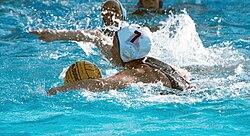
- Water Polo: Dribbling is achieved by swimming forward and propelling the ball ahead using the wake of armstrokes.
- Historical Roots: Early references to football dribbling date back to 14th-century England in the works of Geoffrey Chaucer.
- Rule Evolution: Basketball dribbling evolved from players "passing to themselves," a strategy first used by Yale University in 1897.
Dribbling in Association Football
In association football, dribbling is considered one of the most challenging yet rewarding attacking skills. Players use individual ball control to propel the ball toward the goal, often employing feints (deceptive movements) and manipulative tricks to beat defenders. For example, Ronaldinho was famous for using the elastico to evade opponents.
Dribbling is particularly vital on the wings or in the final third of the pitch. While it creates space in tight situations, poor execution can lead to a loss of possession through interceptions or tackles. Different players employ distinct styles: Gareth Bale often relies on speed and physicality, Luis Suárez is known for the nutmeg (kicking the ball through a defender's legs), and Lionel Messi utilizes agility, acceleration, and precise control.
![Garrincha (left), Brazilian winger and 1962 World Cup star, is regarded as one of the greatest dribblers of all time.[9]](/images/0b/f9/0bf9036a4b99802fe4dab8acb88dc1547474b1ce93fc128f6dafab1c3adeb3af.jpg)
Skillful dribblers are difficult to dispossess. When a defender fails to reach the ball during a tackle, it often results in a free kick and a potential penalty card for the offender. A notable example of elite control occurred at the 2018 FIFA World Cup, where Belgium's Eden Hazard set a record by completing ten dribbles against Brazil with a 100% success rate.
The History of Football Dribbling
The practice of dribbling has deep roots in English history. Geoffrey Chaucer alluded to these skills in The Canterbury Tales (written after 1380). A Latin account from between 1481 and 1500 describing a game in Cawston, Nottinghamshire, provides the first explicit description of a "kicking game" where players skillfully rolled a ball along the ground with their feet. By the 19th century, dribbling was a staple of English public school games, preceding the formal introduction of ball passing in the 1863 Football Association rules.
Dribbling in Basketball
In basketball, dribbling is the act of bouncing the ball on the floor continuously with one hand. This is the only legal method for a player to maintain possession while walking or running. It is fundamental for advancing the ball down the court and evading defenders.
The skill was not part of James Naismith's original rules, which only permitted passing. However, players began "passing to themselves," a move Naismith admired for its ingenuity. Yale University became the first team to utilize the dribble in 1897, and by 1909, continuous dribbling and shots off the dribble were officially permitted.
Technical Execution and Rules
Proper dribbling requires using the finger pads with relaxed, spread fingers, while the wrist pushes the ball and the forearm moves up and down. Elite ball handlers keep the ball low to the ground to prevent steals and may dribble behind their backs or between their legs to confuse defenders. In the modern NBA, players like Stephen Curry and Kyrie Irving are regarded as premier ball handlers, alongside Trae Young and Jamal Murray.
Strict rules govern the dribble to prevent unfair advantages. If a player stops dribbling and then starts again, or "palms" the ball (holding it too much toward the underside), a double dribble or carrying violation is called, resulting in a turnover. The importance of this skill was so great that the National Association of Basketball Coaches (NABC) was founded in 1927 specifically to oppose efforts to eliminate dribbling from the game.
Dribbling in Water Polo
Water polo employs a unique form of dribbling where the player moves the ball while swimming forward. The ball is propelled by the wake created by alternating armstrokes, sometimes aided by nudges from the nose or forehead. Because the player maintains minimal contact with the ball, defenders cannot make contact unless the attacker is touching the ball.
Players use rapid arm strokes with high elbows to shield the ball from opponents. This technique is legal under FINA regulations, and the resulting turbulent motion often forces defenders to avoid contact to prevent injury while attempting to steal the ball.
Comparative Summary of Dribbling
| Sport | Primary Method | Key Objective | Notable Technique/Rule |
|---|---|---|---|
| Association Football | Foot control/Kicking | Bypass defenders to score | Nutmegs and Feints |
| Basketball | Bouncing with one hand | Advance ball down court | Double Dribble violation |
| Water Polo | Swimming wake/Nudging | Advance ball while swimming | High-elbow shielding |
Related Concepts in Other Sports
The requirement to perform a specific skill to move with a ball is common across various sports to prevent players from simply running the length of the field. Similar concepts include:
- Gaelic Football: The "solo" (kicking the ball to oneself) and the "hop" (bouncing the ball to oneself).
- Australian Rules Football: The running bounce of the ellipsoidal ball.
- Canadian Football: A "dribbled ball" refers to a loose ball on the ground that is kicked.
Frequently Asked Questions
What is a "nutmeg" in football?
A nutmeg occurs when a player skillfully kicks the ball through an opponent's legs to bypass them.
What constitutes a "double dribble" in basketball?
A double dribble occurs if a player dribbles, stops and holds the ball, and then begins dribbling again, or if they attempt to dribble with both hands simultaneously.
How is dribbling different in water polo compared to land sports?
In water polo, the ball is moved primarily by the wake of the swimmer's armstrokes rather than constant physical contact, allowing the player to shield the ball with their elbows.
Who is credited with the first team dribbling in basketball?
Yale University is recognized as the first team to utilize dribbling in 1897.
Why was the NABC founded in 1927?
The National Association of Basketball Coaches was established to oppose a proposal that would have eliminated dribbling from the sport of basketball.