Dragonflies: Masters of Aerial Predation and Evolution
Dragonflies are among the most skilled aerial predators in the animal kingdom. Belonging to the infraorder Anisoptera, these insects are renowned for their agility, exceptional vision, and a prehistoric lineage that stretches back millions of years. From their complex compound eyes to their sophisticated flight mechanics, dragonflies represent a pinnacle of evolutionary engineering.
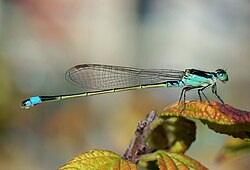
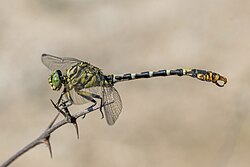
While often confused with damselflies, dragonflies are distinct in their build and behavior. Damselflies are generally slenderer and typically hold their wings closed over their bodies when at rest, whereas dragonflies possess a more robust frame and keep their wings spread.
Key Facts
- Species Diversity: Approximately 3,012 species across 348 genera and 11 families were recorded as of 2010.
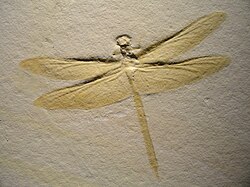
- Prehistoric Giants: The extinct Meganeura monyi had a wingspan of roughly 680 millimeters (27 inches).
- Visual Power: Some species possess over 20,000 ommatidia (individual visual units) in each compound eye.
- Flight Capability: Large species like hawkers can reach maximum speeds of 36–54 km/h (22–34 mph).
- Global Reach: Found across all major biogeographical regions, with high diversity in the Neotropical and Indomalayan realms.
Evolution and Diversity
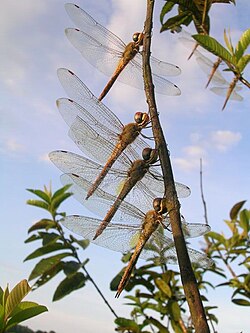
The evolutionary history of dragonflies is marked by extreme variations in size. During the Upper Carboniferous period, the giant Meganeura monyi dominated the skies with a massive wingspan. Modern species, while smaller, have refined their biological systems for maximum efficiency.
![The giant Upper Carboniferous dragonfly relative, Meganeura monyi, attained a wingspan around 680 millimetres (27 inches).[8]](/images/63/3f/633fe05183f933f97fc42cf2978107099a932a1100aaf5754b15632f86ff743f.png)
Today, dragonflies are distributed globally. The Libellulidae (skimmers) and Gomphidae (clubtails) are among the most populous families. Diversity varies by region, with the Neotropical and Indomalayan regions hosting a significant portion of the world's species.
| Family | Indomalaya | Neotropical | Australasian | Afrotropical | Palaearctic | Nearctic | World Total |
|---|---|---|---|---|---|---|---|
| Aeshnidae | 149 | 129 | 78 | 44 | 58 | 40 | 456 |
| Gomphidae | 364 | 277 | 42 | 152 | 127 | 101 | 980 |
| Libellulidae | 192 | 354 | 184 | 251 | 120 | 105 | 1037 |
| Corduliidae | 23 | 20 | 33 | 6 | 18 | 51 | 154 |
Anatomy and Sensory Systems
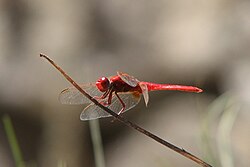
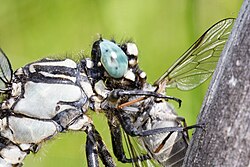
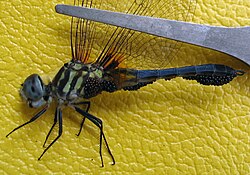
The adult dragonfly body is divided into three segments: the head, thorax, and abdomen, protected by a chitinous exoskeleton (a hard outer shell). The head is dominated by two massive compound eyes composed of thousands of ommatidia. For example, Aeshna interrupta has 22,650 ommatidia, while Petalura gigantea has 23,890. These provide nearly complete vision of the frontal hemisphere.
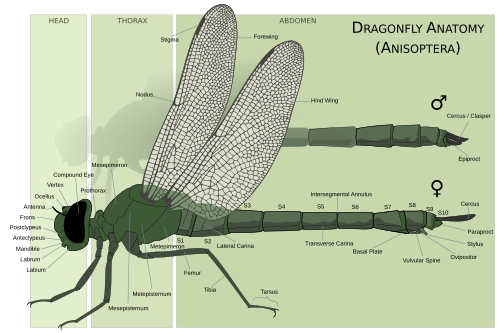
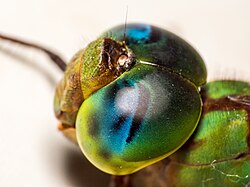
Beyond the compound eyes, dragonflies have three simple eyes called ocelli. Their mouthparts are designed for biting, featuring a toothed jaw and a labrum (upper lip) that can shoot forward rapidly to capture prey. A unique "arrester system" of muscles and hairs locks the head in place during feeding and tandem flight.
Flight and Behavioral Mechanics
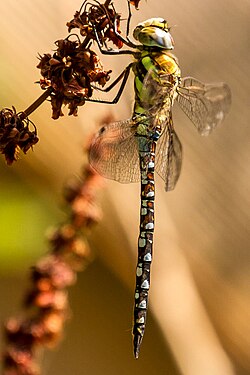
Dragonflies are legendary for their flight precision. While some older claims suggest speeds up to 97 km/h, reliable data indicates that large hawkers typically max out between 36 and 54 km/h, with an average cruise speed of 16 km/h. They can move forward at 100 body-lengths per second and even fly backward at three lengths per second.
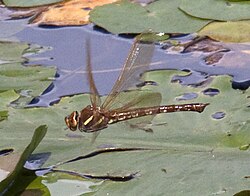
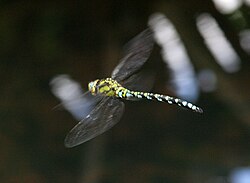
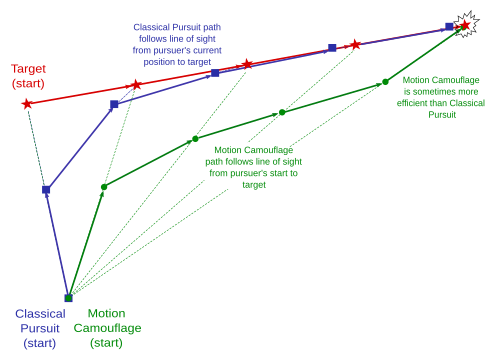
Their agility is aided by the ability to move their wings independently. Some species use motion camouflage to trick prey and rivals during flight. Additionally, they employ various temperature control methods to maintain the metabolic rates required for such high-energy activity.
Life Cycle and Reproduction
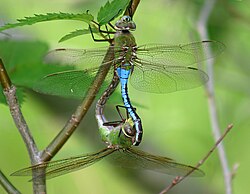
The dragonfly life cycle begins with a nymph (or naiad) stage, which is aquatic. These nymphs are formidable predators in their own right, utilizing a specialized mask that extends rapidly to grab prey.
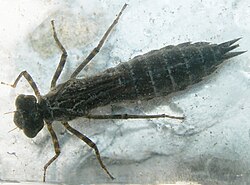
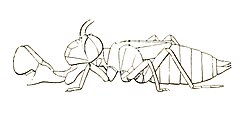
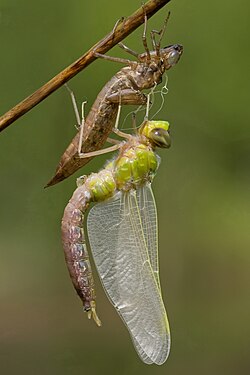
The transition to adulthood occurs through ecdysis, the process of shedding the nymphal skin. The newly emerged adult, known as a teneral, must expand its wings and wait several days for its adult coloration to fully develop.
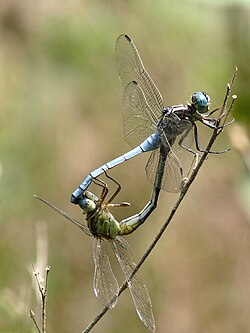
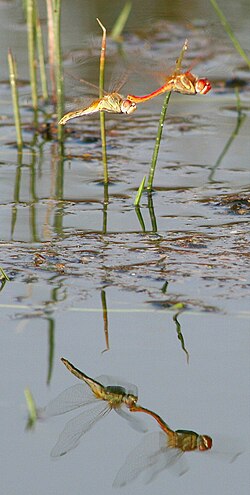
Reproduction often involves complex mating rituals. Some species form a "heart" shape during mating, while others exhibit mate guarding, where the male clasps the female behind the neck to ensure paternity.
Dragonflies in Human Culture

Dragonflies have long inspired human art and literature. In Japan, they are frequent subjects of haiku, with poets like Matsuo Bashō linking the red dragonfly to the autumn season. In the West, the 18th-century artist Moses Harris provided some of the first scientifically accurate illustrations of the species.
From ancient Egyptian amulets to the Art Nouveau designs of Tiffany & Co., the dragonfly's form has been a symbol of elegance and agility across diverse civilizations.
Frequently Asked Questions
How fast can a dragonfly actually fly?
While some unreliable sources claim speeds of 60 mph, reliable records show that large dragonflies, such as hawkers, typically reach maximum speeds of 36–54 km/h (22–34 mph), with average cruising speeds around 16 km/h.
What are ommatidia?
Ommatidia are the individual visual units that make up the compound eyes of a dragonfly. Depending on the species, a single eye can contain over 20,000 of these units, providing a nearly panoramic field of vision.
Do dragonflies bite or sting humans?
Dragonflies do not have stingers. While they have biting mouthparts used for hunting other insects, they are not aggressive toward humans.
What is the difference between a dragonfly and a damselfly?
Dragonflies (Anisoptera) are generally bulkier and hold their wings out horizontally at rest. Damselflies (Zygoptera) are more slender and typically fold their wings along their bodies when not flying.
What was Meganeura monyi?
Meganeura monyi was a giant relative of the modern dragonfly from the Upper Carboniferous period, reaching a massive wingspan of approximately 680 millimeters (27 inches).