Dover: The Gateway to England and the White Cliffs
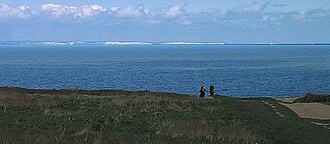
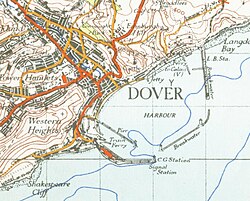
Perched on the edge of the English coast in Kent, Dover is far more than just a transit point. As a major ferry port and civil parish, it serves as the primary link between the United Kingdom and mainland Europe, facing France across the Strait of Dover—the narrowest stretch of the English Channel, measuring just 33 kilometres (21 mi) from Cap Gris-Nez.
With an estimated population of 44,209 in 2024, Dover is the administrative heart of the Dover District. While historically defined by its strategic military and maritime importance, the town has recently undergone a modern transformation. Recent investments totaling £330 million have introduced a revamped beachfront, a new 500m pier, a modern marina, and the St James' retail area, which opened in 2018.
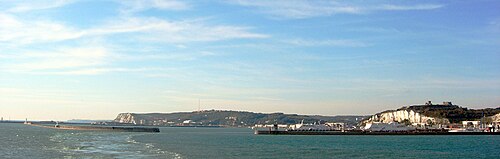
Key Facts
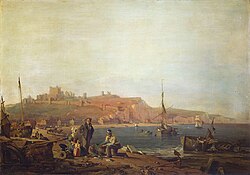
- Location: Kent, South East England, 77.8 miles from London.
- Primary Industry: Shipping (Port of Dover) and tourism.
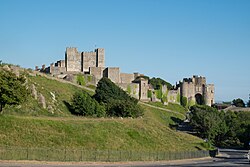
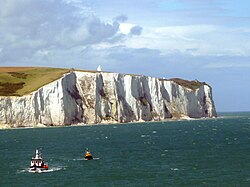
- Landmarks: The White Cliffs of Dover and Dover Castle.
- Climate: Oceanic (Köppen Cfb) with mild temperatures year-round.
- Connectivity: High-speed rail link to London (approx. 55 minutes non-stop).
A Journey Through History
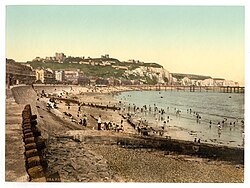
Dover's history is deeply intertwined with its geography. Archaeological finds at Langdon Bay, including bronze axes of French design, suggest that trade routes between England and France existed as far back as the Bronze Age. One of the most significant maritime discoveries is the "Dover boat," a seaworthy vessel dated to approximately 1550 BC via radiocarbon investigation.
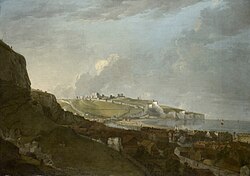
During the Cold War, the town's strategic value remained paramount. A regional seat of government was secretly located within the White Cliffs beneath Dover Castle. This facility was so sensitive that it was omitted from the 1974 Soviet 1:10,000 city plan of Dover. During this era, the port was designated as a critical embarkation point for reinforcing the British Army of the Rhine in the event of a Soviet invasion of Europe.
Geography and Climate
Dover experiences an oceanic climate, characterized by mild temperatures and consistent light rainfall throughout the year. The temperature typically ranges between 3.6 °C (38.5 °F) and 21.1 °C (70.0 °F).
The town has seen extreme weather shifts, with a record high of 37.4 °C (99.3 °F) recorded at Langdon Bay in July 2019, and a record low of −9.5 °C (14.9 °F) at Dover RMS in January 1972.
Climate Data Summary (1991–2020 Normals)
| Metric | Winter (Jan) | Summer (July) | Annual Average/Total |
|---|---|---|---|
| Mean Daily Max Temp | 8.1 °C (46.6 °F) | 20.9 °C (69.6 °F) | 14.3 °C (57.7 °F) |
| Mean Daily Min Temp | 3.6 °C (38.5 °F) | 14.8 °C (58.6 °F) | 11.5 °C (52.7 °F) |
| Average Precipitation | 79.1 mm (3.11 in) | 52.5 mm (2.07 in) | 832.4 mm (32.77 in) |
| Sunshine Hours | 64.9 hrs | 224.2 hrs | 1,769.7 hrs |
Economy and Infrastructure
The economy of Dover is heavily reliant on the Port of Dover and the tourism sector. The port is a massive employer and handles vast volumes of traffic, leading to Dover's classification as a "Large-Port Town." Tourism is driven largely by the White Cliffs and Dover Castle, the latter of which saw 368,000 visitors in 2019.
Transport and Connectivity
Dover is exceptionally well-connected by road, sea, and rail. The railway system evolved through the South Eastern Railway (1844) and the London, Chatham & Dover Railway (1861). Today, Southeastern trains operate from Dover Priory to major London hubs including Charing Cross, Victoria, and St Pancras International. The introduction of High Speed 1 has drastically reduced travel times to London to just 55 minutes.
Main Sights and Culture
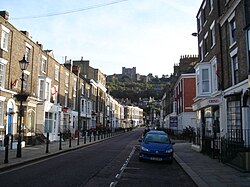
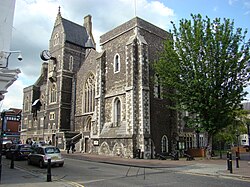
Visitors to Dover can explore a rich array of historical and natural sites. From the ancient Roman Painted House Museum and the 1203 Town Hall to the sprawling Dover Castle and the Western Heights, the town is a living museum.
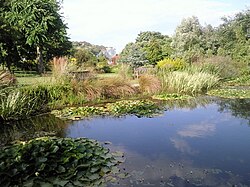
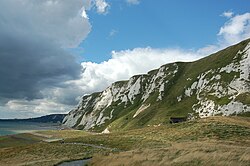
Natural beauty is found at the White Cliffs, Samphire Hoe Country Park, and the Pines Garden. The town also maintains international ties through twinning with Calais (France), Huber Heights (USA), Split (Croatia), and Dover (Barbados).
Frequently Asked Questions
What is the significance of the White Cliffs of Dover?
The White Cliffs are a world-famous natural landmark and a symbol of England. They also served a strategic military purpose, housing a regional seat of government during the Cold War.
How long does it take to travel from Dover to London?
Using the high-speed rail service via High Speed 1 to St Pancras International, the non-stop journey takes approximately 55 minutes.
What is the "Dover boat"?
The Dover boat is one of the oldest known seaworthy boats ever discovered. Found at a depth of six metres, radiocarbon dating places its construction at approximately 1550 BC.
What drives the local economy in Dover?
The economy is primarily driven by the Port of Dover, which provides significant employment through shipping and ferry services, and a robust tourism industry centered on the town's historical landmarks.
Is Dover a large city?
No, it is classified as a Large-Port Town. While it handles massive volumes of port traffic, its urban population is relatively low, estimated at 44,209 in 2024.