Dorothy Maud Wrinch: The Mathematician Who Challenged Protein Theory
Dorothy Maud Wrinch was a pioneering mathematician and biochemical theorist who spent her career bridging the gap between abstract mathematical principles and the physical mysteries of life. Best known for her ambitious and controversial attempts to deduce the structure of proteins, Wrinch navigated the male-dominated academic landscapes of early 20th-century England and the United States, leaving a legacy of intellectual courage and interdisciplinary exploration.
Key Facts
- Primary Contribution: Developed the "cyclol" hypothesis to explain protein structure.
- Academic Firsts: First woman lecturer in mathematics at Oxford University and the first woman to receive an Oxford DSc (1929).
- Interdisciplinary Reach: Transitioned from pure mathematics and logic to theoretical biology.
- Notable Collaborations: Worked closely with Bertrand Russell and Harold Jeffreys.
- Legacy: Her work with Irving Langmuir helped catalyze the understanding of the hydrophobic effect (the tendency of nonpolar substances to aggregate in aqueous solution) as a driver for protein folding.
Early Life and Academic Foundations
Born on September 12, 1894, in Rosario, Argentina, to an engineer father and Ada Souter, Dorothy Wrinch moved to England as a child. Her academic journey began at Surbiton High School, leading her to Girton College, Cambridge, in 1913. A gifted student, she graduated as a wrangler (a student who gains first-class honors in the mathematical tripos) in 1916.
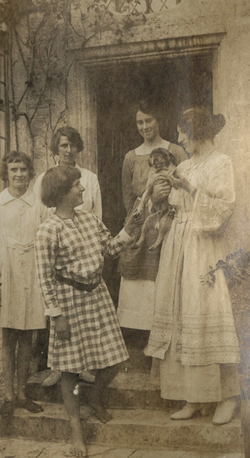
Wrinch's early intellectual life was deeply intertwined with the leading thinkers of her era. She studied mathematical logic under Bertrand Russell and became a fixture in the Bloomsbury Group circles, often visiting Garsington Manor. Her commitment to Russell's work was evident when she assisted him during his imprisonment for anti-war activities in 1918 and later secured the first publication of Ludwig Wittgenstein's Tractatus in a German journal in 1921.
Rise Through the Academic Ranks
After pursuing graduate studies in asymptotic expansions at King's College London, Wrinch began teaching at University College London. Her rapid ascent in academia was marked by an MSc in 1920 and a DSc in 1921 from the University of London. Upon moving to Oxford in 1922, she held various research fellowships and lectureships, eventually becoming the first woman lecturer in mathematics at the university.
Between 1918 and 1932, Wrinch was a prolific author, publishing 20 papers on pure and applied mathematics and 16 on the philosophy of science. Her collaboration with Harold Jeffreys on scientific method provided the essential foundation for his influential 1931 book, Scientific Inference.
The Shift to Theoretical Biology and the Cyclol Hypothesis
In the early 1930s, Wrinch pivoted her focus toward theoretical biology. She became a founding member of the Biotheoretical Gathering, an interdisciplinary group including luminaries such as Karl Popper, J.D. Bernal, and Dorothy Crowfoot Hodgkin, all seeking to explain the mechanisms of life through protein analysis.
Wrinch proposed the cyclol hypothesis, a mathematical model for protein structure. While bold, the theory sparked intense debate and was heavily criticized by chemist Linus Pauling. Wrinch's lack of formal training in chemistry proved to be a significant hurdle in these disputes. Despite accumulating evidence by 1939 that the model was incorrect, she continued to refine her ideas.
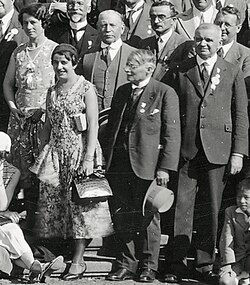
Despite the controversy, her collaborative experimental work with Irving Langmuir was pivotal. Their efforts to validate her theories helped establish the principle of the hydrophobic effect, which remains a cornerstone of modern understanding regarding how proteins fold into their functional shapes.
Personal Life and Social Advocacy
Wrinch's personal life was often as complex as her professional pursuits. In 1922, she married her graduate supervisor, John William Nicholson. The couple had one daughter, Pamela, in 1927. However, Nicholson's mental health declined in the late 1920s, leading to his institutionalization and Wrinch's eventual divorce in 1937.
In 1939, Wrinch moved to the United States on the advice of Lord Halifax to support the war effort through research and lecturing. She held positions at Amherst, Smith, and Mount Holyoke Colleges, eventually marrying Otto Charles Glaser, the chairman of the biology department at Amherst College, in 1941.
The Retreat from Parenthood
Beyond science, Wrinch was concerned with the societal barriers facing professional women. Writing under the pseudonym Jean Ayling, she published The Retreat from Parenthood in 1930. In this work, she argued that the burden of childcare often forced women out of their careers due to a lack of professional support and expertise in child-rearing.
She proposed the creation of Child Rearing Services (C.R.S.), divided into four specialized bureaus: home refitting (A), daily labor and care (B), nutrition and food safety (C), and medical and psychological health (D). This system aimed to allow parents to maintain their professional lives while ensuring children received expert care.
Summary of Dorothy Wrinch's Career
| Period/Year | Achievement/Role | Institution/Context |
|---|---|---|
| 1916 | Graduated as a Wrangler | Girton College, Cambridge |
| 1921 | Awarded DSc | University of London |
| 1929 | First woman to receive Oxford DSc | University of Oxford |
| 1930s | Developed Cyclol Hypothesis | Biotheoretical Gathering |
| 1942–1971 | Research Positions | Smith College, Massachusetts |
Frequently Asked Questions
What was the cyclol hypothesis?
The cyclol hypothesis was a mathematical model proposed by Dorothy Wrinch to explain the structure of globular proteins. It suggested a specific geometric arrangement of atoms, though it was later proven incorrect by chemists like Linus Pauling.
How did Dorothy Wrinch contribute to modern molecular biology?
While her specific protein model was flawed, her interdisciplinary approach and her work with Irving Langmuir helped catalyze the discovery of the hydrophobic effect, which is essential to understanding how proteins fold.
What was the purpose of the book "The Retreat from Parenthood"?
Published under the name Jean Ayling, the book advocated for a societal reorganization of childcare. It proposed professionalized Child Rearing Services to prevent women from having to choose between their professional careers and motherhood.
Who were some of Dorothy Wrinch's most influential associates?
She had close intellectual ties with the philosopher Bertrand Russell, the mathematician Harold Jeffreys, and the chemist Dorothy Crowfoot Hodgkin.
Why did Dorothy Wrinch move to the United States?
She moved in 1939 partly on the advice of Lord Halifax, the Foreign Secretary, who believed her research and lecturing capabilities would be most useful to the war effort in the U.S.