Domestic Canary
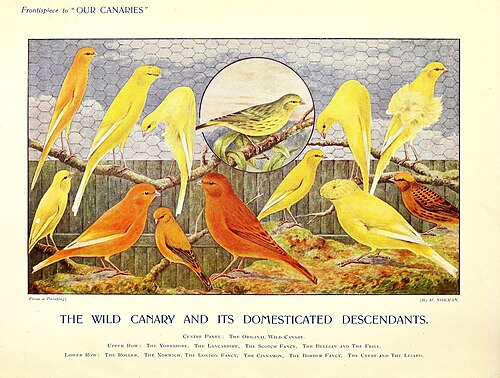
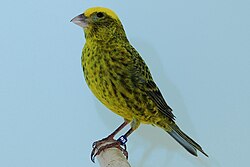
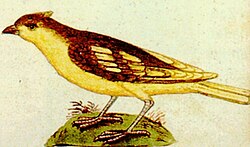
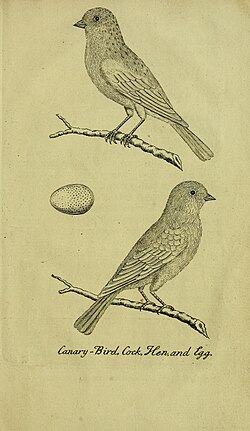
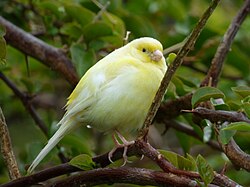
The domestic canary (Serinus canaria domestica) is one of the world's most beloved pet birds. A domesticated descendant of the wild Atlantic canary native to the Canary Islands, these birds are prized for their vibrant plumage, melodic songs, and diverse physical forms. From the classic yellow songbird to elaborate posture breeds, the domestic canary represents centuries of selective breeding and human companionship.
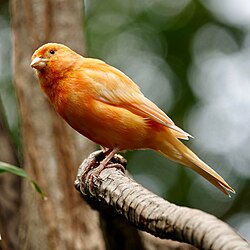
Typically, common canaries measure between 5 and 6 inches (13 to 15 cm) in length and weigh between 15 and 20 grams (0.53 to 0.71 oz). However, selective breeding has created decorative varieties that range from the small Fife Fancy at 4 inches (10 cm) to the larger Lancashire at 9 inches (23 cm). They are characterized by a harmonious finch-like shape, featuring a rounded head and a short, pin-shaped beak.
Key Facts

- Scientific Name: Serinus canaria domestica
- Origin: Domesticated from wild birds of the Canary Islands.
- Size Range: 4 to 9 inches depending on the breed.
- Weight: Generally 15 to 20 grams.
- Primary Categories: Song, Colour, Posture, and Frill canaries.
- Historical Use: Used as sentinel species in coal mines to detect carbon monoxide.
Canary Breed Classifications
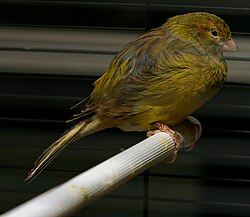
Over generations, breeders have categorized canaries based on their primary appeal: their voice, their color, or their physical silhouette.
Song and Colour Canaries
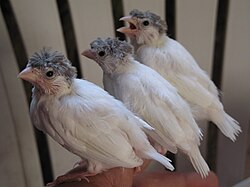
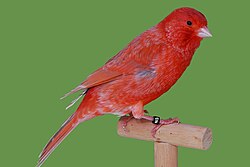
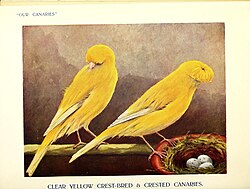
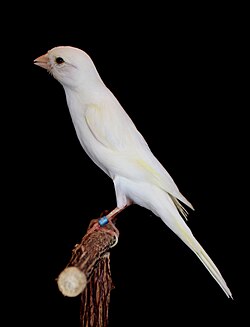
Song canaries are bred specifically for the complexity and beauty of their vocalizations. Parallel to this, colour canaries focus on plumage aesthetics. While the yellow canary is the most iconic, these birds exist in a vast array of hues, including white recessive, intense red with white wings, black red mosaic, agate yellow, and phaeo red intense.
Type and Posture Canaries
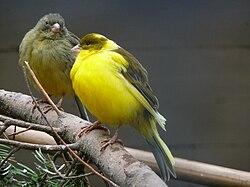
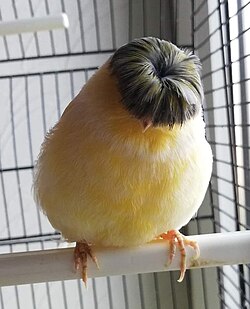
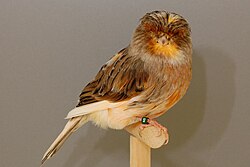
Posture canaries are bred for their unique physical stance and feather growth. These are often divided into smooth-feathered and crested varieties.
- German Crested (Deutsche Haube): An old breed featuring a broad, oval-shaped crest measuring 13.5 to 14.5 cm. It served as the foundation for several English breeds.
- English Breeds: This group includes the Gloster Fancy, the Norwich, and the Crested Canary. The Crested Canary features feathers that flow in a circular pattern from the center of the head, sometimes draping over the beak and eyes.
- Specialized Postures: The Munich canary (Münchener) is known for standing at a 45° angle with a long, forward-tilted neck, while the Japan Hoso is a smaller breed not exceeding 11.5 cm.

Frill Canaries
Frill canaries are distinguished by their curly or wavy plumage. The Parisian Frill (Frisé Parisien), standardized in 1920, is a large breed (19 to 21 cm) known for its chic, wavy look across its entire body. Other varieties include the Fiorino and the Dutch Frill.

Summary of Canary Varieties

| Category | Primary Focus | Example Breeds | Distinguishing Feature |
|---|---|---|---|
| Song | Vocalization | American Singer | Complex melodic patterns |
| Colour | Plumage Hue | Red Isabel, Agate | Diverse colors (Red, White, Yellow) |
| Posture | Physical Stance | Munich, Gloster Fancy | Specific angles or crests |
| Frill | Feather Texture | Parisian Frill | Wavy or curly feathers |
History and Human Interaction

The domestic canary has a long history of integration into human society, appearing in art and literature as early as the 16th century. Beyond being pets, they played a critical role in industrial safety.
The Miner's Canary
Canaries were famously used as sentinel species in coal mines. Because they are more sensitive to toxic gases than humans, a canary would show distress or collapse in the presence of carbon monoxide, alerting miners to evacuate. Some mines even utilized resuscitation cages equipped with oxygen cylinders to revive the birds for repeated use.

Hybridization and Culture
Canaries are known for their ability to hybridize with other finches, such as the goldfinch and the Eurasian siskin. In popular culture, they have transitioned from essential safety tools to symbols of domesticity and artistic inspiration, appearing in classical music recordings and historical paintings.
Frequently Asked Questions






What is the difference between a domestic and an Atlantic canary?
The Atlantic canary is the wild ancestor inhabiting islands off western Europe, whereas the domestic canary is the selectively bred variety kept as a pet.
Why were canaries used in coal mines?
They were used to detect carbon monoxide and other toxic gases; their rapid reaction to poor air quality served as an early warning system for miners.
What are the most common colors for domestic canaries?
While yellow is the most stereotypical color, they also come in white, red, orange, and various mosaic patterns like black red or agate.
What defines a "posture" canary?
A posture canary is bred for a specific physical silhouette or stance, such as the 45-degree angle of the Munich canary or the distinctive head crests of the German Crested.
How large do domestic canaries grow?
Most common canaries are 5 to 6 inches long, but specialized breeds can range from as small as 4 inches (Fife Fancy) to as large as 9 inches (Lancashire).