Parakeets: A Comprehensive Look at These Colorful Parrots
Parakeets are small- to medium-sized species of parrots characterized by their slender builds and typically long tail feathers. Belonging to the order Psittaciformes, these birds are found across multiple genera, with many species falling under the genus Pyrrhura. While often viewed simply as pets, parakeets are a diverse group of seed-eating birds with a fascinating global distribution.
Key Facts
- Species Diversity: There are approximately 115 species of parakeets.
- Global Popularity: The budgerigar is the third most popular pet worldwide, following cats and dogs.
- Physical Traits: Generally characterized by small size, slender bodies, and tapering tails.
- Common Types: Includes budgies, conures, lorikeets, and ring-necked parakeets.
- Breeding: Most species lay an average of 4 to 6 eggs per clutch.
Etymology and Naming
The term "parakeet" originates from the French word perroquet. While older English texts may use spellings like paroquet or paraquet, modern French uses the word perruche to describe these birds. In American English, the word is frequently used as a synonym for the budgerigar, although the budgerigar is actually just one specific species of parakeet.
Types and Classifications
The classification of parakeets can vary between scientific taxonomy and common usage in aviculture (the breeding and keeping of birds).
Common Species and Groups
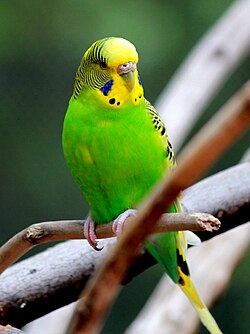
The Australian budgerigar (Melopsittacus undulatus), often called the "budgie," was first described by zoologists in 1891 and is the most popular pet parakeet in Europe and North America.
Other notable groups include:
- Grass Parakeets: Small Australian birds native to grasslands, including the princess parrot and those in the genus Neophema.
- Lorikeets: Smaller, long-tailed species of lories.
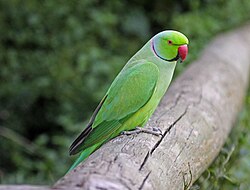
- Ring-necked Parakeets: Species of the genus Psittacula native to Asia and Africa.
- Conures: A term used in aviculture for small to medium parakeets of the tribe Arini (such as the genera Aratinga and Pyrrhura), primarily endemic to South America.
In some cases, the terms "parrot" and "parakeet" are used interchangeably for larger species. For example, Psittacula eupatria is known as both the Alexandrine parrot and the Alexandrine parakeet.
Summary of Parakeet Varieties
| Common Name | Genus/Group | Primary Region | Distinguishing Feature |
|---|---|---|---|
| Budgerigar | Melopsittacus | Australia | Most popular pet species |
| Conure | Arini (Tribe) | South America | Medium size, diverse colors |
| Ring-necked | Psittacula | Africa/Asia | Distinct neck ring |
| Grass Parakeet | Neophema / Others | Australia | Grassland habitat |
Breeding and Behavior
Parakeets often exhibit a preference for breeding in groups, as the presence of other birds encourages pairing. However, this can lead to conflicts if space is limited. To avoid these disputes and ensure the certainty of parentage, many breeders prefer to house birds in isolated pairs. Regardless of the method, most species typically produce clutches of 4 to 6 eggs.
Global Urban Populations
Many parakeet species have established feral populations in cities far from their native habitats.
North America
In the United States, the monk parakeet has established significant populations in New York City (across all five boroughs) and Chicago, specifically in the Hyde Park neighborhood. While the green parakeet remains native to southern Texas, the Carolina parakeet, once native to the eastern US, became extinct in the early 20th century.
Europe
European cities have seen a surge in urban parakeets. By 2023, Brussels hosted an estimated 10,000 birds. In the Netherlands, populations are estimated between 10,000 and 28,000 as of 2025, with notable colonies in Amsterdam's Westerpark and Vondelpark. In Spain, populations in cities like Malaga reached 30,000 by 2018, leading authorities to develop control measures.
In the United Kingdom, the rose-ringed parakeet has thrived. A 2019 analysis published in the Journal of Zoology suggests these populations grew from numerous small-scale accidental and intentional pet releases, debunking myths that they arrived via a single event involving celebrities like Jimi Hendrix or Humphrey Bogart.
Frequently Asked Questions
What is the difference between a parakeet and a budgie?
A budgie (budgerigar) is a specific species of parakeet. While the term "parakeet" refers to a broad group of small-to-medium parrots with long tails, in American English, it is often used specifically to refer to the budgerigar.
Are conures considered parakeets?
Yes, in aviculture, conures are small to medium-sized parakeets from the tribe Arini. However, because they span multiple genera, some taxonomists avoid the general term "conure" in scientific contexts.
Why do some parakeets live in cities like London or New York?
Many urban populations began as pets that were either accidentally or intentionally released. Over time, these birds adapted to city environments and established feral colonies.
How many eggs does a parakeet typically lay?
Most parakeet species, including budgerigars, lay an average of 4 to 6 eggs per clutch.
Which parakeet is the most popular pet?
The Australian budgerigar is the most popular parakeet pet in North America and Europe, and it ranks as the third most popular pet globally after cats and dogs.