DNA Sequencing: Technologies, History, and Modern Applications
DNA sequencing is the fundamental process of determining the nucleic acid sequence, which refers to the specific order of nucleotides within a DNA molecule. This process involves identifying the arrangement of the four canonical bases: adenine (A), thymine (T), cytosine (C), and guanine (G). By mapping these sequences, scientists can unlock the biological blueprints of living organisms.
The ability to sequence DNA rapidly has revolutionized biological and medical research. From diagnosing diseases like cancer to advancing biotechnology and forensic biology, the precision of sequencing allows for highly individualized medical care and the systematic cataloging of the world's biodiversity.
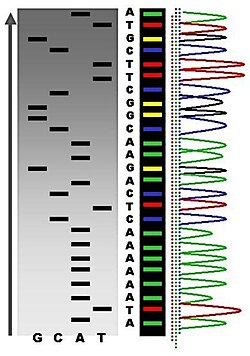
Key Facts
- DNA sequencing determines the order of the four bases: adenine, thymine, cytosine, and guanine.
- Modern sequencing is used in medical diagnosis, forensics, virology, and evolutionary biology.
- Technological shifts have moved from laborious chromatography to rapid, high-throughput automated methods.
- Sequencing enables personalized medicine by comparing healthy and mutated DNA.
The Evolution of Sequencing Technology
The journey of genomic discovery began in the early 1970s. Initially, academic researchers relied on laborious methods based on two-dimensional chromatography to obtain the first DNA sequences. These early processes were time-consuming and difficult to scale.
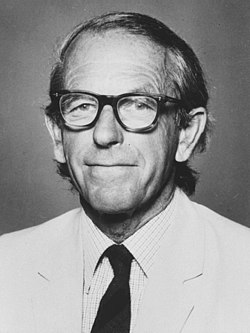
A major turning point occurred with the development of chain-termination methods, most notably pioneered by Frederick Sanger. This advancement, along with the introduction of fluorescence-based sequencing, made the process significantly easier and orders of magnitude faster than previous techniques.
![History of sequencing technology [64]](/images/fe/fb/fefbd379d1424564d812c6c41461b9233632098602be4737e2b568ee4dd3fe4d.jpg)
Early Methods and the Sanger Legacy
One of the most influential early techniques was Sanger sequencing, which utilizes chain-terminating inhibitors to stop DNA synthesis at specific points, allowing the sequence to be read. While newer methods have emerged, the principles established during this era remain foundational to the field.
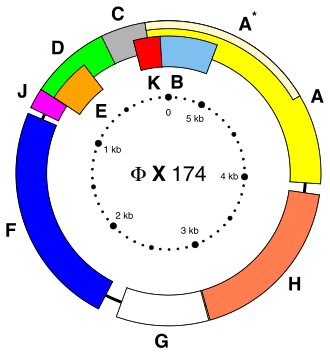
Modern Sequencing Methodologies
Today, sequencing is categorized into several distinct approaches, primarily distinguished by the length of the DNA fragments they can read and the speed at which they operate.
Short-Read Sequencing
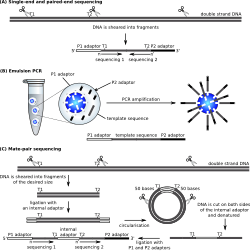
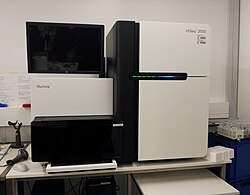
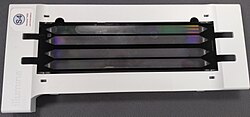
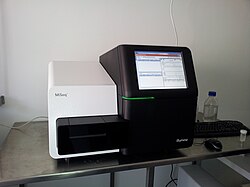
Short-read sequencing is highly accurate and widely used for high-throughput applications. Technologies like Illumina sequencing (sequencing by synthesis) dominate this space. These methods involve breaking genomic DNA into smaller pieces, cloning them, and then sequencing the overlapping regions to reconstruct the full genome.
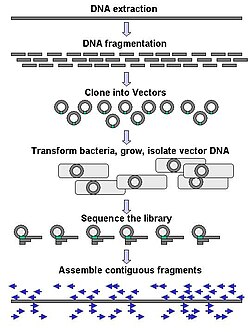
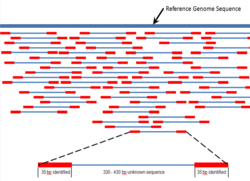
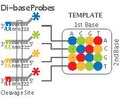
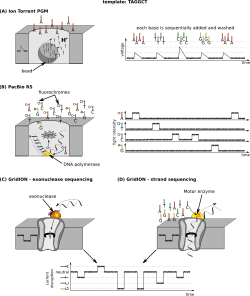
Other short-read technologies include Ion Torrent (semiconductor sequencing) and SOLiD (sequencing by ligation). While these methods offer high throughput, they typically produce shorter fragments compared to newer technologies.
Long-Read Sequencing
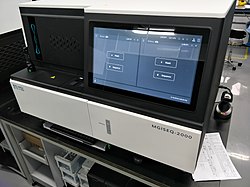
To overcome the limitations of short reads, long-read sequencing methods have been developed. These technologies, such as Pacific Biosciences (SMRT) and Nanopore sequencing, can read much longer continuous stretches of DNA. This is particularly useful for assembling complex genomes and identifying structural variations.
Comparison of Sequencing Technologies
The following table provides a technical comparison of various sequencing methods currently used in research and clinical settings.
| Method | Read Length | Accuracy | Cost per 1B Bases (USD) |
|---|---|---|---|
| Sanger (Chain Termination) | 400–900 bp | 99.9% | $2,400,000 |
| Illumina (Sequencing by Synthesis) | 50–600 bp | 99.9% | $5–$150 |
| Ion Torrent (Semiconductor) | Up to 600 bp | 99.6% | $66.8–$950 |
| Pacific Biosciences (SMRT) | 30,000 bp (N50) | 87% (raw) | $7.2–$43.3 |
| Nanopore | Variable | 92–97% | $7–$100 |
Note: Costs and performance metrics can vary significantly based on the specific instrument and run parameters used.
Applications of DNA Sequencing
The impact of sequencing spans across multiple scientific disciplines:
- Medicine: Comparing healthy and mutated DNA to diagnose cancers and guide personalized patient treatments.
- Molecular Biology: Studying the fundamental processes of life at a genetic level.
- Evolutionary Biology: Understanding the relationships between different species through genomic comparison.
- Forensics: Using DNA profiles to assist in criminal investigations.
- Virology: Identifying and tracking the mutations of viruses.
- Metagenomics: Analyzing genetic material recovered directly from environmental samples.
Frequently Asked Questions
What are the four bases of DNA?
The four canonical bases that make up the DNA sequence are adenine (A), thymine (T), cytosine (C), and guanine (G).
What is the difference between short-read and long-read sequencing?
Short-read sequencing produces many small, highly accurate fragments of DNA, which are then assembled like a puzzle. Long-read sequencing produces much longer continuous sequences, making it easier to map complex or repetitive regions of a genome.
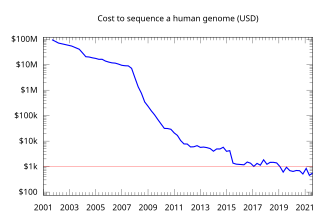
How has the cost of sequencing changed over time?
The cost of sequencing a human genome has decreased dramatically over time, moving from millions of dollars to a range that is accessible for large-scale research and clinical applications.
Why is DNA sequencing important for medicine?
Sequencing allows doctors to identify specific genetic mutations associated with diseases like cancer. This information can be used to tailor treatments to a patient's unique genetic makeup, a field known as personalized medicine.
What is high-throughput sequencing?
High-throughput sequencing, also known as next-generation sequencing (NGS), refers to modern technologies that can sequence millions of DNA fragments simultaneously, allowing for massive amounts of data to be generated in a single run.