Discount Stores: How the Low-Price Retail Model Works
In a world of fluctuating costs, discount stores have become a cornerstone of the global economy. These retail establishments specialize in selling products at prices significantly lower than the standard or recommended retail price. By leveraging massive scale and operational efficiency, discounters provide consumers with an alternative to traditional high-end department stores and supermarkets.
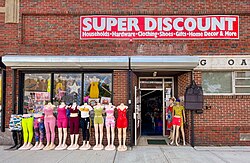
To maintain these low prices, discounters rely on two primary pillars: bulk purchasing—buying enormous quantities of goods to lower the unit cost—and highly efficient distribution networks that minimize overhead.
Key Facts
- Discount stores generate profit through high sales volume on low margins or by pricing specific items higher than regular retailers.
- Common formats include hypermarkets, warehouse clubs, category killers, and dollar stores.
- In the United States, discount stores held an 87% retail market share as of 2010.
- Many discounters use private labels (generic brands) to keep costs down.
- Global giants like Aldi and Lidl operate thousands of stores worldwide.
The Business Model: How Discounters Make Money
It may seem counterintuitive to sell items at a low price and still turn a profit, but discount retailers use sophisticated strategies to ensure sustainability. There are two main ways these businesses operate:
High Volume, Low Margin
The most common method involves buying vast amounts of goods at heavily discounted prices. While the profit margin on each individual item is small, the sheer sales volume—the total number of items sold—multiplies those small gains into significant revenue.
Strategic Pricing and Unit Sizing
Some retailers use a mixed pricing strategy. They may offer certain "loss leaders" or heavily discounted items to draw customers in, while pricing other goods at rates similar to or even higher than traditional retailers. To achieve specific price points, stores may use several tactics:
- Private Labels: Manufacturing generic brands using more cost-effective materials and processes.
- Grey Market Goods: Sourcing products through unofficial but legal distribution channels.
- Closeout Sales: Purchasing seasonal, promotional, or bankruptcy stock at liquidation prices.
- Reduced Unit Sizes: Selling products in smaller packages to maintain a lower shelf price.
Common Types of Discount Retailers
The discount landscape is diverse, with different formats serving different consumer needs. While terminology varies by country, the following categories are widely recognized:
Hypermarkets and Superstores
Hypermarkets, often called superstores in North America, are massive "big-box" retailers that sell a wide range of general merchandise alongside a full grocery selection. In the mid-20th century, these were often referred to as discount department stores. Modern examples include Walmart and Target.
Category Killers
A category killer is a large-scale retailer that specializes in one specific type of merchandise. By offering an exhaustive selection within a single niche, they can dominate that market. Examples include:
- Apparel: Ross Dress for Less, Marshalls, and Burlington.
- Pet Supplies: Petco and PetSmart.
- Home Furnishings: Big Lots and HomeGoods.
- Office Supplies: Staples and Office Depot.
Warehouse Clubs
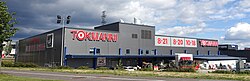
Warehouse clubs are discount superstores that typically require a membership fee to shop. These stores often require customers to purchase goods in larger sizes or bulk quantities. Major international chains include Costco and Sam's Club.
Discount Grocery Stores
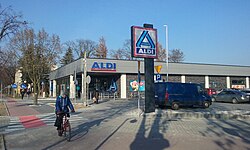
These chains focus specifically on food and household essentials. As of 2025, the scale of these operations is massive: Aldi operates approximately 6,600 stores, while Lidl operates around 12,600 stores globally.
Variety and Dollar Stores
Variety stores sell goods at a single or low fixed price point. In the United States, these are commonly known as dollar stores. Historically known as "five and dimes," these stores have evolved from selling items for a few cents to offering a wider variety of general merchandise at flexible, discounted price points.
Summary of Retail Formats
| Format | Primary Characteristic | Typical Product Range |
|---|---|---|
| Hypermarket | Massive scale; big-box format | General merchandise and groceries |
| Category Killer | Specialized niche focus | Single category (e.g., pet supplies) |
| Warehouse Club | Membership required; bulk buying | Large quantities of various goods |
| Dollar Store | Fixed or low price points | Small variety of general goods |
Frequently Asked Questions
What is the difference between a hypermarket and a supermarket?
A supermarket focuses primarily on food and household items, whereas a hypermarket is a much larger "big-box" store that combines a full grocery selection with a wide array of general merchandise like clothing and electronics.
How do discount stores keep their prices so low?
They utilize bulk purchasing to reduce costs, focus on high sales volumes to make up for small profit margins, and often sell private-label brands manufactured with more efficient processes.
What are "category killers" in retail?
Category killers are large stores that specialize in one specific type of product—such as office supplies or pet goods—offering such a deep selection that they effectively dominate that specific retail category.
Why do some warehouse clubs require a membership?
Membership fees help support the business model, allowing the retailer to pass further savings on to members through bulk pricing and lower operational costs.
What are private labels?
Private labels, or generic brands, are products manufactured specifically for a retailer. They are often produced using cheaper materials or processes than national brands, allowing the store to sell them at a lower price point.