Digraphs: How Two Characters Represent a Single Sound
In the complex world of written language, a single sound is not always represented by a single letter. Often, two characters work together to create a specific phoneme—a distinct unit of sound. This linguistic phenomenon is known as a digraph (derived from the Ancient Greek dis, meaning 'double', and grapho, meaning 'to write').
Digraphs serve various roles in orthography (the conventional spelling system of a language). They may represent a sound that a single character cannot capture, such as the ⟨ch⟩ in the Spanish words chico and ocho. In other cases, they may be relics of historical pronunciations or used to maintain etymological connections, such as the ⟨ph⟩ in French.
Key Facts
- Definition: A digraph is a pair of characters used to write a single phoneme or a specific sequence of sounds.
- Types: They can be heterogeneous (two different characters) or homogeneous (two of the same character).
- Alphabetization: In some languages, digraphs are treated as unique letters with their own specific place in the alphabet.
- Ligatures: While distinct from digraphs, digraphs can evolve into ligatures, which are visual fusions of two characters (e.g., ⟨oe⟩ becoming ⟨œ⟩).
Types of Digraphs
Homogeneous vs. Heterogeneous
Digraphs are categorized based on the characters they comprise. Heterogeneous digraphs consist of two different letters, such as the English ⟨sh⟩ or ⟨th⟩. Homogeneous digraphs, often called doubled letters, consist of the same character repeated.
In several Western European languages like English, French, and Portuguese, the doubled ⟨ss⟩ is used between vowels to represent the voiceless sibilant /s/, preventing it from being pronounced as a voiced /z/. Similarly, in Spanish, Portuguese, Catalan, and Basque, the ⟨rr⟩ represents an alveolar trill, distinguishing it from the single ⟨r⟩, which represents an alveolar flap.
Pan-dialectical and Split Digraphs
Some languages use digraphs that change meaning depending on the dialect, known as diaphonemes. For instance, in Breton, the digraph ⟨zh⟩ represents [z] in most dialects but [h] in the Vannetais dialect. In Catalan, ⟨ix⟩ represents [ʃ] in Eastern Catalan but [jʃ] in Western Catalan.
Other systems utilize split digraphs, where the representation of a sound is discontinuous. An example is found in the Tatar Cyrillic alphabet, where the letter ю can represent both /ju/ and /jy/, with the latter often requiring a specific sequence to be clear.
Digraphs in Alphabetical Order
One of the most significant impacts of digraphs is how they affect collation (the arrangement of words in alphabetical order). In many orthographies, a digraph is not merely two letters, but a single unit with its own position in the alphabet.
- Czech and Slovak: The digraph ⟨ch⟩ is treated as a distinct letter following ⟨h⟩.
- Maltese: The digraphs ⟨għ⟩ and ⟨ie⟩ follow ⟨g⟩ and ⟨i⟩ respectively.
- Gaj's Latin: Used for Serbo-Croatian, it treats ⟨dž⟩, ⟨lj⟩, and ⟨nj⟩ as distinct letters.
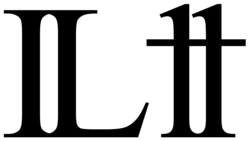
- Welsh: Includes several digraphs like ⟨dd⟩, ⟨ff⟩, and ⟨ll⟩ as separate letters for sorting.
Summary of Common Digraph Examples
| Language | Digraph | Typical Sound/Function |
|---|---|---|
| English | ⟨ph⟩ | /f/ (as in siphon) |
| Spanish | ⟨rr⟩ | Alveolar trill /r/ |
| French | ⟨gn⟩ | Palatal nasal /ɲ/ |
| Welsh | ⟨ll⟩ | Voiceless lateral consonant /ɬ/ |
| German | ⟨ch⟩ | /x/ or /ç/ |
| Italian | ⟨gl⟩ | Palatal lateral approximant /ʎ/ |
Frequently Asked Questions
What is the difference between a digraph and a ligature?
A digraph is defined by its sound (the phoneme it represents), whereas a ligature is a visual phenomenon where two characters are graphically fused into a single shape, such as ⟨œ⟩ in the French word cœur.
Are all doubled letters considered digraphs?
When a digraph consists of two identical characters, it is specifically referred to as a homogeneous digraph or a doubled letter.
Why do some languages treat digraphs as single letters?
Some languages design their alphabets so that certain sound combinations are considered fundamental units. This affects how words are sorted, abbreviated, and hyphenated.
Does every language use digraphs?
While many languages use them, the usage varies. Some languages use them to represent sounds that lack a single character, while others use them for etymological or dialectal distinctions.
How does the English "th" work?
The English ⟨th⟩ is a heterogeneous digraph that can represent different sounds depending on the word, such as the voiceless interdental fricative /θ/ in thin or the voiced interdental fricative /ð/ in then.