Dick Dale: The King of the Surf Guitar and Pioneer of Heavy Sound
Richard Anthony Monsour, known to the world as Dick Dale, was more than just a musician; he was the architect of a sonic revolution. As the undisputed "King of the Surf Guitar," Dale blended the energy of rock and roll with Middle Eastern musical scales and a heavy reliance on reverb to create the iconic sound of surf music. His influence extended far beyond the beaches of California, laying the groundwork for genres that would later define the rock landscape.
From his early collaborations with legendary equipment designers to his unexpected global resurgence in the 1990s, Dale's career was marked by a relentless pursuit of volume and power. His legacy is cemented not only in his discography but in the very hardware used by guitarists today.
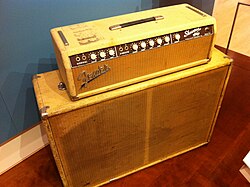
Key Facts
- Professional Alias: The King of the Surf Guitar.
- Musical Innovation: Pioneered surf music by integrating Middle Eastern scales and experimental reverb.
- Technical Legacy: Collaborated with Leo Fender to develop high-volume amplifiers.
- Pop Culture Impact: His recording of "Misirlou" gained worldwide fame via the film Pulp Fiction.
- Accolades: Nominated for a Grammy for "Pipeline" and inducted into the Library of Congress Hall of Records.
The Architecture of Sound: Collaboration with Leo Fender
Dick Dale's playing style was famously aggressive, often pushing his equipment to the breaking point. This led to a pivotal partnership with Leo Fender. Dale's need for extreme volume—specifically to be heard over the screaming crowds at the Rendezvous Ballroom in Balboa, California—resulted in the destruction of several standard amplifiers.
To solve this, Leo Fender and Freddie Tavares worked with the James B. Lansing loudspeaker company to create a custom 15-inch loudspeaker, the JBL D130F. This innovation became the Single Showman Amp. By pairing a Fender Stratocaster with this powerful amplifier, Dale achieved volume levels previously unattainable. This evolution continued with the Dual Showman Amp, which featured a second 15-inch speaker. Because of this pursuit of loudness and his use of heavy-gauge strings, Dale is often referred to as the "Father of Heavy Metal."

Career Evolution and Resilience
While surf rock enjoyed a massive surge in popularity, the British Invasion of 1964 shifted the American musical landscape. Dale continued to perform, but his life was marked by significant health challenges, including a battle with colorectal cancer. During this time, he was encouraged by the spirit of Jimi Hendrix, whom Dale later honored with a cover of "Third Stone from the Sun."
In 1979, a pollution-related infection from a swimming injury nearly cost him a leg, an experience that transformed Dale into an environmental activist. He returned to the studio in 1986, earning a Grammy nomination and appearing in the 1987 film Back to the Beach, where he performed "Pipeline" alongside Stevie Ray Vaughan.
The 1990s brought a massive revival of his work when Quentin Tarantino featured "Misirlou" in Pulp Fiction. This sparked a late-career renaissance, leading to four new albums and extensive world tours.
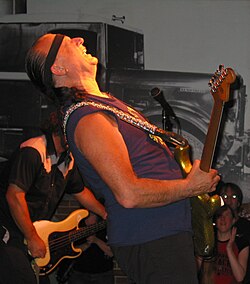
Personal Life and Philosophy
Dale's personal life was as dynamic as his music. He was married three times, with his first wife, Jeannie, a Tahitian dancer, collaborating with him on the 1975 release "Spanish Eyes." Together, they invested in real estate and nightclubs, though a bitter divorce in 1984 depleted much of his wealth. His second wife, Jill, influenced his transition toward a more raw, stripped-down musical style in the 1990s.
A man of discipline, Dale studied Kenpo karate for over 30 years and maintained a strict health regimen, avoiding alcohol and drugs and eliminating red meat from his diet in 1972. He was also an avid pilot, owning a private aircraft (a Piper Tri-Pacer) and a home with a private airstrip in the Mojave Desert, which was officially marked as "Dale" on NOAA aeronautical charts.
Musical Legacy Summary
| Category | Details |
|---|---|
| Primary Genres | Surf, Rockabilly, Proto-punk, Proto-metal, Instrumental Rock |
| Key Equipment | Fender Stratocaster, Fender Showman Amp (Single and Dual) |
| Signature Track | "Misirlou" |
| Major Honors | Hollywood Rock Walk of Fame, Library of Congress Hall of Records |
| Rolling Stone Rank | 31st (2003), 74th (2011) in 100 Greatest Guitarists |
Frequently Asked Questions
Why is Dick Dale called the "Father of Heavy Metal"?
He earned this title due to his pioneering use of extremely loud amplifiers and heavy-gauge strings, creating a powerful, distorted sound that predated the formal emergence of heavy metal.
What is the significance of the song "Misirlou"?
Originally drawing on Middle Eastern scales, Dale's version of "Misirlou" became a definitive surf rock anthem and saw a massive global resurgence after being featured in the 1994 film Pulp Fiction.
How did Dick Dale influence guitar equipment?
Dale worked closely with Leo Fender to test equipment. His need for higher volume led to the development of the JBL D130F loudspeaker and the Fender Showman Amp series.
What were Dick Dale's interests outside of music?
Dale was a dedicated practitioner of Kenpo karate for over 30 years, an environmental activist, and a licensed pilot who operated his own private airstrip.
When did Dick Dale pass away?
Dick Dale died on March 16, 2019, at the age of 81.