Electric Bass Guitar: History, Evolution, and Technical Design
The electric bass guitar, often simply called the bass, is the lowest-pitched member of the guitar family. While it resembles a standard electric guitar, it features a longer neck and scale length to produce deeper frequencies. Since the mid-1950s, this instrument has largely replaced the double bass in popular music due to its portability, ease of intonation, and ability to be amplified electronically.
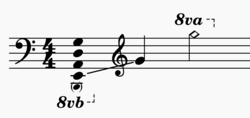
Most electric basses feature four strings, though five-, six-, and seven-string models are common in various genres. The instrument is typically tuned to E, A, D, and G—one octave lower than the lowest four strings of a standard guitar. Musicians play the bass using their fingers, thumb, or a pick.
Key Facts
- Inventor: Paul Tutmarc developed the first modern electric bass in the 1930s.
- Standard Tuning: Typically E1, A1, D2, G2.
- Primary Advantage: Offers easier portability and more precise intonation than the double bass.
- Amplification: Requires external amplification via electromagnetic or piezo-electric pickups.
- Scale Lengths: Range from short scale (30" or less) to long scale (35").
Technical Anatomy and Design
Scale Length
The scale is the length of the vibrating string between the nut and the bridge saddles. Scale length affects the resonance and feel of the instrument:
- Short Scale: 30" (76 cm) or less.
- Medium Scale: 32" (81 cm).
- Standard Scale: 34" (86 cm).
- Long Scale: 35" (89 cm), often used on 5-string basses to improve the resonance of the low B string.
Pickups and Amplification
Because the electric bass is acoustically quiet, it relies on pickups—devices attached to the body beneath the strings. These convert string vibrations into magnetic field interference, which is then transformed into electrical voltage and sent to an amplifier. Modern players may also use direct input (DI) boxes, audio interfaces, or effects processors.
String Composition
Bass strings consist of a core (steel, nickel, or alloy) and a winding. The type of winding significantly alters the instrument's tone:
- Roundwound: Circular cross-section; bright and punchy.
- Flatwound: Rounded-square cross-section; smoother, warmer tone.
- Half-round: A hybrid of round and flat windings.
- Coated: Features a synthetic layer to protect the string.
- Tapewound: Metal core with a plastic winding.
- Taperwound: The winding tapers off at the bridge end.
The Evolution of the Electric Bass
The 1930s: The First Innovations
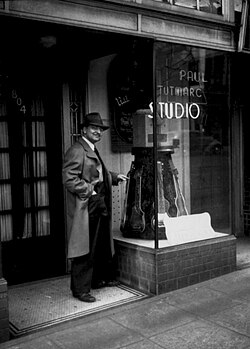
The modern electric bass originated in Seattle, Washington, where inventor Paul Tutmarc developed a fretted four-string instrument designed to be played horizontally. His 1935 "Model 736 Bass Fiddle" featured a solid body and a 30.5-inch scale. Approximately 100 of these units were produced.
The 1950s: Mass Production and the P-Bass
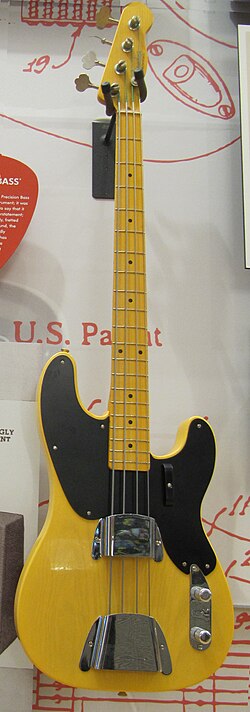
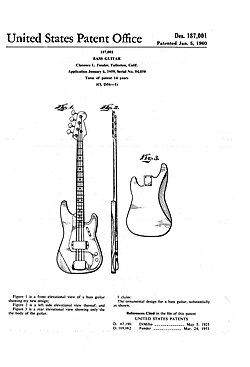
In October 1951, Leo Fender and George Fullerton introduced the Precision Bass (P-Bass). This was the first mass-produced electric bass, featuring a "slab" body and a single-coil pickup. The addition of frets allowed for "precision" in intonation, making it easier for guitarists to transition to the bass.
Throughout the 1950s, other manufacturers entered the market. Gibson released the violin-shaped EB-1 in 1953, followed by the EB-2 and EB-0. In 1956, Walter Höfner introduced the 500/1, which later became famous as the "Beatle bass" after being used by Paul McCartney. Rickenbacker introduced the first neck-through-body design with the Model 4000 in 1957.
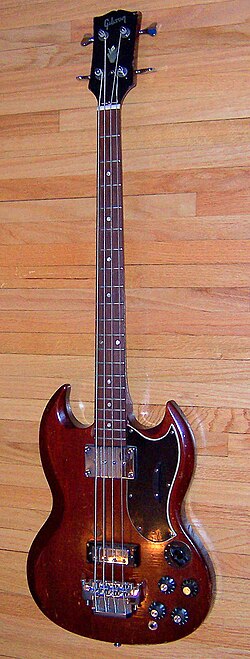
The 1960s and 1970s: Diversification
The 1960s saw the launch of the Fender Jazz Bass (1960), which featured an offset waist for better seated comfort and two single-coil pickups. Other variations emerged, including the short-scale Mustang Bass and the 6-string Fender VI. The first commercial fretless bass, the Ampeg AUB-1, arrived in 1966.
By the 1970s, "boutique" high-end basses emerged via Alembic, introducing premium woods and onboard active electronics. Active electronics use a battery-powered preamp to increase output and allow players to boost or cut specific frequency ranges. In 1974, Music Man introduced the StingRay, the first widely produced active bass. This era also saw the introduction of 5-string and 6-string basses to extend the instrument's range.
Summary of Bass Guitar Specifications
| Feature | Standard 4-String | Extended Range (5/6 String) | Short Scale |
|---|---|---|---|
| Typical Tuning | E-A-D-G | B-E-A-D-G (5) / B-E-A-D-G-C (6) | E-A-D-G |
| Common Scale Length | 34" (Standard) | 35" (Long Scale) | 30" or less |
| Electronics | Passive or Active | Often Active | Passive or Active |
| Primary Use | General Popular Music | Jazz, Metal, Fusion | Indie, Vintage Styles |
Frequently Asked Questions
What is the difference between a Precision Bass and a Jazz Bass?
The Precision Bass typically features a split-coil pickup and a simpler body design, known for a punchy, foundational tone. The Jazz Bass features an offset waist for comfort and two single-coil pickups, offering a brighter and more versatile sound.
What are active electronics in a bass guitar?
Active electronics include a built-in battery-powered preamplifier. This allows the player to adjust the EQ (boosting or cutting bass and treble frequencies) directly on the instrument, resulting in a stronger output signal.
Why are some basses called "fretless"?
A fretless bass has a smooth fingerboard without the metal fret wires. This allows the player to slide between notes seamlessly and achieve a sound closer to that of a double bass.
How does scale length affect the sound of the bass?
Longer scale lengths (like 35") generally provide better tension and resonance for lower notes, which is why they are common on 5-string basses with a low B string. Shorter scales (30") are easier to play and often have a warmer, "thumpier" tone.
What is the difference between roundwound and flatwound strings?
Roundwound strings have a circular winding that creates a bright, metallic zing. Flatwound strings have a flat surface, producing a muted, warm tone and feeling smoother under the fingers.