Diablada: The Vibrant Dance of the Andean Devils
The Diablada is a spectacular folk dance that serves as a living tapestry of Andean history, blending pre-Columbian spirituality with colonial religious influence. Performed across the Altiplano region of South America, this "dance of the devils" is characterized by its elaborate masks, rhythmic choreography, and deep symbolic meaning. While it is most famously associated with the Carnival of Oruro in Bolivia, its roots stretch across the borders of Peru and Chile, reflecting a shared cultural heritage that predates modern national boundaries.
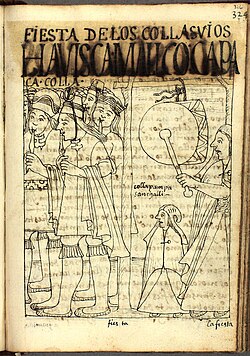
Though the dance has been performed in the Andean region since the 1500s, the term "Diablada" gained prominence in 1789 in Oruro, where participants dressed as devils for public parades. It wasn't until 1904 that the first organized group with standardized music and choreography emerged in Bolivia, transforming a regional tradition into a structured artistic expression.
Key Facts
- Origin: Altiplano region, primarily Bolivia, Peru, and Chile.
- Timeline: Roots in the 1500s; institutionalized in 1904.
- UNESCO Status: The Carnival of Oruro was declared a Masterpiece of the Oral and Intangible Heritage of Humanity in 2001.
- Core Theme: A symbolic struggle between good and evil, often featuring the archangel Saint Michael and Lucifer.
- Regional Variants: Includes the Diablada puneña (Peru), Diablada pillareña (Ecuador), and performances at the Fiesta de La Tirana (Chile).
Historical Evolution
Pre-Columbian and Indigenous Roots
The Diablada is deeply rooted in the civilizations of the Andes. Some scholars point to Aymaran traditions involving the deity Anchanchu, documented by the 16th-century historian Inca Garcilaso de la Vega. In Oruro, the dance is linked to the Uru people and their worship of the god Tiw. Originally, these rituals were performed during the Ito festival, which later evolved into Christian celebrations to avoid prohibition by Spanish colonizers.
Spanish Influence and Religious Syncretism
The modern form of the dance is a result of syncretism—the blending of different beliefs. Many historians believe the dance was influenced by autos sacramentales, religious plays used by Spanish colonizers to introduce Christianity. This process is particularly evident in the Diablada puneña of Peru, which emerged among the Lupaka people in the late 1500s under Jesuit influence.
Other theories suggest a connection to the Catalan Ball de diables (Dance of the Devils), a tradition dating back to 1150 that depicts the struggle between Saint Michael and Lucifer. Additionally, some anthropologists suggest the dance originated among rebellious miners in Potosí in 1538, combining the ancient ritual of Tinku (a traditional combat ritual) with Christian imagery.
Post-Independence and Institutionalization
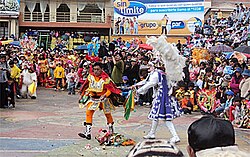
Following the Latin American wars of independence, there was a revival of pre-Columbian music and dance, particularly around Lake Titicaca. In Bolivia, the religious festival of the Virgin of the Candlemas was eventually replaced by Carnival, providing a space for the Diablada to flourish. By 1891, the annual festival in Oruro was firmly established.
The first institutionalized squad, the Gran Tradicional y Auténtica Diablada Oruro, was founded in 1904 by Pedro Pablo Corrales. This group helped spread the tradition, leading to the creation of the Los Vaporinos in Peru (1918) and influencing the Primera Diablada Servidores Virgen del Carmen in Iquique, Chile, after a Bolivian squad visited the Fiesta de la Tirana in 1956.
Regional Variations
Diablada Puneña (Peru)
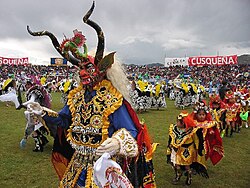
Originating in 1576 among the Lupaka people, the Peruvian version blends autos sacramentales with Aymara traditions and the cult of the Virgin Mary. Its costumes are unique, incorporating influences from Tibet and ancient Peruvian cultures such as the Nazca, Chavin, Sechin, and Mochica. Historically, the music was played on the siku (panpipe) before being replaced by Sicu-Moreno percussionists.

Fiesta de La Tirana (Chile)
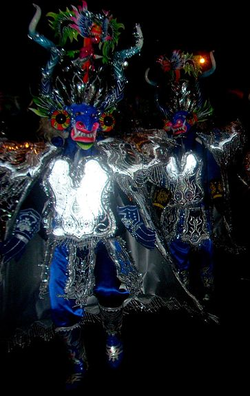
In northern Chile, the Diablada is a centerpiece of the Fiesta de La Tirana, a festival honoring the Virgin of Carmen that dates back to 1540. Today, this event attracts over 100,000 annual visitors to the village of La Tirana.
Summary of Diablada Traditions
| Region/Variant | Key Influence | Notable Feature | Primary Context |
|---|---|---|---|
| Oruro (Bolivia) | Uru God Tiw / Spanish Catholicism | UNESCO World Heritage status | Carnival of Oruro |
| Puneña (Peru) | Lupaka people / Jesuits | Tibet and pre-Columbian costume elements | Puno region festivals |
| La Tirana (Chile) | Virgin of Carmen / Bolivian squads | Massive annual tourist attendance | Fiesta de La Tirana |
| Pillareña (Ecuador) | Andean folk traditions | Regional variation | Local celebrations |
Frequently Asked Questions
Where did the Diablada originate?
The dance has roots in pre-Columbian Andean civilizations across the Altiplano region. While Bolivia is widely recognized as the site of its institutionalization in Oruro, historians in Peru and Chile also cite indigenous traditions and regional influences that contributed to its development.
What does the Diablada dance represent?
The dance typically represents the struggle between good and evil, often depicting the conflict between the archangel Saint Michael and the devil (Lucifer). It is a blend of indigenous Andean mythology and Christian theology.
Why is the Carnival of Oruro significant to the Diablada?
Oruro is where the dance was institutionalized and where the first organized squads were formed. Because of its cultural importance, UNESCO declared the Carnival of Oruro a Masterpiece of the Oral and Intangible Heritage of Humanity in 2001.
How did Spanish colonization affect the dance?
Spanish influence introduced the autos sacramentales (religious plays) and the Christian concept of the devil. Indigenous peoples integrated these elements with their own deities and rituals, such as the worship of the god Tiw, to preserve their culture under the guise of Christian liturgy.
What makes the Peruvian Diablada Puneña different?
The Diablada puneña is distinguished by its specific costume influences, which include elements from Tibet and ancient Peruvian cultures like the Mochica and Nazca, as well as its historical use of the siku for music.