Dhurrin: The Cyanogenic Glycoside in Sorghum and Its Biological Impact
Dhurrin is a cyanogenic glycoside—a compound that can release hydrogen cyanide—found in various plant species. It gained scientific prominence in 1906 when it was identified as the cause of cattle poisoning in multiple sorghum varieties. Most commonly associated with Sorghum bicolor, dhurrin serves as a sophisticated chemical defense mechanism for the plant, though it presents significant challenges for livestock and human consumption if not managed correctly.
Key Facts
- Chemical Formula: C14 H17 NO7
- Primary Source: Most notably found in Sorghum bicolor.
- Biological Function: Acts as an insect repellent by releasing cyanide upon tissue damage.
- Toxicity Mechanism: Hydrolyzes in the presence of glucosidases to release hydrogen cyanide.
- Biosynthesis: Derived from the amino acid tyrosine through a specific enzymatic pathway.
The Biosynthesis of Dhurrin
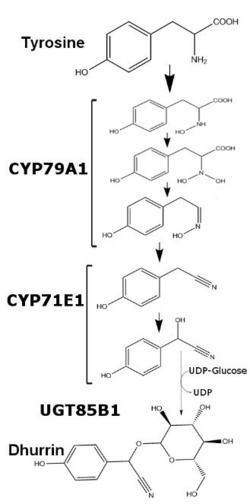
The production of dhurrin is a complex biological process that begins with the amino acid tyrosine. In Sorghum bicolor, this pathway is highly regulated at the transcriptional level, meaning the plant controls how much of the compound is produced based on its age and nutrient availability.
The synthesis relies on specific enzymes from the cytochrome P450 superfamily, which are membrane-bound proteins involved in various metabolic processes. Specifically, the enzymes CYP79A1 and CYP71E1 work in sequence to alter the precursor compound. The final step is completed by UGT85B1, a soluble enzyme that transfers glucose to the aglycone to form the final glycosidic bond.
Regulation and Growth Stages
Dhurrin levels fluctuate significantly throughout the life cycle of the sorghum plant. During the first few days of growth, the transcription and translation of the necessary enzymes are at their highest. However, after one week, transcription levels drop significantly. By the fifth week of growth, enzyme activity in the leaves becomes nearly undetectable, though the stems maintain minimal production.
Nutrient availability also plays a role; for instance, the addition of excess nitrate can increase the transcription of these enzymes, although not to the high levels seen during early development.
Toxicity and Defense Mechanisms
Dhurrin serves a vital evolutionary purpose: protecting the plant from herbivores. When the stem of a sorghum plant is damaged, dhurrin is released at the site of the injury. This chemical response acts as a potent insect repellent. Research involving transgenic plants has shown that when the genes responsible for dhurrin production are removed, herbivorous insects favor the plants much more heavily than wild-type varieties.

Impact on Mammals and Livestock
While dhurrin is an effective plant defense, it poses risks to mammals. The mammalian intestine contains glucosidases—enzymes that break down complex sugars. When these enzymes encounter dhurrin, they hydrolyze the glycosidic bond, causing the compound to rapidly degrade into hydrogen cyanide. This cyanide is then absorbed into the bloodstream.
For humans, the risk is relatively low because the concentration of dhurrin by mass in sorghum is low; a person would need to consume a very large amount of raw sorghum to experience adverse effects. However, for livestock, the risk is much higher. Animals grazing on raw sorghum as fodder may consume enough of the plant to reach a lethal dosage, leading to fatal cyanide poisoning.
Summary of Chemical and Biological Properties
| Property | Details |
|---|---|
| IUPAC Name | (S)-(β-D-Glucopyranosyloxy)(4-hydroxyphenyl)acetonitrile |
| Molar Mass | 311.29 g/mol |
| CAS Number | 499-20-7 |
| PubChem CID | 161355 |
| Key Enzymes | CYP79A1, CYP71E1, UGT85B1 |
Frequently Asked Questions
How does dhurrin protect the sorghum plant?
Dhurrin acts as a chemical deterrent. When an insect damages the plant tissue, the dhurrin is released and breaks down, releasing cyanide which repels the herbivore.
Why is dhurrin dangerous to cattle?
Cattle consuming raw sorghum can ingest high amounts of the compound. Once in the digestive tract, enzymes break dhurrin down into hydrogen cyanide, which can cause lethal poisoning.
Can dhurrin production be modified through science?
Yes. Scientists have successfully used transgenic methods to produce dhurrin in other plants like Arabidopsis thaliana and Nicotiana tabacum by adding the necessary CYP79A1 and CYP71E1 genes.
What role does nitrate play in dhurrin levels?
The addition of excess nitrate can increase the transcription of the enzymes responsible for dhurrin synthesis, though it does not reach the levels seen in the plant's early growth stages.
Is dhurrin synthesis reversible in older plants?
In Sorghum bicolor, dhurrin production naturally decreases as the plant ages. By five weeks, enzyme production in the leaves is almost undetectable, though some production continues in the stems.