DFB: The Powerhouse of German Football
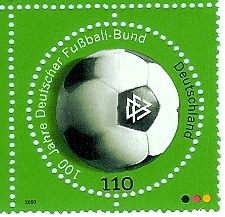
The Deutscher Fußball-Bund (DFB), known in English as the German Football Association, serves as the governing body for football, futsal, and beach soccer in Germany. As a founding member of both FIFA and UEFA, the DFB manages the German football league system and oversees both the men's and women's national teams. Headquartered in Frankfurt am Main, the DFB is the single largest sports federation in the world, boasting more than 8 million members across 23,713 clubs.
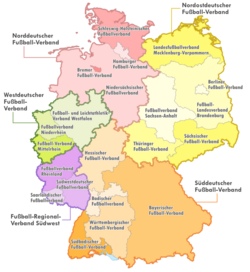
The organization operates through a structured membership consisting of the German Football League (DFL)—which organizes the professional Bundesliga and 2. Bundesliga—alongside five regional and 21 state associations that manage semi-professional and amateur levels.
Key Facts
- Founded: January 28, 1900, in Leipzig.
- Global Standing: The world's largest single sports federation.
- Membership: Over 8 million members across 23,713 clubs.
- Affiliations: Founding member of FIFA (1904) and member of UEFA (1954).
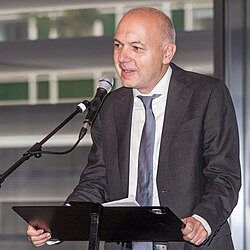
- Current Leadership: President Bernd Neuendorf (since 2022).
A Century of History
Early Foundations (1875–1933)
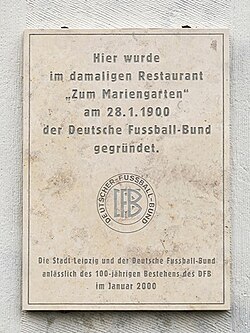
Before the formal establishment of the DFB, football in Germany was heavily influenced by rugby rules from 1875 until the mid-1880s. By 1890, association-style football clubs began organizing regionally. On January 28, 1900, representatives from 86 clubs met in Leipzig to found the DFB, with Ferdinand Hueppe serving as the first president.
The DFB established a recognized national title for the 1902/03 season. Although not present at FIFA's founding in Paris in May 1904, Germany joined via telegram as the eighth nation by September 1 of that year. The national team played its inaugural match in 1908.
The Dark Era (1933–1945)
During the Nazi regime, the DFB suffered significant political interference. The Hitler salute became compulsory, and Jewish members and Marxists were expelled. This included the erasure of records for players like Gottfried Fuchs, who had set a world record by scoring ten goals in a single match against Russia in 1912.
Youth football (under 16) was seized by the Hitler Youth, and the DFB's influence waned. Following the 1938 Anschluss (annexation) of Austria, the Austrian Football Association was absorbed into the DFB. International play continued sporadically until 1942.
Post-War Recovery and Reunification (1945–Present)
Following World War II, West Germany claimed the exclusive mandate for German football, though FIFA recognized the East German Football Association in 1952. The 1954 World Cup victory served as a catalyst for the sport's massive popularity in Germany.
Upon German reunification in 1990, the East German association (DFV) was absorbed into the DFB. Since then, the DFB has hosted the World Cup twice (1974, 2006) and the European Championship twice (1988, 2024).
Global Success and Achievements
The Men's National Team
The men's team, known as die Mannschaft, is one of the most successful in history. They have secured four FIFA World Cup titles and three UEFA European Championships, making them the most successful national team in Europe.
The Women's National Team
The DFB has been instrumental in the rise of women's football. The women's national team has won two World Cups (2003, 2007) and eight UEFA Women's Championships. Notably, in 2007, they became the only World Cup champions (men or women) to win the tournament without conceding a single goal.
In 1990, the DFB established the Frauen-Bundesliga, which has seen unprecedented success in the UEFA Women's Champions League, with German clubs winning nine titles.
Organizational Structure and Competitions
Regional Governance
The DFB is divided into five regional associations that manage the sport across different territories:
- Southern Germany (SFV): Covers Baden-Württemberg, Bavaria, and Hesse.
- Southwestern Germany (FRVS): Covers Rhineland-Palatinate and Saarland.
- Western Germany (WDFV): Covers North Rhine-Westphalia.
- Northern Germany (NFV): Covers Bremen, Hamburg, Lower Saxony, and Schleswig-Holstein.
- Northeastern Germany (NOFV): Covers Berlin, Brandenburg, Mecklenburg-Western Pomerania, Saxony, Saxony-Anhalt, and Thuringia.

Major Competitions
The DFB oversees a vast array of competitions, including the professional Bundesliga (via the DFL), the DFB-Pokal (German Cup), and various youth and amateur leagues. In 2023, the DFB launched DFB Play, an OTT (Over-the-top) streaming platform to increase accessibility to matches like the 3. Liga and Frauen-Bundesliga.


Honours Summary
| Competition | Men's 1st Place | Women's 1st Place | Other Notable Men's | Other Notable Women's |
|---|---|---|---|---|
| FIFA World Cup | 4 | 2 | 4 Runners-Up | 1 Runner-Up |
| UEFA European Championship | 3 | 8 | 3 Runners-Up | 1 Runner-Up |
| Summer Olympic Games | 1 (Gold) | 1 (Gold) | 2 Silver, 3 Bronze | 4 Bronze |
| Confederations Cup / Nations League | 1 (Confed) | 0 | 1 Third Place (Confed) | 1 Third Place (Nations) |
Frequently Asked Questions
What is the DFB?
The DFB (Deutscher Fußball-Bund) is the governing body for football, futsal, and beach soccer in Germany, managing everything from the professional Bundesliga to amateur state associations.
How many members does the DFB have?
As of 2025, the DFB has more than 8 million members, making it the largest single sports federation in the world.
Who is the current president of the DFB?
Bernd Neuendorf has been the president of the DFB since 2022.
Which national team is more successful in European Championships?
The women's national team has been more successful in the UEFA European Championship, winning the title 8 times, compared to the men's 3 titles.
What is the DFB Play platform?
Launched in 2023, DFB Play is an OTT streaming platform that provides access to various DFB competitions, including the 3. Liga and the Frauen-Bundesliga.