Deutschland-Class Panzerschiffe: The Rise of the Pocket Battleship
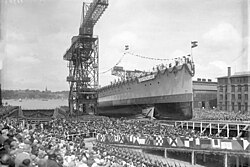
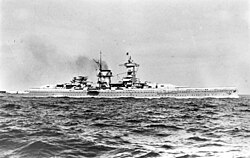
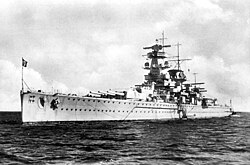
The Deutschland-class ships were a series of three Panzerschiffe (armored ships) that challenged the naval conventions of the early 20th century. Built by the German navy—initially the Reichsmarine and later the Kriegsmarine—these vessels were designed to circumvent the strict limitations of the Treaty of Versailles. While officially categorized as armored ships and later as heavy cruisers, their unique combination of heavy firepower and cruiser-like speed earned them the famous nickname "pocket battleships" from the British Royal Navy.
These ships represented a bold leap in naval engineering, introducing radical innovations such as all-diesel propulsion and the extensive use of welding in warship construction. From their roles in the Spanish Civil War to their commerce-raiding missions in the Atlantic, the Deutschland-class ships were designed for high-seas operations and long-range endurance.
Key Facts
- Class Members: Deutschland, Admiral Scheer, and Admiral Graf Spee.
- Defining Feature: Heavy 28 cm (11 in) guns on a cruiser-sized hull.
- Innovation: First major warships to utilize all-diesel propulsion.
- Treaty Status: Officially claimed to be 10,000 long tons to meet Treaty of Versailles limits, though actual weights were higher.
- Combat Role: Primarily used as commerce raiders during World War II.
Development and Treaty Constraints
Following World War I, the Treaty of Versailles severely limited the size and composition of the German Navy. The Reichsmarine was permitted only six pre-dreadnought battleships and six light cruisers, with new replacements capped at a displacement of 10,000 long tons. The Allies assumed these limits would restrict Germany to building small coastal defense ships.
However, the Treaty did not explicitly regulate gun caliber. Germany exploited this loophole by mounting battleship-grade artillery on a hull that barely exceeded the weight limit. This allowed them to create a vessel that could outrun any ship it could not outfight, and outfight any ship it could not outrun.
Technical Design and Specifications
General Characteristics
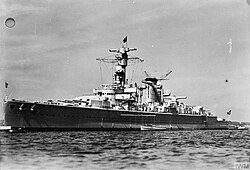
The three ships grew slightly in size and displacement as the class evolved. While the Deutschland had a standard displacement of 10,600 long tons, the Admiral Graf Spee reached 12,340 long tons. All ships measured approximately 186 meters in length, though Deutschland and Admiral Scheer were later fitted with clipper bows, increasing their overall length to 187.90 meters.
Machinery and Propulsion
The most radical feature of the class was the use of eight MAN 9-cylinder, double-acting, two-stroke diesel engines. This all-diesel system saved significant weight compared to steam turbines and provided an extraordinary cruising range. At a speed of 20 knots, the Deutschland could travel 10,000 nautical miles. On trials, the ships exceeded their design speed of 26 knots, with Admiral Graf Spee reaching 29.5 knots.
Armament and Aviation
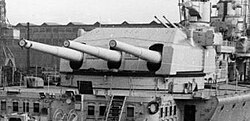
The primary punch of the class came from six 28 cm (11 in) guns housed in two triple turrets, capable of firing 300 kg projectiles over 36,475 meters. The secondary battery consisted of eight 15 cm (5.9 in) guns in single mounts. Anti-aircraft defenses evolved throughout their service, moving from obsolete 8.8 cm guns to more modern 10.5 cm and 3.7 cm mounts.
For reconnaissance, the ships carried a catapult and a seaplane—initially the Heinkel He 60, which was later replaced by the Arado Ar 196 in 1939.
Armor Protection
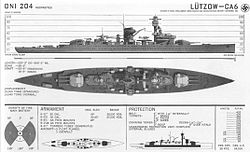
Protection was focused on the central citadel. The main armored belt was 80 mm (3.1 in) thick amidships, though this was improved to 100 mm on the Admiral Graf Spee. The main battery turrets featured 140 mm (5.5 in) faces. To save weight, the armored deck did not cover the full width of the ship on the first two vessels, a flaw corrected in the Admiral Graf Spee.
Class Summary Table
| Feature | Specification |
|---|---|
| Standard Displacement | 10,600 – 12,340 long tons |
| Length (Overall) | 186 m (610 ft 3 in) |
| Propulsion | 8 × MAN diesel engines |
| Top Speed | 26 – 29.5 knots |
| Main Armament | 6 × 28 cm (11 in) guns |
| Secondary Armament | 8 × 15 cm (5.9 in) guns |
| Armor Belt | 80 mm – 100 mm |
| Complement | 33 officers, 586 enlisted |
Operational History
During the Spanish Civil War, all three ships conducted non-intervention patrols. This period saw the Admiral Scheer bombard the port of Almería in retaliation for an attack on the Deutschland. In 1937, the Admiral Graf Spee represented Germany at the Coronation Review for King George VI.
In World War II, the ships were deployed as commerce raiders. The Admiral Scheer became the most successful capital ship surface raider of the war, sinking 113,223 gross register tons (GRT) of shipping. The Admiral Graf Spee sank nine ships totaling 50,089 GRT in the South Atlantic before being hunted by a massive Allied force including aircraft carriers and battleships.
Frequently Asked Questions
Why were they called "pocket battleships"?
The term was coined by the British because the ships possessed the heavy armament of a battleship (28 cm guns) but the size and speed of a cruiser, effectively fitting a battleship's power into a "pocket"-sized hull.
How did Germany bypass the Treaty of Versailles?
Germany officially stated the ships displaced 10,000 long tons to comply with the treaty, while the actual standard displacement ranged from 10,600 to 12,340 long tons. They also utilized the fact that the treaty did not regulate gun caliber.
What was the significance of their diesel engines?
The all-diesel propulsion was a radical innovation that significantly reduced weight and provided an immense operational range, allowing the ships to operate far from home ports for extended periods.
Were these ships ever considered for conversion?
Yes. In early 1943, there were discussions about converting the remaining ships into aircraft carriers. This would have involved lengthening the hulls by 20 meters, but the plan was never pursued.
Which ship was the most successful raider?
The Admiral Scheer was the most successful, sinking 113,223 GRT of shipping during its raiding operations in the South Atlantic and Indian Oceans.