Dependent Territories: Political Status and Global Distribution
In the complex landscape of global geopolitics, not every landmass functions as a fully independent sovereign state. Many regions exist as dependent territories—areas that do not possess full political independence but remain politically distinct from the integral territory of the state that controls them.
Unlike standard administrative subdivisions (such as provinces or states), which are considered internal divisions of a country, a dependent territory is typically viewed as being outside the state proper. These entities often maintain a significant degree of autonomy, managing their own internal affairs while relying on a parent state for defense and foreign diplomacy. Historically, many of these regions began as colonies, though their modern legal statuses vary widely.
Most inhabited dependent territories are recognized globally through their own ISO 3166 country codes, a standardized system used to identify countries and territories for trade, shipping, and international communication.
![Dependent territories and their sovereign states. All territories are labeled according to ISO 3166-1[note 1] or with numbers.[note 2] Coloured areas without labels are integral parts of their respective countries. Antarctica is shown as a condominium instead of individual claims.](/images/85/74/8574cf8653056e1cf41beee54e7d64f52ffddf3baab4896378fc2a36c231bc5d.webp)
Key Facts
- Definition: A territory that lacks full sovereignty but is not an integral part of the controlling state's main landmass.
- Autonomy: Many dependent territories possess high levels of self-governance compared to standard subnational divisions.
- Identification: Most inhabited dependencies have unique ISO 3166 country codes.
- Diversity: Statuses range from "Associated States" and "Crown Dependencies" to "Special Administrative Regions."
Types of Dependent and Autonomous Entities
The relationship between a controlling state and its territory is defined by various legal frameworks. These range from tight integration to near-total internal independence.
Overseas and External Territories
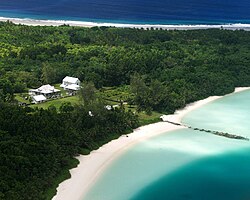
The United Kingdom and Australia utilize these designations for lands far removed from their mainland. The UK manages Crown Dependencies (like Jersey and Guernsey) and Overseas Territories (such as Bermuda and the Cayman Islands). Australia manages external territories including Christmas Island and Norfolk Island, though debate persists regarding whether these are integral parts of the Australian state.
Special Administrative Regions and Autonomous Collectivities
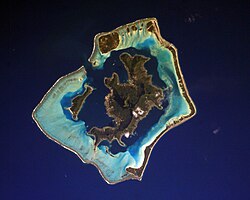
Some states grant specific legal statuses to maintain economic or cultural distinctions. China utilizes Special Administrative Regions (SARs) for Hong Kong and Macau. France employs a variety of statuses, including Overseas Collectivities (such as French Polynesia) and sui generis (unique) collectivities like New Caledonia.
Constituent Countries and Associated States
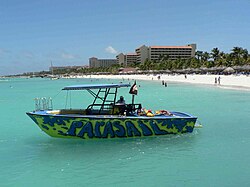
The Netherlands operates a kingdom composed of constituent countries, including Aruba, Curaçao, and Sint Maarten, each possessing autonomy in internal affairs. Similarly, New Zealand has relationships with associated states like the Cook Islands and Niue.
Unincorporated Territories
The United States manages several unincorporated territories. These are divided into "organized" territories (such as Puerto Rico and Guam), which have a local government established by the US Congress, and "unorganized" territories (such as American Samoa).
Global Distribution and Data
Dependent territories are spread across every inhabited continent and the Antarctic. While some are densely populated urban hubs like Hong Kong, others are uninhabited research outposts or claimed Antarctic sectors.
| Name | Sovereign State | Legal Status | UN Region | Population |
|---|---|---|---|---|
| Greenland | Denmark | Autonomous territory | Americas | 56,483 |
| Hong Kong | China | Special administrative region | Asia | 7,374,000 |
| Puerto Rico | United States | Unincorporated organized territory | Americas | 3,411,307 |
| French Polynesia | France | Overseas collectivity | Oceania | 285,735 |
| Bermuda | United Kingdom | Overseas territory | Americas | 70,537 |
| Åland | Finland | Autonomous region | Europe | 29,013 |
Frequently Asked Questions
What is the difference between a dependent territory and a province?
A province is an administrative subdivision that is an integral part of a sovereign state. A dependent territory is considered politically outside the state's integral area and often enjoys a higher degree of autonomy.
Do dependent territories have their own passports?
While the source does not specify passport issuance, it notes that most inhabited dependent territories have their own ISO 3166 country codes for international identification.
What are "unincorporated" territories in the US?
Unincorporated territories are areas where the US Constitution does not apply in full. They can be "organized," meaning they have a government authorized by Congress, or "unorganized."
Which country has the most diverse types of territories?
France and the United Kingdom maintain a wide variety of statuses, with France utilizing overseas collectivities, sui generis collectivities, and state private property.
Are all autonomous regions dependent territories?
No. Not all autonomous entities are classified as dependent territories; some may be internal autonomous divisions within a national government.