Country Definitions and the Complexities of Statehood
The term country is used frequently in everyday conversation, yet it lacks a single, universally accepted definition. Depending on the context, it can refer to a political entity, a specific territory, or even a rural landscape. In a political sense, countries function as sovereign states, unrecognized states, constituent countries, or dependent territories. Some may even be multinational states, meaning they consist of multiple distinct nations within a single political structure.
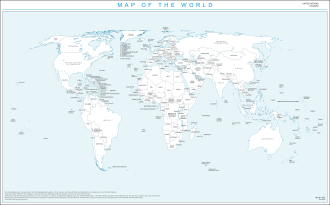
Because of the complexities of international diplomacy, there is no global agreement on exactly how many countries exist. This ambiguity often stems from the process of diplomatic recognition, where some entities are recognized as sovereign by some United Nations (UN) members but not by others.
Key Facts
- Statehood Requirements: Under international law, a state generally requires a permanent population, a defined territory, a government, and the capacity to enter into relations with other states.
- ISO Standardization: The ISO 3166 standard lists 249 countries, including 193 UN member sovereign states.
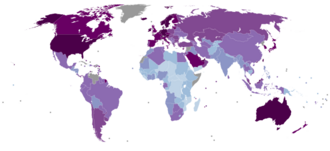
- Economic Tiers: The World Bank classifies countries into four income groups based on Gross National Income (GNI) per capita.
- Non-Political Usage: "Country" can also describe rural areas (e.g., "the country") or specific regions (e.g., "coal country").
Defining Statehood and International Law
To distinguish a sovereign state from other types of entities, international law typically looks for four primary criteria. These foundational elements ensure that an entity can function independently on the global stage:
- A permanent population.
- A defined territory.
- An established government.
- The ability to engage in diplomatic relations with other states.
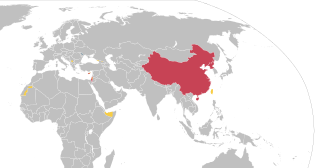
Despite these criteria, the reality of global politics often leads to "partial recognition." Some entities operate as states in practice but lack full recognition from the UN system, leading to disputes over territory and legitimacy.
Dependent Territories and Non-Sovereign Entities
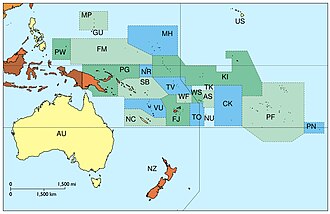
Not every entity called a country is sovereign. Dependent territories are areas that do not possess full political independence but are tied to a sovereign state. Interestingly, some of these non-sovereign entities are still assigned official country codes for administrative and logistical purposes.
![Dependent territories and their sovereign states. All territories are labeled according to ISO 3166-1[note 1] or with numbers.[note 2] Colored areas without labels are integral parts of their respective countries. Antarctica is shown as a condominium instead of individual claims.](/images/1d/1a/1d1ad28ecd959cbb8be73bab017065ce55b59db627382837a79ee355654a2803.webp)
Identification and National Symbols
Countries are identified not only by their borders but by a set of symbols that foster national identity and patriotism. These identifiers are used in diplomacy, sports, and official documentation.
Official Identifiers
- Names and Codes: The International Organization for Standardization (ISO) maintains the ISO 3166 list to provide unique codes for countries and territories.
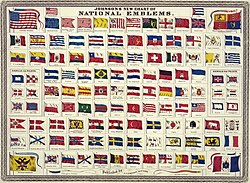
- Flags: Vexillology (the study of flags) tracks the evolution of national banners, which often change as political regimes shift.
- Anthems: Official songs that represent the spirit and history of a nation.
![Early version of the "Wilhelmus" as preserved in a manuscript of 1617 (Brussels, Royal Library, MS 15662, fol. 37v-38r)[78]](/images/97/d0/97d0b9d903883d2eed3f9a717fc8fc7bc301b1b2c14597f1a2cc41ea8048be88.jpg)
Other National Emblems
Beyond flags and anthems, countries utilize coats of arms, national emblems, official seals, stamps, national mottos, and specific national colors to assert their identity.
Economic Classifications
Economically, countries are often categorized as either developed or developing. The World Bank provides a more granular classification using the Atlas method, which relies on GNI per capita (the total income of a country divided by its population, adjusted for purchasing power).
| Income Group | GNI per capita (2018 USD) |
|---|---|
| Low-income | $1,025 or less |
| Lower-middle-income | $1,026 – $3,995 |
| Upper-middle-income | $3,996 – $12,375 |
| High-income | $12,376 or more |
Frequently Asked Questions
What is the difference between a country and a sovereign state?
While often used interchangeably, a sovereign state is a political entity with a permanent population, defined territory, and a government capable of conducting international relations. A "country" is a broader term that can include sovereign states, dependent territories, or constituent parts of a larger state.
How many countries are there in the world?
There is no universal agreement. The ISO 3166 standard lists 249 countries, while the United Nations has 193 member states. The discrepancy is due to entities with partial or no diplomatic recognition.
What is a multinational state?
A multinational state is a single political entity (a country) that consists of multiple distinct nations or ethnic groups.
How does the World Bank classify country income?
The World Bank uses GNI per capita to categorize economies into four tiers: low-income, lower-middle-income, upper-middle-income, and high-income.
What are the requirements for statehood under international law?
Generally, an entity must have a permanent population, a defined territory, an effective government, and the capacity to enter into relations with other states.