Democratic Republic of the CongoDRC historyKinshasaCongo BasinCongolese economy

Democratic Republic of the Congo: A Nation of Vast Resources and Complex History

Understanding the Democratic Republic of the Congo: A Comprehensive Overview The Democratic Republic of the Congo (DRC) is a nation of immense scale, profound complexity, and extraordinar...

Understanding the Democratic Republic of the Congo: A Comprehensive Overview

The Democratic Republic of the Congo (DRC) is a nation of immense scale, profound complexity, and extraordinary natural wealth. Located in the heart of Africa, it serves as a vital ecological and economic hub, yet it has faced a turbulent history marked by colonial exploitation, political shifts, and ongoing regional conflicts. From the dense canopy of the Congo Basin to the bustling streets of Kinshasa, the DRC is a land of striking contrasts.

This article explores the foundational aspects of the nation, including its history, geography, diverse culture, and the economic realities that shape its future.
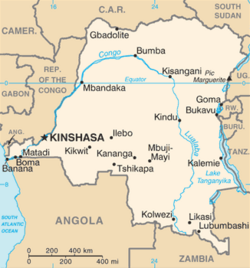
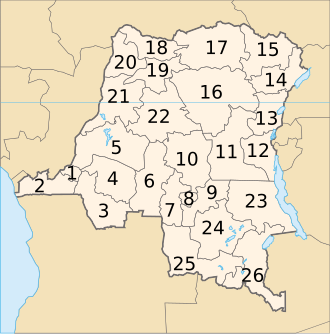
A map of the Democratic Republic of the Congo
: A map of the Democratic Republic of the Congo

Key Facts

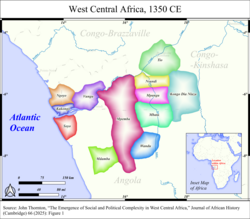
States of the western Congo Basin, c. 1350
  • Capital City: Kinshasa
  • Official Language: French
  • Total Area: 2,345,409 km² (11th largest in the world)
  • Estimated Population (2025): 124,388,160
  • Motto: Justice – Peace – Work
  • Primary Religion: Christianity (95.4%)

Historical Evolution
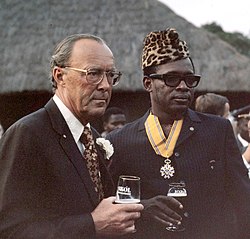
Mobutu with the Dutch Prince Bernhard in Kinshasa in 1973

The history of the DRC is characterized by dramatic transitions in governance and identity. The region's modern political trajectory began under the influence of King Leopold II of Belgium, who established the Congo Free State in 1885. This was followed by the Belgian Congo era, which lasted until the nation achieved independence on June 30, 1960.
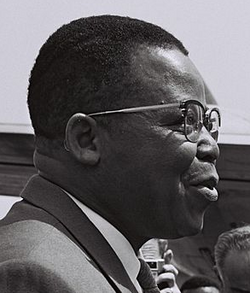
The leader of ABAKO, Joseph Kasa-Vubu, the first democratically elected president of Congo-Léopoldville
: The leader of ABAKO, Joseph Kasa-Vubu, the first democratically elected president of Congo-Léopoldville

The early years of independence were marked by significant political instability. Following the democratic elections, the nation faced a period of crisis involving key figures such as Prime Minister Patrice Lumumba.
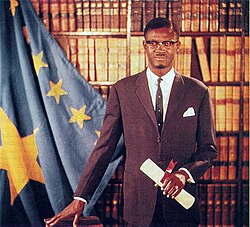
Patrice Lumumba, the first democratically elected prime minister of Congo-Léopoldville, was murdered by Belgian-supported Katangan separatists in 1961.
: Patrice Lumumba, the first democratically elected prime minister of Congo-Léopoldville, was murdered by Belgian-supported Katangan separatists in 1961.

From 1965 to 1997, the country was known as Zaire under the autocracy of Mobutu Sese Seko. This era saw significant shifts in international relations and domestic control.
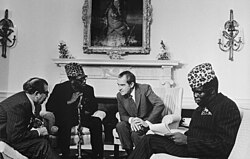
Mobutu Sese Seko and Richard Nixon in Washington, D.C., 1973
: Mobutu Sese Seko and Richard Nixon in Washington, D.C., 1973

The late 1990s and early 2000s were defined by the First and Second Congo Wars. The latter, often referred to as "Africa's World War," involved numerous belligerents and resulted in significant humanitarian challenges.

Belligerents of the Second Congo War, also known as Africa's World War.[78]
: Belligerents of the Second Congo War, also known as Africa's World War.[78]

In recent years, the DRC has moved toward constitutional stability under the current 2006 constitution, with President Félix Tshisekedi leading the nation through ongoing efforts to manage regional security and economic development.
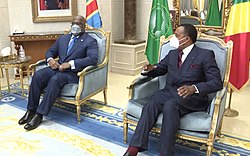
President Félix Tshisekedi with the president of neighbouring Republic of the Congo Denis Sassou Nguesso in 2020; both wear face masks due to the COVID-19 pandemic.
: President Félix Tshisekedi with the president of neighbouring Republic of the Congo Denis Sassou Nguesso in 2020; both wear face masks due to the COVID-19 pandemic.

Geography and Biodiversity

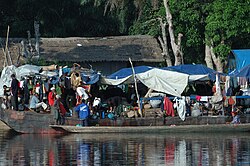
Refugees in the Congo

The DRC is a geographically diverse nation. It contains vast stretches of tropical rainforest, which play a critical role in global climate regulation. The landscape is categorized by various climate zones, ranging from humid equatorial regions to more seasonal patterns.
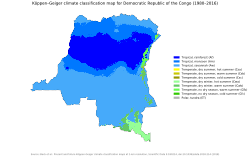
A Köppen climate classification map of the DRC
: A Köppen climate classification map of the DRC

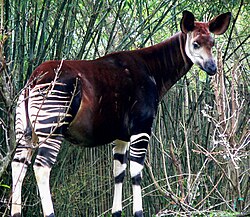
This environment supports some of the world's most unique and endangered wildlife. The biodiversity of the Congo Basin is a global treasure, housing species found nowhere else on Earth.
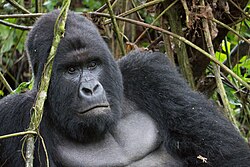
The endangered mountain gorilla; half of its population live in the DRC's Virunga National Park, making the park a critical habitat for those animals.
: The endangered mountain gorilla; half of its population live in the DRC's Virunga National Park, making the park a critical habitat for those animals.
Found in the Congolian rainforests, the okapi was unknown to science until 1901.
: Found in the Congolian rainforests, the okapi was unknown to science until 1901.
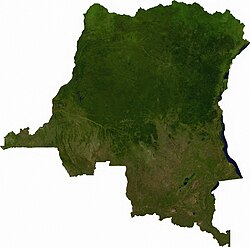
A satellite image of the Democratic Republic of the Congo
: A satellite image of the Democratic Republic of the Congo

Demographics and Culture

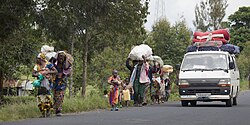
People fleeing their villages due to fighting between FARDC and rebel groups, North Kivu, 2012

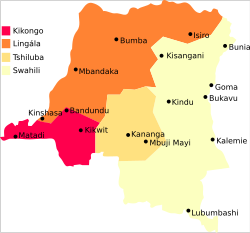
The DRC is home to a vast array of ethnic groups, with the Luba-Kasaï, Kongo, and Mongo being among the largest. This diversity is reflected in the nation's linguistic landscape. While French is the official language used in administration and education, four Bantu languages hold elevated national status: Kikongo ya leta, Lingala, Swahili, and Luba-Kasai.
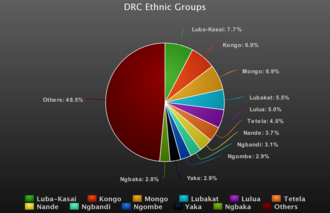
The largest ethnic groups in the DRC
: The largest ethnic groups in the DRC
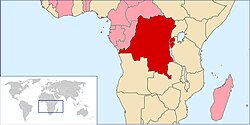
The Democratic Republic of the Congo speaks a variant of Belgian French (dark red), compared to other French speaking parts of Africa.
: The Democratic Republic of the Congo speaks a variant of Belgian French (dark red), compared to other French speaking parts of Africa.
The four Bantu languages with elevated "national" status
: The four Bantu languages with elevated "national" status

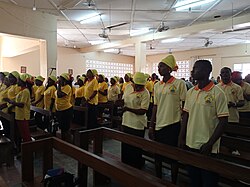
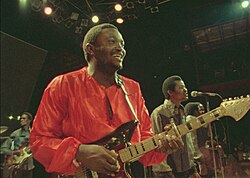
Religion plays a central role in daily life, with Christianity being the predominant faith. The country's cultural expression is also famously vibrant, particularly through its music and religious architecture.

A Roman Catholic Church in the Democratic Republic of the Congo
: A Roman Catholic Church in the Democratic Republic of the Congo
Franco Luambo and his OK Jazz orchestra performing live at Zaire 74
: Franco Luambo and his OK Jazz orchestra performing live at Zaire 74
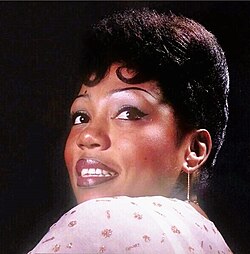
Abeti Masikini in 1978
: Abeti Masikini in 1978

Economy and Natural Resources

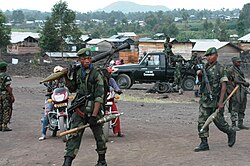
Government troops near Goma during the M23 rebellion in May 2013

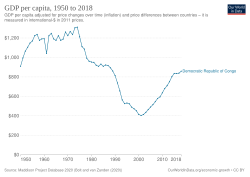
The economy of the DRC is heavily driven by its immense mineral wealth. The country possesses significant deposits of gold, diamonds, and cobalt. However, the nation faces a significant challenge in translating these resources into widespread prosperity, as evidenced by its Human Development Index (HDI) and per capita GDP.

Per capita GDP in the DRC, 1950–2018. Figures are inflation-adjusted to 2011 international dollars.
: Per capita GDP in the DRC, 1950–2018. Figures are inflation-adjusted to 2011 international dollars.
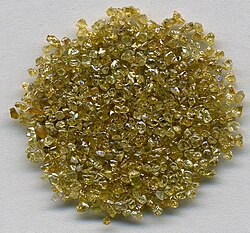
Rough diamonds ≈1 to 1.5 mm in size from the DR Congo
: Rough diamonds ≈1 to 1.5 mm in size from the DR Congo
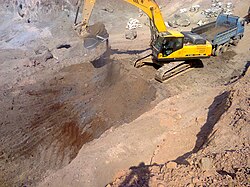
A mining site in the Haut-Katanga Province
: A mining site in the Haut-Katanga Province

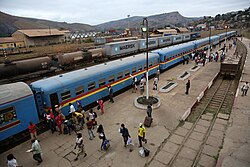
Infrastructure, including railways and roads, remains essential for transporting these resources and connecting the country's major urban centers, such as Kinshasa, Lubumbashi, and Mbuji-Mayi.

The Matadi railway station, part of the Matadi–Kinshasa Railway
: The Matadi railway station, part of the Matadi–Kinshasa Railway
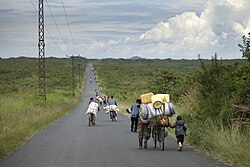
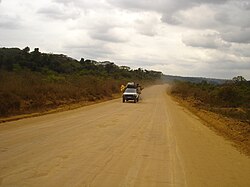
A section of National Road 1 between Boma and Moanda, Kongo Central
: A section of National Road 1 between Boma and Moanda, Kongo Central

Economic Summary Table

Key Economic Indicators (2025 Estimates)
Indicator Value (Nominal) Value (PPP)
Total GDP $79.120 billion $200.76 billion
Per Capita GDP $742 $1,881

Frequently Asked Questions

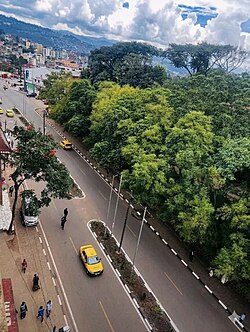
Bukavu, the capital of South Kivu province
ภาพประกอบบทความ
ภาพประกอบจากบทความต้นฉบับ
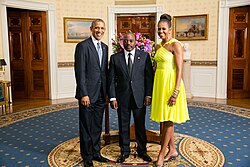
President Joseph Kabila with U.S. President Barack Obama in August 2014
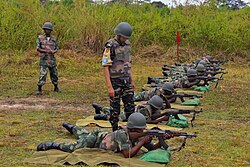
Congolese soldiers being trained by UN personnel
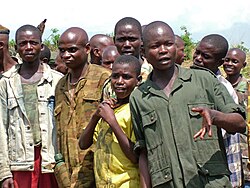
A group of demobilized child soldiers in the Democratic Republic of the Congo
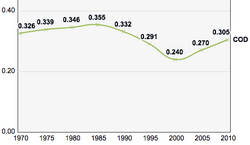
The DRC's Human Development Index score, 1970–2010
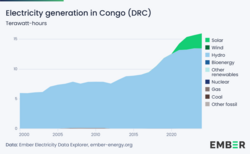
Electricity generation in Congo (DRC) in terawatt-hours, 2026
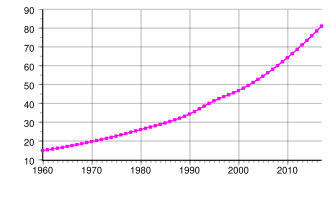
The Democratic Republic of the Congo's population between 1960 and 2017
People fleeing their villages due to fighting between FARDC and rebels groups, Sake, North Kivu, April 2012
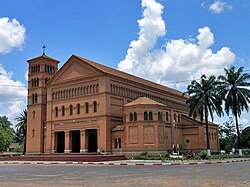
The Sts. Peter and Paul Cathedral, Lubumbashi
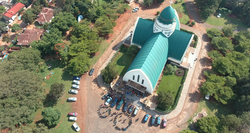
Our Lady of Peace Cathedral in Bukavu
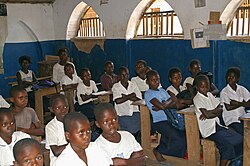
A classroom in the Democratic Republic of the Congo
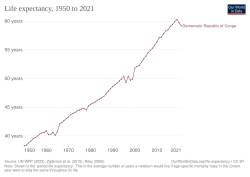
Changes in life expectancy in the Democratic Republic of the Congo, 1950 to 2021
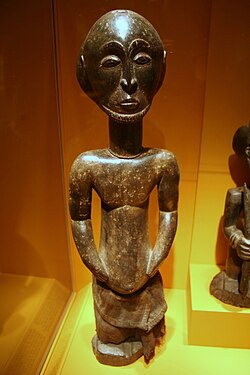
A Hemba male statue
A Hemba male statue

What are the official and national languages of the DRC?

The official language of the Democratic Republic of the Congo is French. Additionally, four Bantu languages are recognized with elevated national status: Kikongo ya leta, Lingala, Swahili, and Luba-Kasai.
What is the main driver of the DRC's economy?

The economy is largely driven by the mining sector, which includes the extraction of valuable minerals such as gold, diamonds, and cobalt.

How diverse is the population of the DRC?

The population is highly diverse, consisting of many different ethnic groups. Some of the largest groups include the Luba-Kasaï, Kongo, and Mongo.

What is the current political structure of the country?

The DRC is a unitary semi-presidential republic. It features a President and a Prime Minister, with a legislature consisting of a Senate (upper house) and a National Assembly (lower house).

What are the major religious affiliations in the DRC?

The vast majority of the population is Christian (95.4%), followed by traditional faiths (2.6%) and Islam (1.5%).