Democratic Left: The Split from the Workers' Party
The emergence of Democratic Left represents a pivotal moment in Irish political history, marking a transition from rigid Marxist ideologies toward a more pragmatic approach to governance. The party was born out of a contentious split within the Workers' Party, a movement that had already evolved from a 1970 division within Sinn Féin.
The Foundation of the Workers' Party
The Workers' Party operated with an internal structure based on democratic centralism—a system where policy is decided centrally and must be followed strictly by all members. While it never officially labeled itself a communist party, it maintained strong ties to the Soviet Union and campaigned vigorously for socialist policies.
During the 1980s, a period characterized by economic hardship and austerity in Ireland, the party found significant resonance with the public. This momentum culminated in the 1989 general election, where the party secured 7 TDs (Teachta Dála, members of the lower house of parliament), and the 1991 local elections, where they won 24 council seats.
Internal Tensions and Ideological Shifts
Between 1989 and 1992, the party faced a convergence of internal and external pressures. The collapse of communism across Eastern Europe forced many Soviet-aligned parties to re-evaluate their core beliefs. Within the Workers' Party, a faction led by Proinsias De Rossa argued that the party's Marxist stance was hindering its electoral growth and advocated for an acceptance of free-market economics.
This ideological divide created a rift between the party's elected representatives—including De Rossa, Pat Rabbitte, and Eamon Gilmore—and a group of activists and organizers on the Central Executive Committee led by Sean Garland.
Adding to the instability, a June 1991 BBC Spotlight program raised serious questions regarding the party's connections to the Official IRA. Although the Official IRA had maintained a ceasefire since 1972, it faced frequent allegations of money-laundering, robberies for fundraising, and other criminal activities.
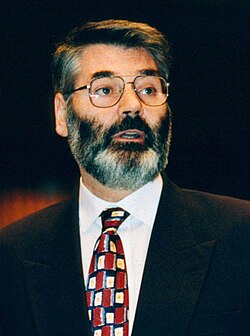
The 1992 Dún Laoghaire Conference
The tension reached a breaking point on February 15, 1992, during a special conference in Dún Laoghaire intended to reconstitute the party. The lead-up to the event was marked by physical clashes between the De Rossa and Garland factions at various party meetings.
Proinsias De Rossa and general secretary Des Geraghty proposed a motion to stand down the existing membership and establish an 11-member provisional executive council to overhaul the party's structure. Despite initial optimism from his supporters, the motion was defeated by 9 votes. Following the result, De Rossa informed the delegates that while he believed it was a bad decision, the choice had been made. The aftermath was characterized by mutual accusations of "packing votes" from both sides.
Key Facts
- Origin: Formed following a split from the Workers' Party, which originally split from Sinn Féin in 1970.
- Peak Influence: The Workers' Party won 7 TDs in 1989 and 24 councillors in 1991.
- Core Conflict: A struggle between Marxist orthodoxy (led by Sean Garland) and a shift toward free-market economics (led by Proinsias De Rossa).
- External Pressure: The fall of the Soviet Union and a 1991 BBC report on Official IRA links.
- The Breaking Point: A failed motion at the February 15, 1992, conference in Dún Laoghaire.
| Faction Leader | Key Figures | Ideological Leanings | Outcome |
|---|---|---|---|
| Proinsias De Rossa | Pat Rabbitte, Eamon Gilmore, Des Geraghty | Free-market economics, electoral pragmatism | Formed Democratic Left |
| Sean Garland | Central Executive Committee activists | Marxist stance, democratic centralism | Remained with Workers' Party |
Frequently Asked Questions
What was the primary cause of the split in the Workers' Party?
The split was primarily caused by ideological disagreements over Marxism and free-market economics, exacerbated by the collapse of communism in Eastern Europe and tensions between elected representatives and party organizers.
Who were the key figures involved in the formation of Democratic Left?
The movement was led by Proinsias De Rossa, supported by other prominent figures such as Pat Rabbitte, Eamon Gilmore, and general secretary Des Geraghty.
What role did the Official IRA play in the party's decline?
A 1991 BBC Spotlight program highlighted links between the Workers' Party and the Official IRA, which was accused of criminality and money-laundering despite being on ceasefire since 1972.
What happened at the Dún Laoghaire conference in 1992?
A motion to restructure the party and elect a provisional executive council was defeated by 9 votes, leading to the final break between the De Rossa and Garland factions.
What is democratic centralism?
Democratic centralism is an internal organizational principle where policy is decided by a central authority and must be strictly adhered to by all members of the organization.