Death Metal: History, Evolution, and Subgenres of Extreme Music
Death metal is a visceral and intense form of extreme metal that pushes the boundaries of speed, aggression, and sonic texture. Emerging as a distinct style in the mid-1980s, it transformed the landscape of heavy music by introducing deeper vocals, more complex song structures, and a relentless rhythmic drive. From its roots in the United States to its global expansion, death metal has evolved into a diverse ecosystem of subgenres that continue to influence modern music.
Key Facts
- Origins: Emerged in the mid-1980s, primarily in Florida and the San Francisco Bay Area, USA.
- Stylistic Roots: Developed from thrash metal, first-wave black metal, and hardcore punk.
- Defining Vocals: Characterized by the death growl, a low-frequency, guttural singing style.
- Rhythmic Core: Frequent use of the blast beat, an extremely fast drumming technique.
- Global Hubs: Major scenes developed in Sweden, Norway, Poland, the Netherlands, Brazil, and Indonesia.
The Emergence of a New Extreme
Death metal did not appear in a vacuum; it was the result of musicians wanting to push the aggression of thrash metal to its absolute limit. By blending the speed of thrash with the raw atmosphere of early black metal and the intensity of hardcore punk, early pioneers created a sound that was heavier and darker than anything previously recorded.
The mid-1980s saw the rise of foundational acts. While there is historical debate regarding the very first death metal band, groups like Possessed and Death are widely cited as the architects of the genre.
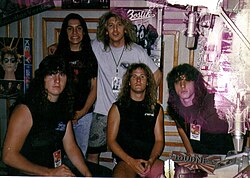
Jeff Becerra of Possessed played a pivotal role in these early developments, helping to define the guttural vocal style and thematic darkness that would become hallmarks of the genre.
![Jeff Becerra of Possessed[19]](/images/77/43/77432d0ec63727d34902c33e22454e3ed5892481a468c53574076d791345f4c1.jpg)
The Influence of Chuck Schuldiner
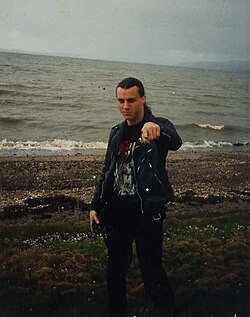
One of the most influential figures in the genre's history was Chuck Schuldiner. As the leader of the band Death, Schuldiner not only helped pioneer the sound but also pushed it toward greater musical sophistication, incorporating more complex arrangements as the genre matured.
Growth and Diversification (1980s–Present)
By the late 1980s and throughout the 1990s, death metal exploded in popularity. The Florida scene became a global epicenter, producing bands that emphasized precision and brutality. This era saw the rise of technical proficiency and the exploration of more gruesome or occult lyrical themes.
As the genre grew, it branched into various specialized styles. Some bands focused on sheer brutality and speed, while others integrated melodic elements or symphonic arrangements to create a more cinematic experience.
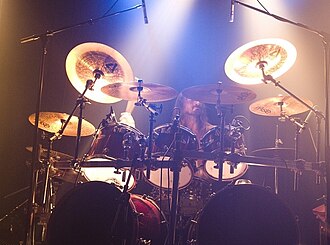
Musicians often moved between bands to refine these sounds. For example, guitarist Jack Owen contributed to the development of several heavyweights, including Cannibal Corpse, Deicide, and Six Feet Under.
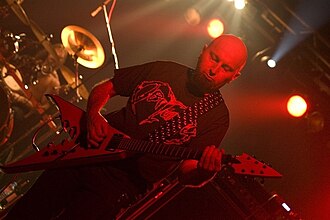
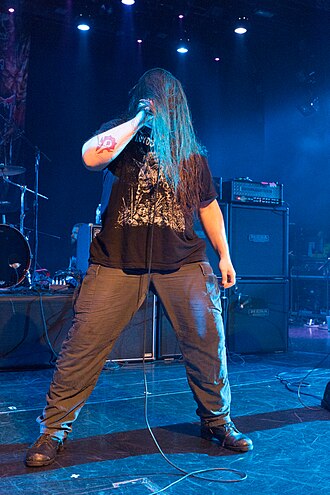
Cannibal Corpse became one of the most commercially successful death metal acts, known for their extreme imagery and the powerful delivery of vocalist George "Corpsegrinder" Fisher.
Subgenres and Fusion Styles
Death metal is characterized by its ability to fuse with other extreme styles. These hybrids have created a vast array of sonic experiences, ranging from the atmospheric to the chaotic.
Pure Death Metal Variants
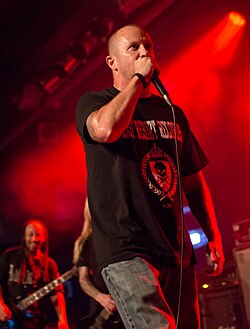
- Brutal Death Metal: Focuses on extreme aggression and guttural vocals. Suffocation is a key example of this style.
- Technical Death Metal: Emphasizes complex compositions, odd time signatures, and high virtuosity, as seen in the work of Nile.
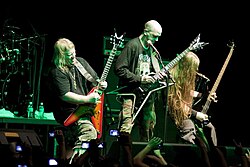
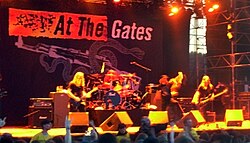
- Melodic Death Metal: Integrates twin-guitar harmonies and melodic hooks, a style heavily developed in Sweden by bands like At the Gates.
- Symphonic Death Metal: Incorporates orchestral elements and keyboards for a grander scale.
Fusion and Hybrid Genres
The intersection of death metal with other genres has led to the creation of several distinct fusion styles:
- Blackened Death Metal: Combines the aggression of death metal with the atmosphere and shrieks of black metal. This includes variants like war metal and melodic black-death.
- Death-Doom: Slows the tempo significantly, blending death metal's weight with the melancholy of doom metal.
- Deathcore: A modern fusion of death metal and metalcore, often featuring heavy breakdowns.
- Deathgrind: A high-speed blend of death metal and grindcore, with bands like Aborted contributing significantly to the genre.
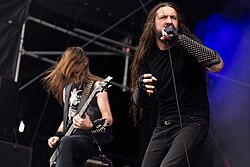
![Aborted are "key contributors to the death-grind genres," according to AllMusic.[135]](/images/e8/68/e868396eff0d6883aa479c4a8e714e682bef8e9561804fbf62962c5f95a6a5a8.jpg)
Summary of Death Metal Classifications
| Category | Subgenre/Fusion | Primary Characteristic |
|---|---|---|
| Pure Death | Technical | Complex structures and high virtuosity |
| Pure Death | Melodic | Harmonized guitars and melodic hooks |
| Pure Death | Brutal/Slam | Extreme gutturals and rhythmic "slams" |
| Fusion | Blackened Death | Death metal aggression + Black metal atmosphere |
| Fusion | Death-Doom | Slow tempos and oppressive atmosphere |
| Fusion | Deathgrind | Extreme speed and grindcore influence |
Frequently Asked Questions
What is a blast beat?
A blast beat is a drumming technique used in extreme metal characterized by rapid, alternating hits between the snare, bass drum, and cymbal, creating a wall of sound at very high speeds.
What is a death growl?
A death growl is a low-frequency, guttural vocal technique that emphasizes texture and power over melodic pitch, often sounding like a deep roar or rumble.
Where did death metal originate?
Death metal emerged in the mid-1980s in the United States, with the most prominent early scenes located in Florida and the San Francisco Bay Area.
What is the difference between death metal and black metal?
While both are extreme, death metal typically focuses on low-tuned guitars, guttural vocals, and technical precision. Black metal generally emphasizes high-pitched shrieks, atmospheric tremolo picking, and a raw, lo-fi production style.
Is there such a thing as Christian death metal?
Yes, there are bands that utilize the sonic characteristics of death metal—such as growled vocals and heavy riffs—while incorporating Christian themes and lyrics.