De Gruyter: A History of Academic Publishing Excellence
From its origins in the 18th century to its current status as a global leader in scholarly communication, De Gruyter has played a pivotal role in preserving and disseminating human knowledge. What began as a royal privilege in Berlin has evolved into a sophisticated international operation, bridging the gap between classical humanities and modern scientific research.
The Early Foundations (1749–1894)
The company's lineage traces back to 1749, when Frederick the Great granted the Königliche Realschule (Royal Secondary School) in Berlin the royal privilege to establish a bookstore and publish "good and useful books." This early mandate set the stage for a commitment to educational and intellectual growth.
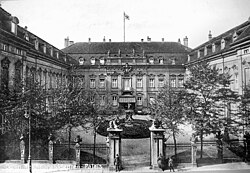
In 1800, Georg Reimer (1776–1842) took over the store, which operated as the Reimer'sche Buchhandlung from 1817. Simultaneously, the school's press evolved into the Georg Reimer Verlag. By 1816, Reimer had established his family residence and publishing house at Wilhelmstraße 73 in Berlin, utilizing the building's wings for his press and print shop. This historic site later served as the Palace of the Reich President.
The Era of Walter de Gruyter
The modern trajectory of the company began in 1894 when Walter de Gruyter, born in Ruhrort in 1862, joined Reimer Verlag. By 1897, at age 35, he became the sole proprietor of the century-old firm, which was then renowned for publishing the works of German romantics, including Friedrich Schleiermacher, Johann Gottlieb Fichte, and Heinrich von Kleist.
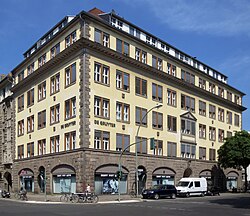
De Gruyter aggressively expanded the company's reach by acquiring four other publishing houses: Göschen, Guttentag, Trübner, and Veit. In 1919, he merged these entities into the Vereinigung wissenschaftlicher Verleger Walter de Gruyter & Co., based in Genthiner Straße, where the company remains headquartered today.
This merger allowed the company to specialize in a vast array of academic disciplines, including:
- Philosophy and Theology
- German Literature
- Medicine and Natural Science
- Mathematics and Engineering
- Law and Political Science
By the time of his death in 1924, Walter de Gruyter had established one of Europe's largest modern publishing houses. The leadership then passed to his son-in-law, Herbert Cram (1893–1967), ensuring the company remained family-owned.
Resilience and Global Expansion
The company faced significant challenges during World War II. While the de Gruyter building survived, its basement warehouse was flooded, and the top floor and roof were destroyed. Despite these losses, the publisher registered for trading on May 14, 1945, becoming the first publisher in the British zone to receive a license.
In 2012, the company transitioned to Walter de Gruyter GmbH. Today, it operates a global network with offices in Berlin, Munich, Vienna, Basel, Warsaw, Boston, and Beijing.
The Formation of De Gruyter Brill
Continuing its growth strategy, De Gruyter announced in October 2023 the acquisition of the Dutch publisher Brill for €51.1 million. This merger, scheduled for completion by the second quarter of 2024, creates a new entity known as De Gruyter Brill.
Key Facts
- Founded: Roots date back to 1749 via royal privilege.
- Headquarters: Genthiner Straße, Berlin.
- Ownership: Family-owned since its inception under Walter de Gruyter.
- Global Presence: Offices in Europe, North America, and Asia.
- Major Merger: Acquisition of Brill for €51.1 million (announced 2023).
| Period/Year | Key Milestone | Entity Name |
|---|---|---|
| 1749 | Royal privilege granted by Frederick the Great | Königliche Realschule bookstore |
| 1817 | Takeover by Georg Reimer | Reimer'sche Buchhandlung / Georg Reimer Verlag |
| 1897 | Walter de Gruyter becomes sole proprietor | Reimer Verlag |
| 1919 | Merger of five publishing houses | Vereinigung wissenschaftlicher Verleger Walter de Gruyter & Co. |
| 2012 | Corporate restructuring | Walter de Gruyter GmbH |
| 2024 | Acquisition of Brill | De Gruyter Brill |
Frequently Asked Questions
Who founded the original bookstore that became De Gruyter?
The roots of the company began in 1749 when Frederick the Great granted the Königliche Realschule in Berlin the privilege to open a bookstore and publish books.
Which academic fields does De Gruyter specialize in?
The company is known for its classics and publications in philosophy, theology, German literature, medicine, mathematics, engineering, law, political science, and natural science.
How did the company survive World War II?
Although the roof and top floor were destroyed and the basement flooded, the main building survived. The company was the first publisher in the British zone to receive a trading license in May 1945.
What is the significance of the Brill acquisition?
In October 2023, De Gruyter announced the acquisition of the Dutch publisher Brill for €51.1 million, leading to the formation of the new company De Gruyter Brill by the second quarter of 2024.
Is De Gruyter still a family-owned company?
Yes, following the leadership of Walter de Gruyter and his son-in-law Herbert Cram, the company continues to be family-owned.