De Facto vs. De Jure: Reality Versus Legal Authority
In the realms of law, governance, and social science, two Latin terms frequently emerge to describe the gap between how things are officially documented and how they actually function: de facto and de jure. While they may seem like academic nuances, the distinction between these two concepts often determines the legitimacy of governments, the validity of relationships, and the enforcement of global standards.
At its simplest, de facto (meaning "from fact") refers to practices that exist in reality or effect, regardless of whether they are officially recognized. Conversely, de jure (meaning "from law") refers to practices that are recognized by formal laws or norms, regardless of whether they are actually practiced in the real world.
Key Facts
- De facto describes what is happening in practice; de jure describes what is mandated by law.
- A de facto government holds actual power but lacks legal recognition.
- De facto standards gain dominance through market use rather than formal approval processes.
- In some jurisdictions, such as Australia, de facto relationships are legally recognized as providing rights similar to marriage.
- De jure borders are claimed territories, while de facto control refers to the area a government actually manages.
Jurisprudence and Legal Application
In jurisprudence, a de facto law (or regulation) is a rule that is widely followed despite not being specifically enumerated in formal legislation. This often occurs when a law from one jurisdiction is adopted in another where it has no official legal effect.
The distinction became critically important in United States law following the 1954 Brown v. Board of Education decision. The courts needed to distinguish between de jure segregation—which was mandated by local laws (such as the "Jim Crow laws" of the American South)—and de facto segregation, which resulted from voluntary associations and residential patterns.
Technical and Market Standards
Beyond the courtroom, these terms apply to how technology and industry operate. A de facto standard is a system that achieves a dominant position through tradition, enforcement, or market dominance, rather than through a formal standardization process. These may lack an official standards document but are used universally because of their prevalence.
In contrast, de jure standards are obligatory or voluntary requirements formally approved by a body, such as ISO 9000 requirements or government-mandated drinking water quality standards. In social sciences, a voluntary standard that becomes a de facto standard is often seen as a solution to a coordination problem.
Governance, Sovereignty, and Borders
In politics, a de facto government is one that exercises the attributes of sovereignty through usurpation or power, even if it was not legally invested with that authority. This is often the case following a coup d'état or revolution.
History provides several examples of this tension. The Muhammad Ali dynasty of Egypt (1805–1914) remained de jure subjects of the Ottoman Empire but acted as de facto rulers with significant independence. Similarly, Saddam Hussein exercised de facto power as vice president before officially becoming the de jure president of Iraq in 1979.
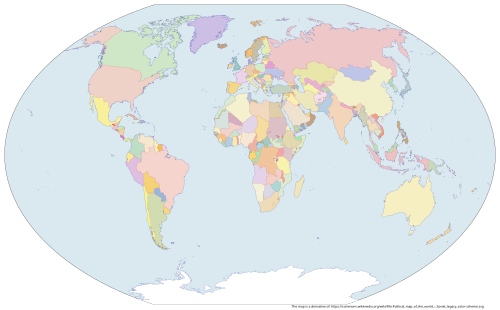
This distinction also applies to national borders. A country's de jure borders are the areas it officially claims. However, these may differ from the areas it actually controls. Modern examples include Kashmir, which is claimed by multiple countries, and Taiwan, which is claimed but not controlled by China.
National Languages
Language status often follows this pattern. Some nations, such as Japan, Mexico, and Australia, have a de facto national language without a de jure official one. Others have both; for example, in New Zealand, Māori and New Zealand Sign Language are the official (de jure) languages, while English is the de facto national language due to the number of speakers.
Social and Personal Relationships
The concept of de facto status extends to domestic partnerships. In many regions, a de facto husband or wife is a partner in a committed relationship outside of legal marriage.
In Australia, the Family Law Act 1975 legally recognizes de facto relationships (both opposite-sex and same-sex) as providing many of the same rights and benefits as marriage. However, these rights are tied to the territorial limits of the Australian states; if a couple moves abroad, their status is governed by the laws of their new country of residence, unlike marriage, which is recognized internationally via conventions like the 1978 Hague Convention on Marriages.
Summary Comparison
| Category | De Facto (In Practice) | De Jure (By Law) |
|---|---|---|
| Government | Holds actual power/control | Holds legal title/authority |
| Standards | Dominant via market use | Approved via formal process |
| Borders | Area actually controlled | Area officially claimed |
| Relationships | Living together/committed | Legally married |
| Language | Most widely spoken | Officially designated |
Frequently Asked Questions
Can a de facto government become a de jure government?
Yes. This often happens when a leader who seized power (de facto) later amends the constitution or wins an election to gain formal legal recognition (de jure). An example is Augusto Pinochet, who moved from being a de facto leader to the formal president of Chile.
What is the difference between de facto and de jure segregation?
De jure segregation is mandated by law (such as the Jim Crow laws), whereas de facto segregation happens due to social factors, voluntary associations, or neighborhood patterns without legal requirement.
Is a de facto standard the same as a legal requirement?
No. A de facto standard is a dominant practice adopted by the market or tradition. A legal requirement is a de jure standard, which is formally mandated by a government or regulatory body.
Are de facto relationships recognized everywhere?
No. Recognition varies by jurisdiction. For instance, while Australian law provides specific rights to de facto couples, these rights are generally limited to the territorial boundaries of the Australian states and may not be recognized in other countries.
What is a de facto state of war?
A de facto state of war occurs when two nations engage in active, aggressive military conflict without having issued a formal, legal declaration of war.