De Facto vs. De Jure: Defining Reality Versus Law
In the realms of law, governance, and social science, two Latin terms frequently emerge to describe the gap between how things are officially documented and how they actually function: de facto and de jure. While they may seem like academic jargon, these concepts are essential for understanding everything from international borders and government legitimacy to marriage rights and technical standards.
At its simplest, de facto means "from fact," referring to practices that exist in reality regardless of whether they are legally recognized. Conversely, de jure means "from law," referring to practices that are formally recognized by law or official norms, even if they do not exist in practice.
Key Facts
- De facto describes a state of affairs that exists in reality but lacks formal legal sanction.
- De jure describes a state of affairs that is legally recognized, regardless of the actual reality.
- A de facto government holds actual power but lacks legal legitimacy.
- A de facto standard is a dominant technology or practice adopted by market force rather than a formal committee.
- In some jurisdictions, such as Australia, de facto relationships provide legal rights to unmarried couples living together.
Jurisprudence and Legal Application
In jurisprudence, a de facto law (or regulation) is a rule that is widely followed despite not being specifically enumerated in official legislation. This often occurs when a law from one jurisdiction is adopted in another where it has no formal legal effect.
The distinction became historically critical in U.S. law following the 1954 Brown v. Board of Education decision. The courts had to distinguish between de jure segregation—separation mandated by local laws (such as the "Jim Crow laws" of the American South)—and de facto segregation, which occurred due to voluntary associations and residential patterns.
Governance, Sovereignty, and Borders
When applied to government, a de facto government is one that has usurped the attributes of sovereignty. These rulers exercise real power through means not provided for in a constitution, such as a coup d'état or revolution, even if they lack legal legitimacy.
History provides several nuanced examples of this dynamic:
- Augusto Pinochet: Initially a de facto leader via a military junta, he later amended the constitution to become the de jure president.
- Saddam Hussein: Exercised de facto power as vice president before formally assuming the presidency in 1979.
- Muhammad Ali Dynasty: Between 1805 and 1914, they were de jure subjects of the Ottoman Empire but functioned as de facto rulers of Egypt.
In Argentina, a "doctrine of de facto governments" once held that decrees from non-constitutional governments remained binding until repealed de jure. This was nullified by a 1994 constitutional reform that sought to punish those who overthrew constitutional order.
Culture and Language
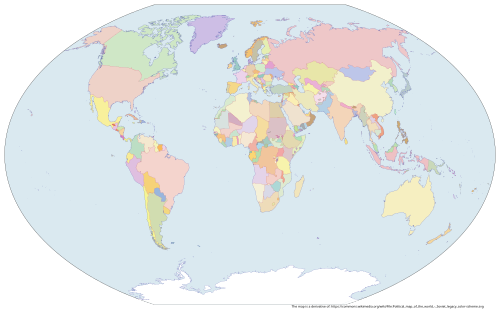
Language often follows de facto patterns rather than legal mandates. Some nations, including Japan, Mexico, and Australia, have a de facto national language without an official de jure designation.
In other cases, de facto languages coexist with official ones. In Lebanon, Arabic is the official language, while English and French serve as de facto national languages. Similarly, in Hong Kong and Macau, while English and Portuguese are official, Cantonese is the de facto standard for speaking and writing.
Technical Standards and Business
In industry, a de facto standard is a technology that achieves dominance through market share or tradition rather than a formal standardization process (like ISO). For example, in cell phone communications, CDMA1X is considered a de facto technology, whereas GSM is a standard (de jure) technology.
This concept extends to sports management. A de facto general manager is someone who controls personnel and drafting decisions without holding the official title, such as Bill Belichick's role with the New England Patriots.
Relationships and Family Law
The term is also used to describe domestic partnerships. In Australian law, a de facto relationship is a legally recognized committed relationship between a couple living together. Under the Family Law Act 1975, these couples can access many of the same rights as married couples.
However, these rights are often tied to the territorial limits of the state. Because of Australian federalism, a de facto partnership may only be recognized while the couple resides within a specific state, unlike marriage, which is recognized internationally via conventions like the Hague Convention on Marriages (1978).
| Category | De Facto (In Fact) | De Jure (By Law) |
|---|---|---|
| Government | Holds power via usurpation or force | Holds power via legal appointment/election |
| Standards | Dominant via market use/tradition | Approved by formal standardization body |
| Language | Spoken and used by the population | Declared official by legislation |
| Relationships | Living together in a committed union | Legally married via official ceremony |
Frequently Asked Questions
What is the main difference between de facto and de jure?
The main difference is that de facto refers to what is happening in reality ("in practice"), while de jure refers to what is mandated or recognized by law ("on paper").
Can a de facto government become a de jure government?
Yes. This often happens when a ruler who seized power (de facto) later amends the constitution or holds an election to formalize their legal authority (de jure), as seen in the case of Augusto Pinochet.
What is a de facto standard in technology?
A de facto standard is a system or format that becomes the industry norm because it is widely used and dominant in the market, not because it was officially approved by a regulatory body.
Are de facto relationships the same as marriage?
While they may be "marriage-like" and provide similar legal benefits in some jurisdictions like Australia, they are distinct. De facto relationships are based on the fact of living together rather than a formal legal contract of marriage.
What is a de facto state of war?
A de facto state of war occurs when two nations engage in active military aggression against one another without having issued a formal, legal declaration of war.