DBU: The Governing Body of Danish Football
The Danish Football Association (Danish: Dansk Boldspil-Union, abbreviated as DBU) serves as the primary governing body for football in Denmark. Based in Brøndbyvester, the DBU manages the professional leagues and oversees both the men's and women's national teams. As a founding member of both FIFA and UEFA, the DBU holds a prestigious place in the global football landscape and has expanded its remit to include the governance of futsal—a variant of association football played on a smaller, hard court—since 2008.
Key Facts
- Founded: 18 May 1889 (the first national association outside Great Britain and Ireland).
- Headquarters: Brøndbyvester, Denmark.
- Affiliations: Founding member of FIFA (joined 21 May 1904) and member of UEFA since 1954.
- Current President: Jesper Møller (serving since 2014).
- Scope: Manages professional leagues, national teams, and futsal.
Historical Beginnings
Established in 1889, the DBU is one of the oldest football associations in the world. While it achieved success early on, including a win in the 1906 Intercalated Olympics, the DBU did not officially record games until the 1908 Summer Olympics. Consequently, the 1906 victory remains unofficial in the organization's records.
Organizational Structure and Regional Governance
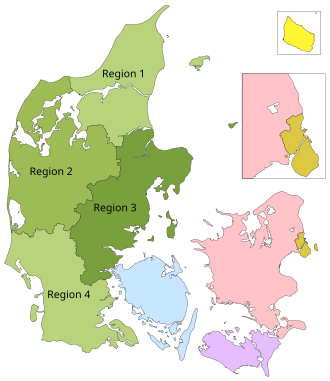
The DBU operates through a decentralized regional structure based on Denmark's former counties. This ensures that football development and administration are managed effectively across the country.
- DBU Jutland: Divided into four regions covering Nordjylland, Viborg, Ringkøbing, Århus, Vejle, Ribe, and South Jutland.
- DBU Funen: Covers Funen County.
- DBU Zealand: Covers West Zealand, Roskilde, Frederiksborg, Copenhagen counties, and the Zealand portion of Storstrøm County.
- DBU Copenhagen: Covers the municipalities of Copenhagen and Frederiksberg.
- DBU Lolland-Falster: Covers the non-Zealand portion of Storstrøm County.
- DBU Bornholm: Covers Bornholm municipality.
It is important to note that the autonomous territories of Greenland and the Faroe Islands maintain their own associations. While the Faroe Islands are members of FIFA and UEFA, Greenland is not affiliated with either.
Competitions and Leagues
The DBU oversees a comprehensive pyramid of competitions for both men and women, ensuring a pathway from amateur levels to professional play.
Men's Competitions
- Leagues: Superliga, First Division (1. Division), Second Divisions (2. Division), Third Divisions (3. Division), and the Denmark Series (Danmarksserien) consisting of four groups.
- Cup: DBU Pokalen.
Women's Competitions
- Leagues: A-Liga, B-Liga, C-Liga (2 groups), and the Denmark Series women (Danmarksserien) consisting of three groups.
- Cup: Landspokalturneringen.
Defunct Tournaments
Historically, the DBU managed several competitions that are no longer active, including the Landsfodboldturneringen (1913–1927), the Provinsmesterskabsturneringen (1913–1931), and the Sylow-Tournament (1918–1926).
National Teams and Honors
The DBU controls a wide array of national teams. The men's side includes the A-level team, youth teams ranging from Under-16 to Under-21, a Futsal team, and an Oldboys team. The women's side includes the A-level team and youth teams for Under-16, Under-17, Under-19, and Under-23.
Player Recognition
Since 1963, the DBU has presented the Player of the Year award. Originally restricted to domestic players, the award opened to all Danish players regardless of where they played in 1983, with Morten Olsen becoming the first winner under these rules. Brian Laudrup holds the record for the most wins, securing the title four times (1989, 1992, 1995, and 1997).
Additionally, the DBU presents Young Players of the Year awards, currently sponsored by Arla Foods (previously known as Mælkens talentpriser and Arla's talentpriser).
Labor Relations and Equal Pay
The DBU has faced significant challenges regarding collective bargaining and player rights in recent years.
Women's National Team Dispute
In 2017, a breakdown in salary negotiations led to the cancellation of a World Cup qualifier against Sweden. Denmark forfeited the match 3–0 and was fined by UEFA. Although a collective bargaining agreement was eventually reached, the team failed to qualify for the 2019 FIFA Women's World Cup after a playoff loss to the Netherlands.
Men's National Team Dispute
Following the 2018 FIFA World Cup, a dispute over commercial rights led the DBU to field a temporary squad of futsal and lower-league players for a friendly against Slovakia, resulting in a 3–0 loss. A new six-year agreement was finalized in September 2018, lasting until 2024.
The Move Toward Equal Pay
In June 2024, the DBU and the players' union (Spillerforeningen) reached a landmark four-year deal ensuring equal basic pay for the men's and women's national teams. To facilitate this, the men's team declined a pay raise and accepted a 15% reduction in insurance coverage to fund a 50% upgrade in coverage for the women's team and the men's U21 team.
| Category | Details |
|---|---|
| Founded | 18 May 1889 |
| Headquarters | Brøndbyvester |
| President | Jesper Møller (2014–Present) |
| Regional Associations | 6 (Jutland, Funen, Zealand, Copenhagen, Lolland-Falster, Bornholm) |
| Key Men's League | Superliga |
| Key Women's League | A-Liga |
Frequently Asked Questions
When was the DBU founded?
The DBU was founded on 18 May 1889, making it the first national football association established outside of Great Britain and Ireland.
Who is the current president of the DBU?
Jesper Møller has served as the president of the DBU since 2014.
How does the DBU handle equal pay for national teams?
As of June 2024, a four-year agreement ensures equal basic pay for the men's and women's national teams. The men's team supported this by refusing a pay raise and reducing their insurance coverage to benefit the women's and U21 teams.
Which Danish player has won the Player of the Year award the most?
Brian Laudrup holds the record with four wins, achieved in 1989, 1992, 1995, and 1997.
Are the Faroe Islands and Greenland part of the DBU?
No, both are autonomous territories with their own football associations. The Faroe Islands are members of FIFA and UEFA, while Greenland is not a member of any continental federation or FIFA.