Darío Grandinetti: The Versatile Career of an Argentine Acting Icon
Darío Grandinetti is one of the most distinguished figures in Argentine performing arts, having built a prolific career that spans over four decades. From his early days in the theater of Rosario to achieving international acclaim on the global stage, Grandinetti has become a staple of television, film, and stage productions across Latin America and Europe.
Known for his ability to navigate diverse genres and complex characters, he has collaborated with some of the most renowned directors in cinema, including Pedro Almodóvar, Alejandro Doria, and Damián Szifron. His work is characterized by a seamless transition between the intimacy of the theater and the broad reach of international cinema.
Key Facts
- Born: March 5, 1959, in Rosario, Santa Fe, Argentina.
- Major Award: Winner of an International Emmy Award in 2012 for Televisión por la Inclusión.
- Career Span: Active from 1976 to the present.
- Global Reach: Extensive work in Argentine, Spanish, Bolivian, and Brazilian productions.
- Notable Film: Featured in the critically acclaimed Relatos salvajes (Wild Tales).
Early Life and Foundations
Born in Rosario, Argentina, Grandinetti's early life was rooted in his hometown. His father worked at the Junta Nacional de Granos. During his teenage years, he briefly lived in the town of Las Rosas before returning to Rosario, where he spent time playing for the junior teams of the Newell's Old Boys football club.
While working as an auxiliary at the Junta Nacional de Granos, Grandinetti began his formal studies in theater. This passion eventually led him to relocate to Buenos Aires, the cultural hub of Argentina, to pursue his acting career professionally.
Professional Evolution: From Stage to Screen
Grandinetti's career began in television, but he gradually transitioned into cinema, where he established himself as a leading man. While the majority of his filmography consists of Argentine productions or co-productions, he expanded his horizons internationally starting with the 1998 Bolivian film El Día que murió el silencio.
In recent years, he has become a frequent collaborator in Spanish cinema and television series. His versatility was formally recognized in 2012 when he won an International Emmy Award for his role in Televisión por la Inclusión.
Theater and Television Highlights
His stage career is extensive, beginning with Equus in 1976 and continuing through diverse roles in plays like Novecento (2014). In television, he has portrayed a wide array of characters, from the historical figure of Domingo Faustino Sarmiento in Algo habrán hecho por la historia argentina to the complex role of Juan Domingo Perón in Santa Evita.
Personal Life
Grandinetti's personal life has occasionally been a subject of public interest. In his youth, he had a relationship with actress Silvia Montanari, which ended due to their age difference.
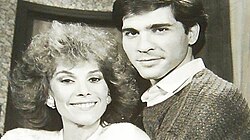
He was married to Catalan artist Eulalia Lombarte Llorca from 1989 to 1992, with whom he has two children, María Eulalia and Juan. He later married actress and former model Marisa Mondino in 1995; they had two daughters, Laura and Lucía. Tragically, Lucía passed away in 1997 due to hydrocephalus (a condition where fluid builds up in the brain). The couple divorced in 2006. In 2016, he made his relationship with actress Pastora Vega official.
Career Summary Table
| Category | Notable Works / Details | Key Recognition |
|---|---|---|
| Cinema | Relatos salvajes, Hable con ella, Julieta | Multiple Best Actor Awards |
| Television | Santa Evita, El lobista, Hierro | International Emmy Award (2012) |
| Theater | Equus, Novecento, Baraka | Active since 1976 |
| International | Spain, Bolivia, Brazil, France | Global Co-productions |
Frequently Asked Questions
What is Darío Grandinetti's most prestigious award?
His most prestigious international recognition is the International Emmy Award, which he won in 2012 for his performance in Televisión por la Inclusión.
Which famous directors has he worked with?
He has worked with renowned directors such as Pedro Almodóvar, Alejandro Doria, and Damián Szifron.
Has he worked outside of Argentina?
Yes, Grandinetti has a significant international presence, having appeared in productions from Spain, Bolivia, Brazil, and France.
What was his first foreign production?
His first work in a foreign production was the 1998 Bolivian film titled El Día que murió el silencio.
In which historical roles has he appeared?
He has portrayed significant historical figures, including Juan Domingo Perón in Santa Evita and Domingo Faustino Sarmiento in Algo habrán hecho por la historia argentina.