Dan Rooney: The Architect of the Pittsburgh Steelers Dynasty
While many sports figures are defined by their time on the field, Dan Rooney defined the Pittsburgh Steelers from the front office. Transitioning from a personnel director to the controlling owner, Rooney combined a rare patience for coaching with a sharp instinct for talent and a commitment to the structural integrity of the National Football League (NFL).
Rooney's journey began in 1960 as the director of personnel. By 1969, he was appointed general manager, succeeding Francis Fogarty. His first major impact in this role was the selection of Joe Greene, a cornerstone of the legendary Steel Curtain—the formidable defensive unit that powered the team's dominance throughout the 1970s.
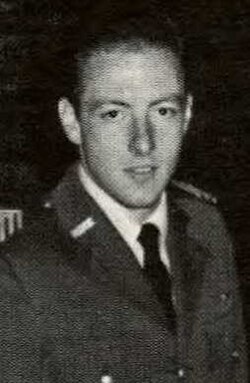
The Foundation of a Dynasty
Despite a challenging 1–13 record in 1969, Rooney demonstrated the patience that would become his trademark. He stepped down as general manager to hire Dick Haley, whose 1974 draft class famously yielded four future Hall of Fame players. More importantly, Rooney personally selected Chuck Noll as head coach in 1969.
Appointed team president in 1975, Rooney assumed full operational control of the franchise, while his father remained the public face and chairman until 1988. Under Rooney's stewardship, the Steelers secured six championships between Super Bowl IX and Super Bowl XLIII. He was instrumental in the hiring of all three head coaches during the era spanning 1969 to 2007.
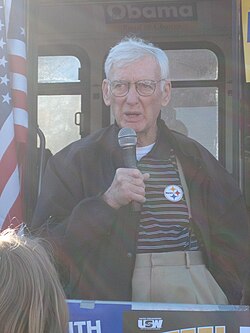
Influence Beyond the Field
Rooney was a quiet but powerful force in NFL governance. He played a pivotal role in negotiating the 1982 collective bargaining agreement, earning respect from both owners and players for helping end a season-long strike. Furthermore, he was one of the primary architects of the salary cap, the system implemented in 1993 to limit the amount of money teams can spend on player salaries to ensure competitive balance.
His commitment to the sport extended to league stability. In 1995, Rooney and Buffalo Bills owner Ralph Wilson were the only owners to vote against the Cleveland Browns moving to Baltimore, and Rooney worked tirelessly to ensure the Browns returned to Cleveland in 1999.
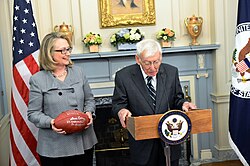
Strategic Risks and Patient Leadership
One of Rooney's most significant contributions was the 2004 selection of quarterback Ben Roethlisberger. While head coach Bill Cowher preferred offensive lineman Shawn Andrews, Rooney insisted on drafting a franchise quarterback to avoid repeating the 1983 mistake of passing on Dan Marino. This decision ended a quarterback drought dating back to Terry Bradshaw's retirement and led to three Super Bowl appearances between 2005 and 2010.
Rooney's faith in his coaches often defied conventional wisdom. He supported Chuck Noll through the worst record in franchise history (1–13) and retained him until his retirement in 1991. Similarly, he stood by Bill Cowher during two consecutive losing seasons in 1998 and 1999, a move that eventually culminated in a victory at Super Bowl XL.
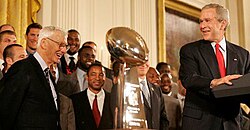
Ownership Restructuring and Legacy
In the late 2000s, the Rooney family faced a complex ownership challenge. NFL policies prohibit owners from having interests in gambling casinos, which included facilities with slot machines. Because some family members owned racetracks in New York and Florida that had installed slot machines, a restructuring was necessary to comply with league rules.
This led to a period of tension and negotiation between Dan, his son Art Rooney II, and his four brothers. While there was speculation about selling a majority interest to outside investors like Stanley Druckenmiller, the family eventually worked toward a consolidation of control. By 2003, Dan had begun ceding day-to-day operations to Art Rooney II, ensuring the franchise remained a family legacy.
Key Facts
- Championships: Oversaw six Super Bowl victories from Super Bowl IX to XLIII.
- Key Hires: Personally selected head coach Chuck Noll in 1969.
- League Impact: Co-architect of the 1993 NFL salary cap and key negotiator in the 1982 strike.
- Draft Legacy: Made the final call to draft Ben Roethlisberger in 2004.
- Family Transition: Transitioned operational control to his son, Art Rooney II, starting in 2003.
| Year | Role/Event | Significance |
|---|---|---|
| 1960 | Director of Personnel | Entry into team executive management |
| 1969 | General Manager | Drafted Joe Greene; hired Chuck Noll |
| 1975 | Team President | Assumed full operational control |
| 1993 | Salary Cap Architect | Helped implement NFL financial regulations |
| 2004 | Draft Decision | Selected Ben Roethlisberger |
| 2008 | Ownership Restructuring | Resolved gambling policy conflicts with brothers |
Frequently Asked Questions
Why did Dan Rooney insist on drafting Ben Roethlisberger?
Rooney wanted to avoid another missed opportunity to secure a franchise quarterback, recalling the team's decision to pass on Dan Marino in 1983. He overrode Coach Bill Cowher's preference for an offensive lineman to make the pick.
How did Dan Rooney influence the NFL's financial structure?
He was one of the main architects of the NFL salary cap implemented in 1993 and played a critical role in ending the 1982 players' strike through collective bargaining negotiations.
What caused the ownership dispute among the Rooney brothers in 2008?
The conflict arose from NFL policies forbidding owners from owning gambling casinos (including facilities with slot machines). Some brothers owned racetracks with such machines, necessitating a restructuring of ownership to comply with league rules.
What was Dan Rooney's approach to coaching changes?
Rooney was known for extreme patience. He retained Chuck Noll despite a 1–13 start and supported Bill Cowher through two consecutive losing seasons, believing in long-term stability over quick fixes.
Who currently manages the day-to-day operations of the Steelers?
Dan Rooney began ceding day-to-day operational control to his son, Art Rooney II, in 2003.