Dairy Farming: Evolution, Technology, and Global Production
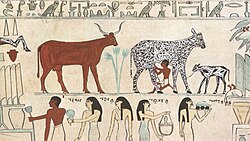
Dairy farming is a specialized branch of agriculture dedicated to the long-term production of milk. This raw commodity is processed—either directly on the farm or at a dedicated dairy plant—to create a wide array of dairy products for commercial sale. With roots stretching back to the early Neolithic era around the seventh millennium BC in Europe and Africa, the practice has evolved from simple subsistence to a high-tech global industry.
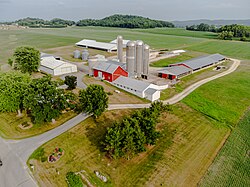
For most of human history, milking was a manual labor process performed on small-scale farms. However, the 20th century ushered in a wave of mechanization that transformed the landscape. The introduction of rotary parlors, milking pipelines, and eventually fully automated milking systems in the early 1990s allowed for a massive increase in scale and efficiency.
Key Facts
- Global Production: Approximately 827,884,000 tonnes of milk were produced worldwide in 2017.
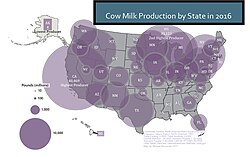
- Top Producers: India is the world's largest producer, followed by the United States, Pakistan, and China.
- Market Leaders: New Zealand is the leading exporter of cow milk, while China is the largest importer.
- Technological Shift: Modern profitability often requires herds of over 100 cows, a significant increase from the dozen-cow farms common before the 1950s.
- Environmental Impact: Large-scale operations (CAFOs) face strict regulations due to the high volume of phosphorus and methane emissions.
The Evolution of Milking Methods
Hand Milking and Early Mechanization
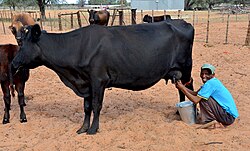
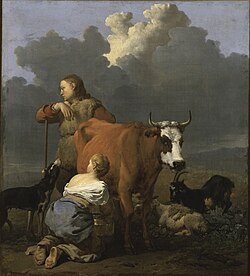
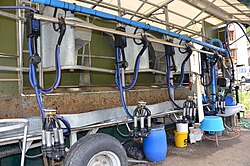
Before the industrial era, hand milking was the universal standard. While still practiced in some regions today, it was replaced in developed economies by vacuum-based systems. Early innovations included the vacuum bucket, which used air pressure to extract milk, and later, the milking pipeline, which transported milk directly from the cow to a storage tank.
Modern Milking Parlors
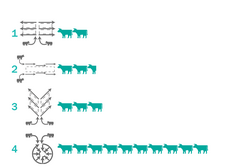
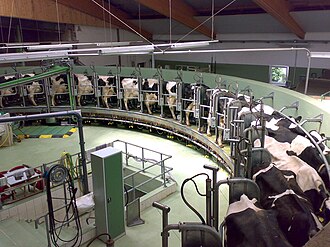
To handle larger herds, farmers utilize various parlor configurations. Herringbone and parallel parlors organize cows in specific angles to optimize space, while rotary parlors use a slowly rotating platform to move cows through the milking process continuously.
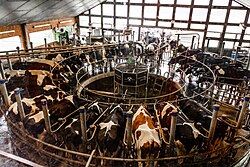
The efficiency gains between these systems are stark. For example, while a Bali-style setup might handle 50 cows per hour, a rotary parlor can process up to 250 cows per hour.
Automated and Robotic Systems
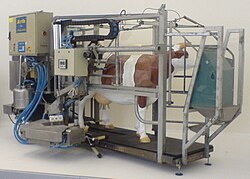
The cutting edge of dairy technology is the fully automated robotic milking system. These units allow cows to be milked without human intervention, utilizing sensors and robotics to attach the milking equipment and monitor milk flow.
Milk Preservation and Operation
The ability to transport milk over long distances depends on preservation. The arrival of refrigeration technology in the late 19th century—specifically direct expansion refrigeration and the plate heat exchanger—drastically reduced spoilage caused by humidity and bacterial growth.
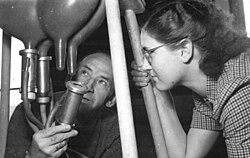
In a modern operation, milking machines are held in place by a vacuum system that reduces ambient air pressure to between 15 and 21 pounds per square inch (100 to 140 kPa). This vacuum lifts the milk through small hoses into a receiving can, where a lift pump then pushes it through a plate cooler and into a refrigerated bulk tank.
Herd and Nutritional Management
Reproductive Cycles and Puberty
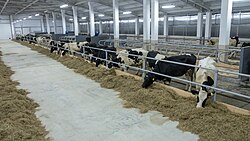
Effective dairy management relies on precise breeding timelines. Most producers aim for a replacement heifer to join the milking herd by her second birthday. Because the gestation period is slightly over nine months, heifers must be inseminated by 15 months of age.
Puberty is largely driven by body weight. For Holstein heifers, puberty typically occurs between 9 and 10 months of age, when they weigh between 550 and 650 lbs. To ensure a healthy pregnancy and easy birth, they are generally bred once they reach approximately 800 lbs.
Calf Nutrition and Weaning
Young calves often rely on milk replacers, which are categorized by protein source (such as whey, soy, or animal plasma), energy levels, and additives. Ideal levels for fat and protein in these replacers are 10–28% and 18–30%, respectively. Higher energy levels reduce the need for starter feed (initial solid food). Weaning typically occurs once a calf consumes at least two pounds of starter feed daily for three consecutive weeks.
Environmental and Ethical Concerns
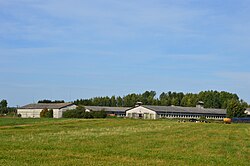
The scale of modern dairies has introduced significant environmental challenges. In the United States, operations with more than 1,000 cows are classified as Concentrated Animal Feeding Operations (CAFOs) and are regulated by the EPA.
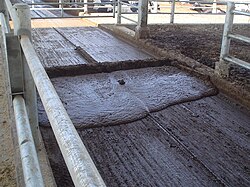
The waste output is substantial; the phosphorus produced by 5,000 cows is roughly equivalent to that of a city of 70,000 people. Managing this manure requires vast amounts of cropland for dispersion or the use of methane digesters to mitigate air pollution from methane gas.
Global Market and Production Data

The dairy industry is characterized by a shift toward larger, more consolidated farms. In New Zealand, for instance, the average herd size grew from 113 cows in the 1975–76 season to 435 by 2018–19.
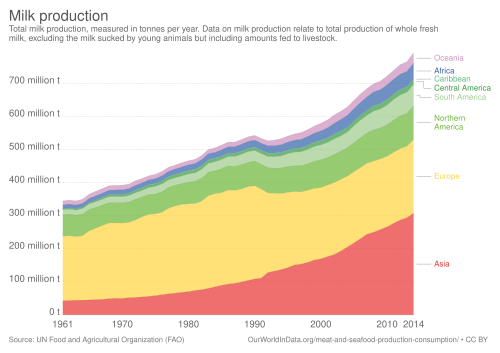
| Rank | Country | Production (1,000 tonnes/year) | Global Share (%) |
|---|---|---|---|
| 1 | India | 176,272 | 21.29% |
| 2 | United States | 97,760 | 11.81% |
| 3 | Pakistan | 44,293 | 5.35% |
| 4 | China | 34,869 | 4.21% |
| 5 | Brazil | 33,742 | 4.08% |
Frequently Asked Questions

What is a CAFO in the context of dairy farming?
A CAFO, or Concentrated Animal Feeding Operation, is a term used by the EPA in the U.S. to describe dairy operations with more than 1,000 cows. These facilities are subject to specific regulations due to their high concentration of livestock and the resulting environmental impact of manure management.
How does a rotary milking parlor work?
A rotary parlor consists of a slowly rotating platform that carries cows in a circle. As the cows move, they are milked by technicians or machines, allowing for a continuous flow of animals and significantly higher efficiency compared to stationary parlors.
At what age and weight do Holstein heifers typically reach puberty?
Holstein heifers generally reach puberty between 9 and 10 months of age, typically when their body weight is between 550 and 650 lbs.
Why is refrigeration critical for dairy farming?
Refrigeration, including technologies like the plate heat exchanger, is essential to reduce the growth of bacteria and the effects of humidity, thereby preventing milk from spoiling and allowing it to be transported to markets.
What are the ideal nutritional levels for calf milk replacers?
The ideal levels for milk replacers are 10–28% for fat and 18–30% for protein. Higher energy levels in these replacers can lead to a decrease in the amount of starter feed the animal consumes.