Czechoslovakia National Football Team: A Legacy of European Glory
From 1919 to 1993, the Czechoslovakia national football team stood as a formidable power in international soccer. Managed by the Czechoslovak Football Association, the team became a symbol of sporting excellence for the joint republic, qualifying for eight FIFA World Cups and three UEFA European Championships. Their journey was marked by tactical innovation, legendary players, and a historic continental title.
The team's existence concluded following the dissolution of Czechoslovakia at the end of 1992. In a unique transition, the squad competed in the 1994 World Cup qualifiers as the Representation of Czechs and Slovaks (RČS) before officially disbanding in November 1993. Today, the national teams of the Czech Republic and Slovakia are recognized as the joint successors to this storied record.
Key Facts
- Major Honors: European Champions (1976) and two-time World Cup runners-up (1934, 1962).
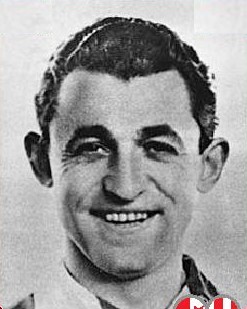
- All-Time Top Scorer: Antonín Puč with 34 goals.
- Most Caps: Zdeněk Nehoda with 91 appearances.
- Home Ground: Stadion Evžena Rošického (1926–1993).
- Olympic Success: Gold medalists in the 1980 Moscow Games.
Early Foundations and the Bohemian Era
Before the formal establishment of the Czechoslovak team, the national team of Bohemia played its first international match on April 5, 1903, losing 2–1 to Hungary. Despite early struggles and a period of expulsion from FIFA due to conflicts with the Austrian Football Association, Bohemia remained competitive. They notably won the UIAFA Great European football tournament in 1911 by defeating England 2–1 in the final.
The Inter-War Years and First World Cup Success
Following the creation of Czechoslovakia, the team made an immediate impact. At the 1920 Olympics in Antwerp, they dominated early matches with a 7–0 win over Yugoslavia, though they were ultimately ejected from the tournament after protesting a referee's decision in the final against Belgium.
The 1930s marked the team's ascent on the global stage. In the 1934 FIFA World Cup in Italy, Czechoslovakia reached the final, narrowly losing 2–1 to the hosts after extra time. This tournament saw Oldřich Nejedlý claim the Golden Shoe for his five goals. The team also reached the quarter-finals of the 1938 World Cup, exiting after a replay against Brazil in a match famously remembered as the "Battle of Bordeaux" due to its aggressive play.
Post-War Resilience and the 1962 Final
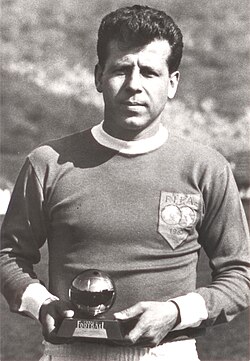
After World War II, Czechoslovakia remained a consistent contender. The 1960s brought one of their greatest achievements. In the 1962 FIFA World Cup in Chile, the team navigated a tough group—including a 0–0 draw with Brazil—to reach the final. Although they finished as runners-up, the tournament cemented their status as a world power.
Continental Triumph: The 1976 European Championship
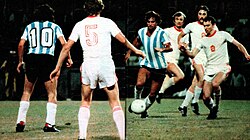
The pinnacle of Czechoslovak football arrived in 1976 during the UEFA European Championship in Yugoslavia. After defeating the Netherlands in the semi-finals, Czechoslovakia faced West Germany in the final in Belgrade. The match ended in a 2–2 draw, leading to a penalty shootout.
It was here that Antonín Panenka executed a daring chipped penalty to win the title. This technique, now known globally as the Panenka, remains one of the most famous moments in football history. The 1976 squad was heavily influenced by Slovak talent, with 16 of the 22 players being Slovak.
The Final Chapter (1980–1993)
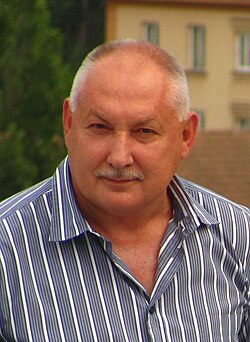
The team continued to perform well into the 1980s, securing third place at Euro 1980 and a gold medal at the 1980 Moscow Olympics. Their final major tournament appearance was the 1990 FIFA World Cup in Italy, where they reached the quarter-finals before losing 1–0 to West Germany. Manager Jozef Vengloš later made history as the first foreign manager in English football upon joining Aston Villa.
Performance Summary
| Competition | Appearances | Best Result | Medals/Titles |
|---|---|---|---|
| FIFA World Cup | 8 | Runners-up (1934, 1962) | 2 Silver |
| UEFA European Championship | 3 | Champions (1976) | 1 Gold, 2 Bronze |
| Olympic Games | 5 | Gold (1980) | 1 Gold, 1 Silver |
Frequently Asked Questions
Who is the all-time leading goalscorer for Czechoslovakia?
Antonín Puč is the top scorer in the team's history, netting 34 goals in 60 appearances between 1926 and 1938.
What is the "Panenka" penalty?
The Panenka is a chipped penalty kick designed to deceive the goalkeeper. It was famously used by Antonín Panenka to win the 1976 European Championship final for Czechoslovakia.
How many times did Czechoslovakia reach a World Cup final?
The team reached the FIFA World Cup final twice, finishing as runners-up in 1934 and 1962.
What happened to the team after the dissolution of the country?
The team played its final matches as the Representation of Czechs and Slovaks (RČS) during the 1994 World Cup qualifiers. Subsequently, the Czech Republic and Slovakia formed their own separate national teams, which share the historical records of Czechoslovakia.
Which player earned the most caps for the national team?
Zdeněk Nehoda holds the record for the most caps, appearing 91 times for the national side between 1971 and 1987.