Curtis Mayfield: The Gentle Genius of Soul and Social Consciousness
Known as the Gentle Genius, Curtis Lee Mayfield was a transformative force in American music. As a singer-songwriter, guitarist, and record producer, he bridged the gap between the spiritual fervor of gospel and the rhythmic drive of soul and R&B. Beyond the melodies, Mayfield is revered for his courage in weaving themes of social awareness and black pride into the popular music of the 1960s and 70s.
Key Facts
- Full Name: Curtis Lee Mayfield (1942–1999).
- Primary Genres: Soul, R&B, funk, progressive soul, gospel, and psychedelic soul.
- Major Groups: Lead singer and songwriter for The Impressions.
- Defining Work: The 1972 soundtrack for the film Super Fly.
- Legacy: Double inductee into the Rock and Roll Hall of Fame (1991 and 1999).
- Accolades: Grammy Legend Award (1994) and Grammy Lifetime Achievement Award (1995).
Early Life and The Impressions
Curtis Mayfield's musical journey began in a gospel choir, providing the foundational spiritual sound that would define his later work. In 1956, at the age of 14, he moved to the North Side of Chicago and joined the vocal group The Impressions after meeting Jerry Butler.
As the group's primary songwriter and lead singer, Mayfield became a pioneering voice during the civil rights movement. He shifted soul music toward social consciousness, most notably with the 1965 hit "People Get Ready." This track was later inducted into the Grammy Hall of Fame and ranked among the 500 Greatest Songs of All Time by Rolling Stone.
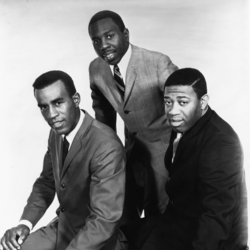
Throughout the mid-to-late 1960s, The Impressions achieved significant success with hits like "Keep On Pushing," "It's All Right," and "Woman's Got Soul." In 1968, Mayfield established his own label, Curtom Records. During this era, his music evolved to reflect the black pride movement. His 1967 song "We're a Winner" became a powerful anthem for black power, while "Keep On Pushing" served as a soundtrack for the movement led by Martin Luther King Jr.
Solo Career and Cinematic Impact
In 1970, Mayfield transitioned to a solo career, releasing his debut album Curtis. His influence expanded as he produced records for various artists on the Curtom label, including the Staple Singers and Mavis Staples.
Mayfield's most culturally significant solo achievement came in 1972 with the soundtrack for the blaxploitation film Super Fly. Unlike the film's plot, the music provided a critical social commentary on the hardships facing inner-city residents, specifically addressing poverty, crime, and drug abuse. The album remains one of the most influential works in the soul-funk genre.

His commitment to social issues continued with the 1973 concept album Back to the World, which criticized U.S. involvement in global conflicts and the aftermath of the Vietnam War. He also experimented with funk-disco blends, such as the 1977 hit "Do Do Wap is Strong in Here" from the film Short Eyes.
Overcoming Adversity
On August 13, 1990, Mayfield's life changed drastically when lighting equipment fell on him during a live performance at Wingate Field in Brooklyn, New York. The accident left him paralyzed from the neck down.
Despite this devastating injury, Mayfield refused to stop creating. He discovered he could still sing and compose by lying on his back, allowing gravity to assist his breathing. This method allowed him to record his final album, New World Order, released in 1996, where vocals were sometimes recorded one line at a time.
Final Years and Legacy
In his final years, Mayfield faced further health challenges related to type 2 diabetes, which led to the amputation of his right leg in 1998. He was inducted into the Rock and Roll Hall of Fame as a solo artist in 1999, though his health prevented him from attending the ceremony.
Curtis Mayfield passed away on December 26, 1999, at the age of 57. He left behind a massive musical archive, including approximately 140 songs in the Curtom vaults, and a legacy as one of the most influential architects of socially conscious African-American music.
| Category | Details |
|---|---|
| Active Years | 1956–1999 |
| Key Instruments | Vocals, Guitar, Piano, Keyboards |
| Major Labels | Curtom, Rhino |
| Notable Albums | Curtis (1970), Super Fly (1972), Back to the World (1973) |
| Hall of Fame | Rock and Roll Hall of Fame (1991, 1999) |
Frequently Asked Questions
What was Curtis Mayfield's role in the civil rights movement?
Mayfield used his music as a tool for social change, writing anthems like "People Get Ready" and "Keep On Pushing" that provided a soundtrack for the civil rights movement and the subsequent black pride movement.
How did the Super Fly soundtrack differ from the movie?
While the film focused on the blaxploitation genre, Mayfield's soundtrack provided a socially conscious counter-narrative, addressing the systemic issues of poverty and drug abuse affecting racial minorities.
How did Curtis Mayfield continue recording after his paralysis?
Mayfield recorded by lying on his back, using gravity to help his chest and lungs function so he could sing. For his final album, New World Order, he sometimes recorded vocals in single lines.
Which groups was Curtis Mayfield a member of?
He is most famous for his time as the lead singer and primary songwriter for the vocal group The Impressions.
What caused the death of Curtis Mayfield?
Curtis Mayfield died on December 26, 1999, from complications related to type 2 diabetes.