Cuckooshrikes: The Diverse Passerine Birds of the Tropics
Cuckooshrikes are a group of small to medium-sized passerine (perching) birds belonging to the family Campephagidae. Found across the subtropical and tropical regions of Africa, Asia, and Australasia, these birds are known for their slender builds and often understated plumage. While their name suggests a link to cuckoos or shrikes, they are distinct lineages, though they share some superficial physical and behavioral traits with them.
With 107 species distributed across 11 genera, cuckooshrikes occupy a variety of ecological niches, from the dense canopies of primary forests to open scrublands. Their diversity is reflected not only in their distribution but also in their striking variations in color and vocalization.
Key Facts
- Family: Campephagidae, consisting of 107 species across 11 genera.
- Distribution: Tropical and subtropical Africa, Asia, and Australasia.
- Diet: Primarily insectivorous, specializing in large hairy caterpillars.
- Size Range: From the small minivet (16 cm) to the south Melanesian cuckooshrike (35 cm).
- Social Structure: Generally monogamous and territorial, with some species practicing cooperative breeding.
Taxonomy and Classification
Despite their name, cuckooshrikes are not closely related to cuckoos or shrikes. The name likely stems from the grey coloration common to many species and an undulating flight pattern that resembles that of a cuckoo. Because of this grey hue, they are sometimes referred to as greybirds, while their preference for caterpillars has earned them the nickname caterpillar-birds in certain regions.
Modern DNA studies suggest a potential relationship with the Old World orioles (Oriolidae), although they differ significantly in wing feather arrangement and skull morphology. Taxonomic revisions in 2010, based on molecular phylogenetic studies, revealed that the genus Coracina was non-monophyletic (not descending from a single common ancestor). This led to a reorganization where five genera were resurrected, moving various species into Edolisoma, Lalage, Ceblepyris, Malindangia, Celebesica, and Cyanograucalus.
Clarifying Misclassifications
Historically, some birds were grouped with cuckooshrikes that have since been moved. The woodshrikes (Tephrodornis) are now placed in the family Vangidae. Similarly, the black-breasted fruithunter (Chlamydochaera) was once considered a cuckooshrike but is now classified as a thrush (Turdidae).
Physical Characteristics
Cuckooshrikes are typically long, slender, arboreal birds. Their appearance varies wildly across the family: most are predominantly grey, white, or black, but the minivets display vibrant reds, yellows, and blacks. The blue cuckooshrike of central Africa is distinguished by its all-over glossy blue plumage.
Some species exhibit sexual dimorphism, where males and females look different. In the genus Campephaga, males possess glossy black plumage and bright red or yellow wattles (fleshy growths), while females have more subdued olive-green feathers.
Habitat and Distribution
The majority of the 107 species are forest dwellers. While some, such as the New Caledonian cuckooshrike, are restricted to primary forests, others are more adaptable to disturbed forest environments. A small number of species prefer open habitats; for example, the Australian ground cuckooshrike inhabits open plains and scrubland with minimal tree cover.
Behavior and Ecology
Social structures vary by genus. "True" cuckooshrikes are typically found alone, in pairs, or in small family groups. In contrast, minivets and flycatcher-shrikes often form small flocks. Their vocalizations also range from very infrequent calls to the extremely vocal nature of the minivets.
Diet and Feeding
These birds are mainly insectivorous, with a notable appetite for large hairy caterpillars. However, their diet is opportunistic, and they have been recorded eating small vertebrates, seeds, fruit, and other plant matter.
Breeding and Reproduction
Cuckooshrikes are generally monogamous, often maintaining year-round pair bonds and territories. While most follow this pattern, one instance of polygyny (one male mating with multiple females) has been recorded in Australian white-winged trillers. Some species also engage in cooperative breeding.
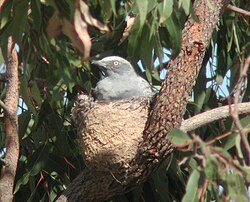
Nests are typically cup-shaped and built in trees, containing about four eggs that may be white, green, or blue. The incubation period lasts approximately two weeks.
Summary of Genera
| Genus | Common Name / Group | Number of Species |
|---|---|---|
| Edolisoma | Cuckooshrikes and cicadabirds | 31 |
| Coracina | Cuckooshrikes | 27 |
| Lalage | Trillers and cuckooshrikes | 20 |
| Pericrocotus | Minivets | 14 |
| Ceblepyris | Cuckooshrikes | 5 |
| Campephaga | Cuckooshrikes | 4 |
| Lobotos | Wattled cuckooshrikes | 2 |
| Campochaera | Golden cuckooshrike | 1 |
| Malindangia | McGregor's cuckooshrike | 1 |
| Celebesica | Pygmy cuckooshrike | 1 |
| Cyanograucalus | Blue cuckooshrike | 1 |
Frequently Asked Questions
Are cuckooshrikes related to cuckoos?
No, they are not closely related to cuckoos or shrikes. Their name is derived from their grey color and undulating flight pattern, which superficially resemble cuckoos.
What do cuckooshrikes eat?
They are primarily insectivorous and are known for eating large hairy caterpillars, though they also consume small vertebrates, fruit, and seeds.
Where can cuckooshrikes be found?
They are found in the subtropical and tropical regions of Africa, Asia, and Australasia.
Do all cuckooshrikes look the same?
No, there is significant variety. While many are grey, minivets are brightly colored in red, yellow, and black, and the blue cuckooshrike is glossy blue.
How do cuckooshrikes breed?
Most are monogamous and territorial, building cup-shaped nests in trees where they lay about four eggs with an incubation period of two weeks.